
Why Eggs Are the Best Skill Benchmark
Few ingredients expose kitchen control the way eggs do. They're inexpensive, universally available, and cooked in minutes - but they demand real precision. Burn scrambled eggs and you've overshot the temperature. Break a poached egg and you've rushed the technique. Eggs don't lie, which is exactly what makes them such a useful benchmark for any home cook trying to sharpen their skills.
If you're building your cooking foundation from the ground up, our guide to techniques worth learning in order places egg cooking near the top of the list - and for good reason. Mastering each egg method teaches you lessons that transfer across the entire kitchen: how to manage heat, read visual cues, and understand timing as an active skill rather than a passive countdown.
It also helps to read through a method before you start rather than learning as you go. Egg techniques move fast, and knowing each step in advance keeps you from scrambling (literally) to catch up.
What you will need
Non-stick skillet
Prevents scrambled and fried eggs from sticking without requiring excessive fat.
Slotted spoon
Used to gently lift poached eggs out of simmering water without breaking the yolk.
Small ramekin or cup
Cracking an egg into a cup first lets you lower it gently into water for poaching with better control.
Timer
Precise timing is essential for soft-boiled eggs - a reliable timer removes guesswork.
Silicone spatula
Allows slow, gentle folding of scrambled eggs without scratching the pan surface.
Lid for skillet
Optional for basted fried eggs - trapping steam gently sets the top of the white.
The Four Core Techniques
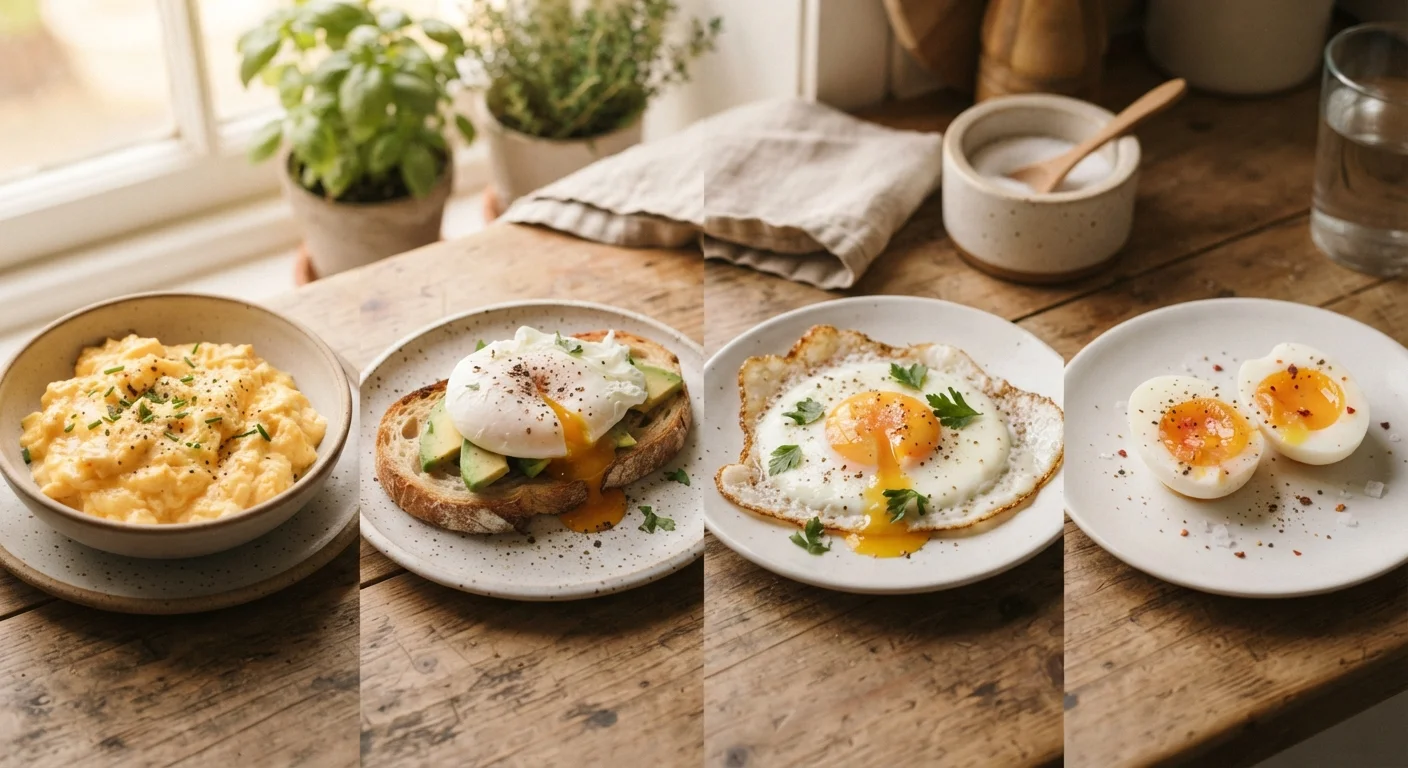
Each of the four classic egg preparations - scrambled, poached, fried, and soft-boiled - trains a distinct aspect of kitchen skill. Scrambled eggs reward patience and restraint. Poached eggs demand attention to water temperature and egg freshness. Fried eggs test your ability to read fat behavior as a heat signal. Soft-boiled eggs are almost entirely about disciplined timing.
Freshness Affects Every Technique
The age of an egg matters more than most cooks realize. Fresh eggs hold their shape better when poached or fried, while older eggs are actually easier to peel after boiling. Check the pack date before choosing your method. When in doubt, use the freshest eggs available for wet-heat techniques like poaching.
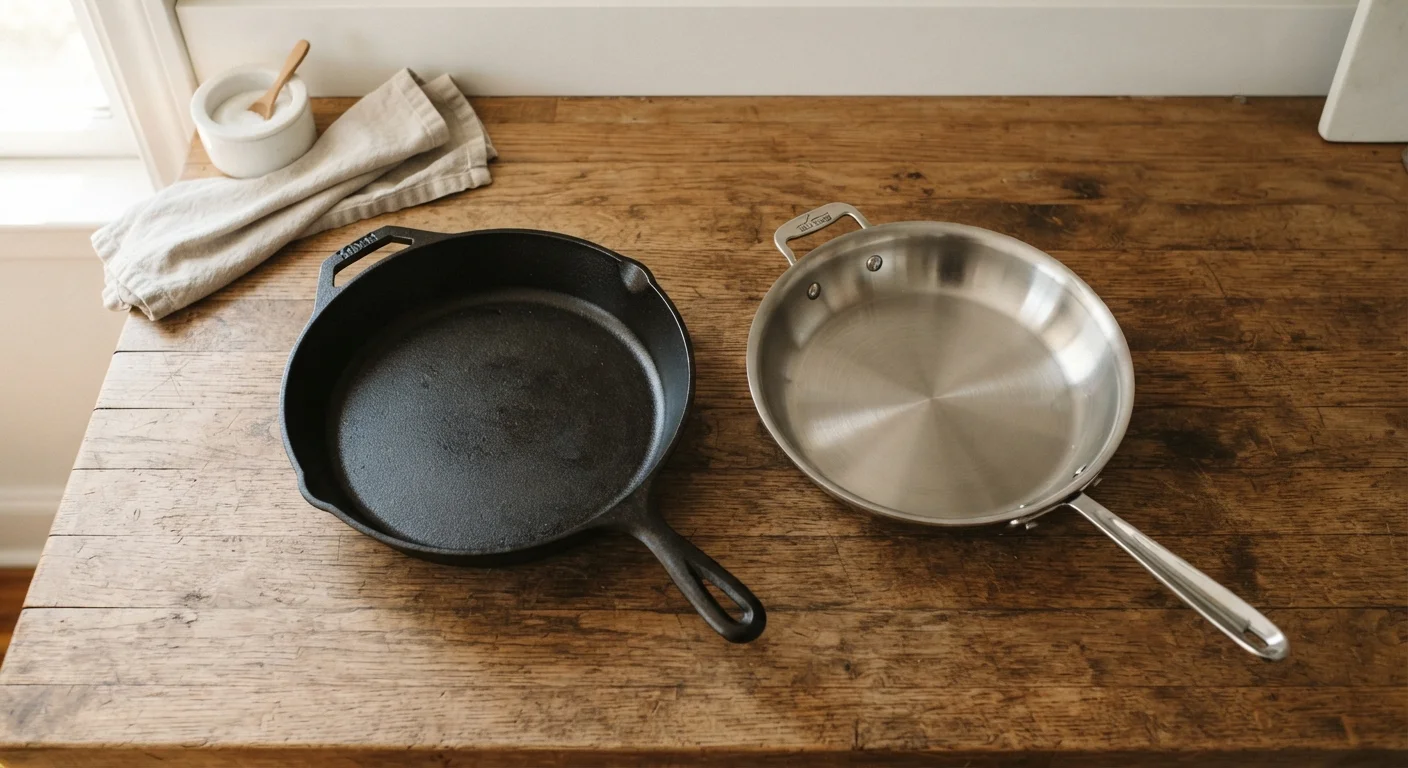
Work through each method deliberately. Once you can produce consistent results across all four, you'll notice improved instincts in other areas of cooking - particularly with delicate proteins and precise-heat techniques. The choice of pan matters here too, as different surfaces behave differently with egg whites.
Room Temperature Eggs Cook More Evenly
Cold eggs straight from the refrigerator can cause uneven cooking - especially when frying or poaching, where the white may set before the yolk warms through. Letting eggs sit at room temperature for 10-15 minutes before cooking gives you more control over the final result.
Scrambled Eggs: Start Low, Go Slow
Crack two or three eggs into a bowl and whisk until the yolks and whites are fully combined. Season lightly with salt. Heat a non-stick skillet over low to medium-low heat and add a generous knob of butter - about a tablespoon. Once the butter melts and foams without browning, pour in the eggs.
Use a silicone spatula to push the eggs gently from the edges toward the center in slow, wide folds. Remove the pan from heat every 20 seconds or so to slow things down. The goal is large, glossy curds that hold moisture. Pull the pan off heat when the eggs look slightly underdone - residual heat finishes them.
Poached Eggs: Control the Simmer
Fill a wide saucepan with about 3 inches of water and bring it to a gentle simmer - small bubbles rising, not a rolling boil. Add a teaspoon of white vinegar to help the whites cohere. Crack a fresh egg into a small ramekin or cup.
Use a spoon to stir the water in a slow circle, then lower the ramekin to just above the surface and slide the egg in at the center of the swirl. Cook for 3 to 3½ minutes for a runny yolk and set white. Lift with a slotted spoon and rest briefly on a paper towel to drain before serving.
Fried Eggs: Read the Fat and the Heat
Heat a skillet over medium heat and add about a teaspoon of butter, neutral oil, or a combination. When the butter foams or the oil shimmers, crack the egg directly into the pan. You should hear a steady, gentle sizzle - not a violent spit.
For a sunny-side-up egg, don't flip: cook until the white is fully set but the yolk is still fluid, about 2 minutes. For over-easy, flip gently with a thin spatula after 90 seconds and cook 20 seconds more. Season with salt and serve immediately.
Soft-Boiled Eggs: Nail the Timing
Bring a saucepan of water to a full rolling boil. Gently lower eggs (straight from room temperature, or refrigerator-cold for an extra 30 seconds) into the water using a slotted spoon. Start your timer immediately.
Cook for 6 to 6½ minutes for a fully set white with a jammy, slightly runny yolk - ideal for ramen, grain bowls, or toast. For a looser yolk, aim for 5½ minutes. When the timer goes off, transfer immediately to an ice-water bath and leave for at least 2 minutes before peeling.
Don't Walk Away From the Stove
Eggs cook faster than almost anything else in the kitchen. Poached eggs can turn rubbery in under a minute of over-cooking, and scrambled eggs go from silky to dry in seconds. Stay present and reduce heat early - you can always add more time, but you can't undo overcooked eggs.
Putting It All Together
Cooking eggs well isn't about following a recipe to the letter - it's about developing feel. Once you've practiced each technique a handful of times, you'll stop relying on clocks and start reading the eggs themselves: the way a white changes from translucent to opaque, how curds tighten as moisture evaporates, the subtle color shift in butter that signals the right window to add your egg.
That perceptual awareness is what separates a cook who follows instructions from one who understands what's happening in the pan. If you're still building those instincts, running through the pre-cooking checklist before each session helps you stay organized and present - two qualities that matter a great deal when cooking something as unforgiving as eggs.
Eggs are also a genuinely nutritious option for everyday meals. For broader guidance on building balanced eating habits, the Healthy Eating hub offers practical, approachable advice worth exploring alongside your cooking practice.