
Why Order of Learning Matters
Home cooks often learn techniques randomly - whatever a recipe happens to require next. That approach works, but it's slow. Learning in order of usefulness means that each new skill immediately improves the meals you're already making, rather than sitting dormant until a specific dish comes along.
The techniques below are ranked by how broadly they apply across everyday cooking. Master the earlier ones first - they'll make the later ones easier to learn and more immediately rewarding to practice. Good prep habits and a reliable stocked pantry support all of them.
Technique vs. Recipe: An Important Distinction
Recipes are instructions for a specific dish. Techniques are transferable principles that work across hundreds of dishes. Investing time in technique - rather than memorizing individual recipes - means you become a more adaptable cook over time, not just a better executor of a particular set of steps. Reading recipes carefully before you start is still valuable, but it works best when underpinned by solid technique.
Knife Skills: The Foundation Everything Else Rests On
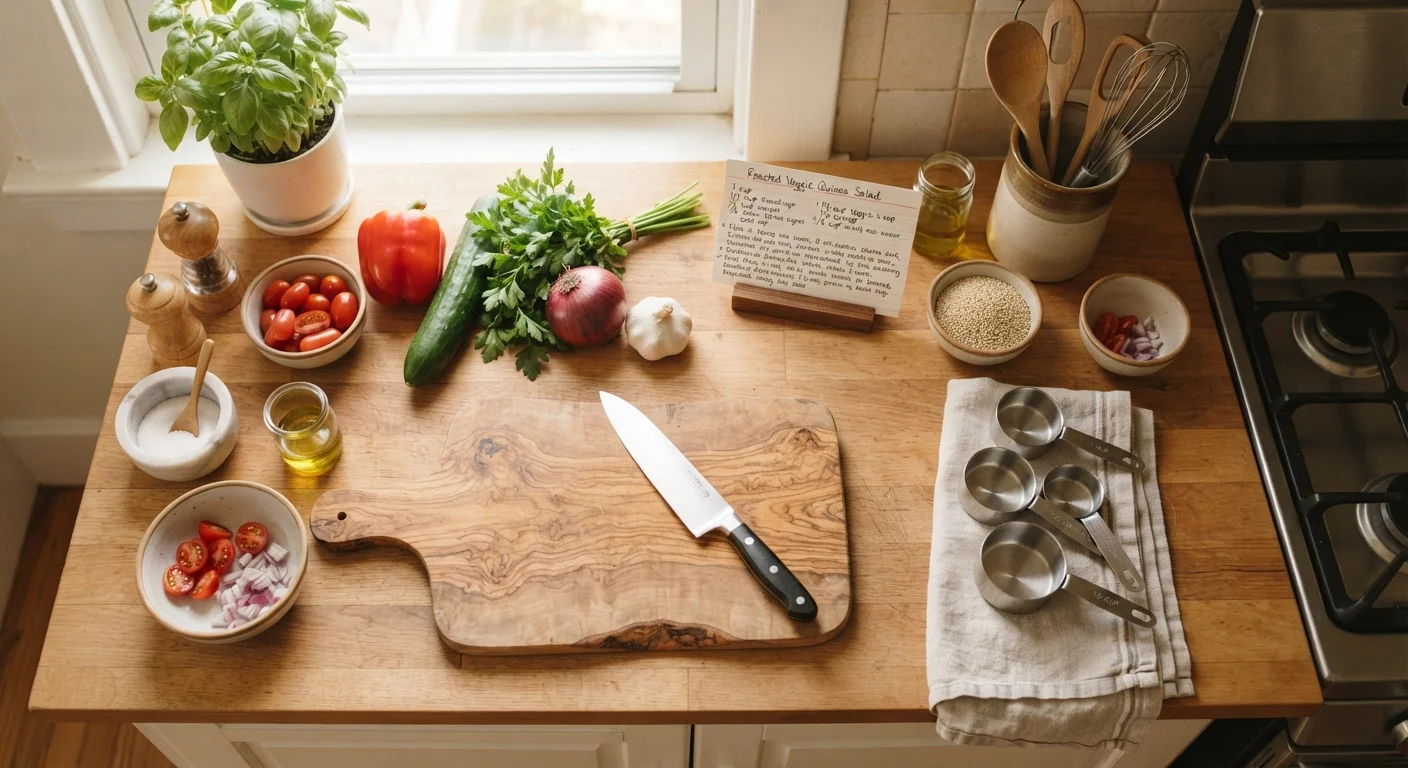
Before heat, before seasoning, before any technique - there's the knife. Learning how to hold a chef's knife properly, use a pinch grip, and execute a consistent dice or chiffonade pays dividends in every single meal. Uniform cuts aren't about aesthetics; they ensure food cooks evenly, which directly affects texture and flavor.
Start with the rocking chop for herbs and garlic, then progress to julienne and brunoise cuts for vegetables. A sharp knife, held correctly, is far safer than a dull one. Dedicate 10 minutes a few times a week to deliberate cutting practice - speed follows naturally.
Uniform cuts aren't about aesthetics - they ensure food cooks evenly every time.
Heat Control: Understanding Your Pan Before You Add Food
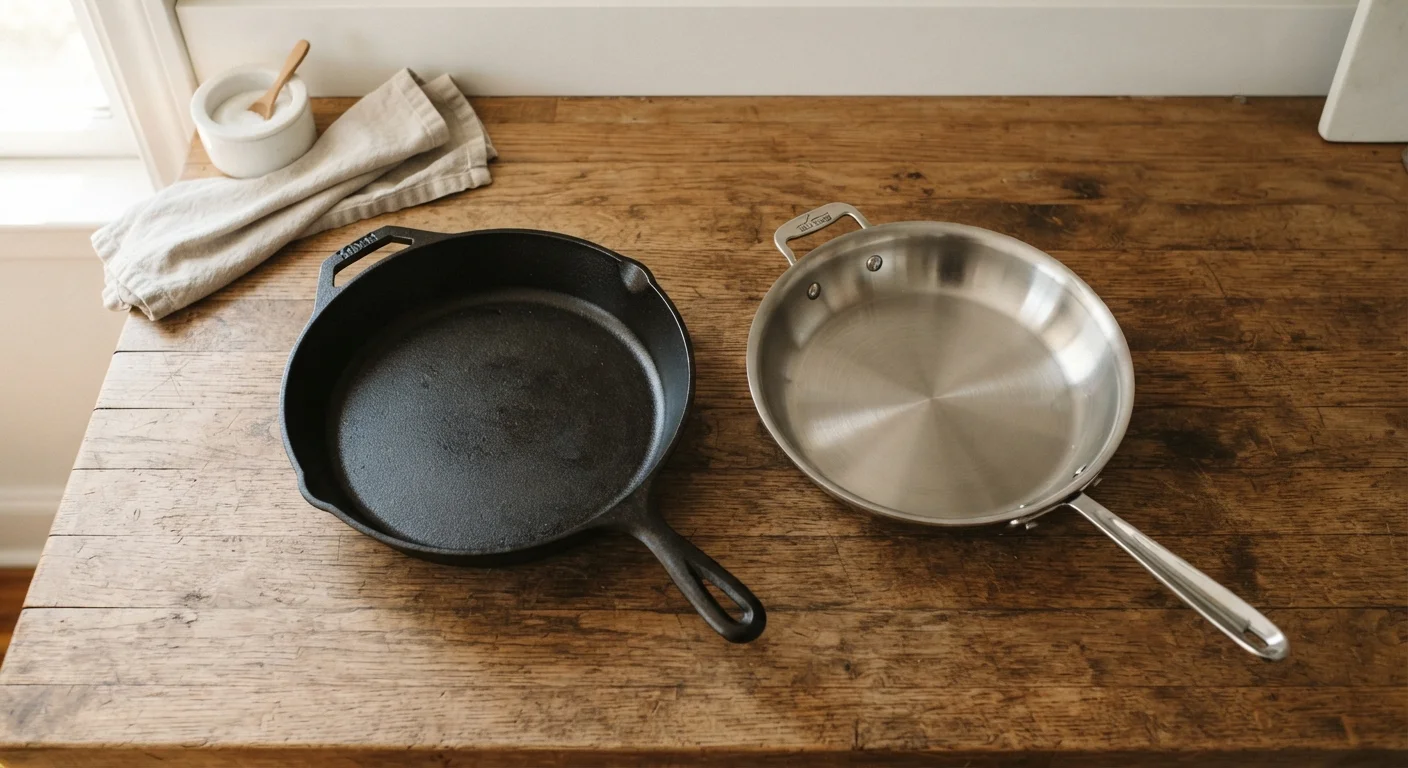
Most home cooking problems trace back to the wrong temperature at the wrong moment. Learning to read a pan - when it's truly hot enough for a sear, when it's too hot for eggs - is one of the most practical skills you can develop. The water droplet test (a drop skitters and evaporates rather than sitting still) is a reliable way to gauge a dry pan's readiness.
Different proteins and vegetables require different heat levels. High heat creates the Maillard reaction, the browning that develops complex flavor on meat and vegetables. Medium-low heat is your ally for delicate proteins, custards, and anything that needs time without scorching. Understanding this spectrum means fewer ruined meals and more confident improvisation. See our guide to kitchen myths for a look at common heat-related misconceptions.
Most home cooking problems trace back to the wrong temperature at the wrong moment.
Proper Seasoning: Salt as a Tool, Not an Afterthought
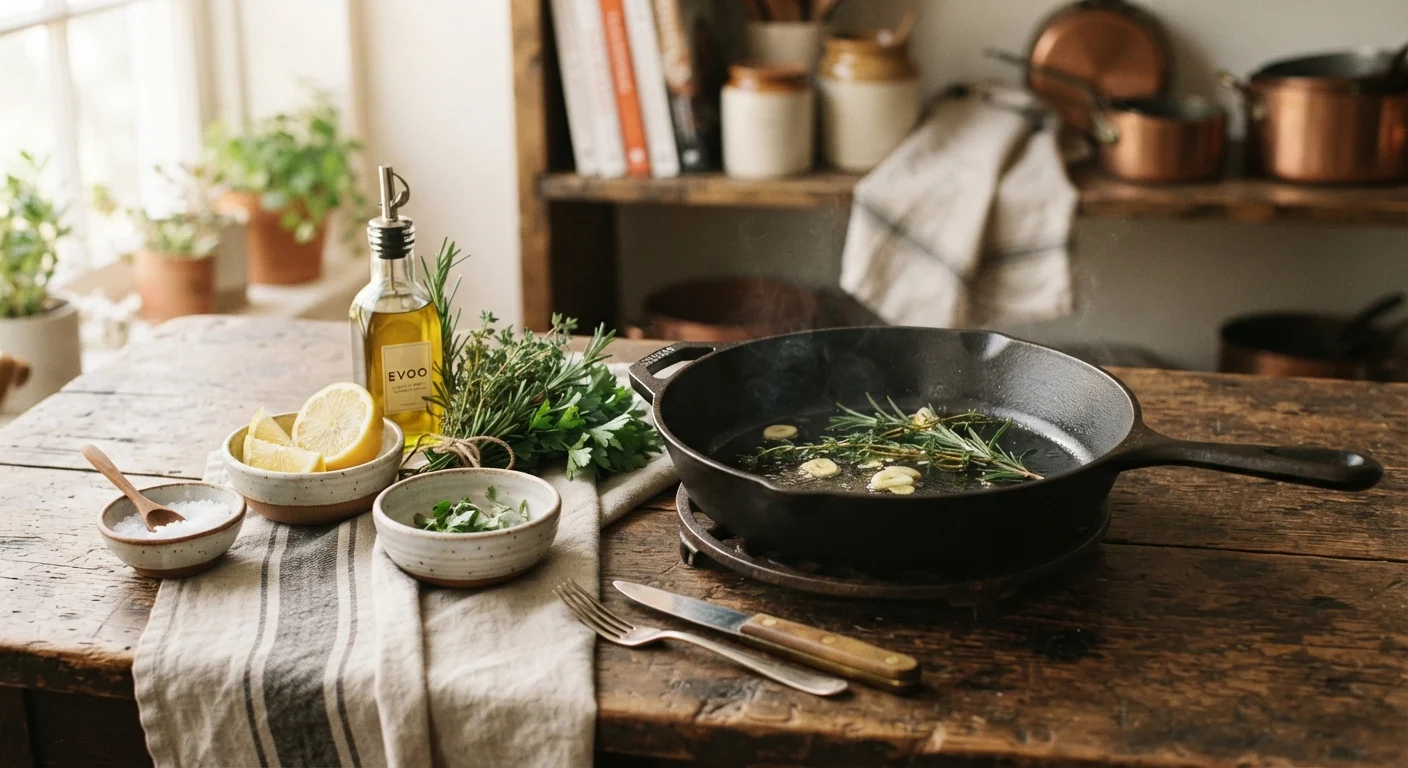
Seasoning is not the same as salting at the table. It means adding the right amount of salt at the right stage of cooking - to pasta water, to meat before it hits the pan, to vegetables as they roast. Salt draws out moisture, enhances natural flavors, and affects texture in ways that last-minute sprinkling cannot replicate.
Beyond salt, seasoning includes acid (lemon juice, vinegar), fat, and heat as flavor levers. A dish that tastes flat often needs a small squeeze of citrus rather than more salt. Developing a palate for what's missing in a dish - and knowing which lever to pull - is a skill built through tasting constantly as you cook.
A dish that tastes flat often needs a squeeze of acid, not more salt.
Roasting and the Sheet Pan Method
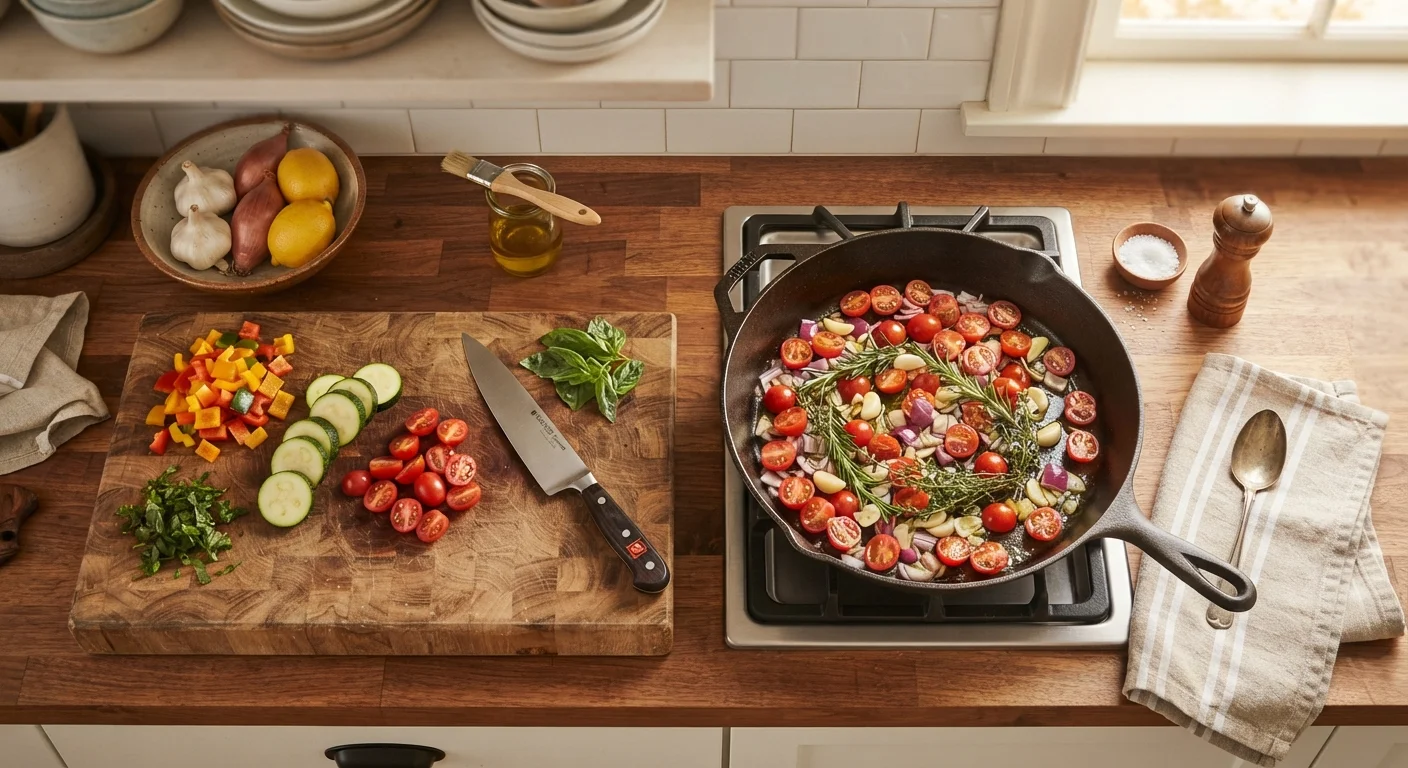
Roasting is one of the most forgiving and high-yield techniques in the home cook's toolkit. High dry heat concentrates flavors, caramelizes natural sugars, and creates texture contrasts that boiling and steaming simply don't. A sheet pan, some fat, salt, and correct oven temperature is all the infrastructure you need.
The key variables: don't crowd the pan (crowded food steams rather than roasts), use enough fat to coat surfaces, and match temperature to what you're cooking - root vegetables generally benefit from higher heat and longer time, while tender greens roast quickly at similar temperatures. Once you internalize these principles, nearly any vegetable or protein can be roasted with confidence.
Crowded pans steam food instead of roasting it - leave space for proper browning.
Building a Pan Sauce: Deglazing and Fond
After searing meat or sautéing vegetables, the browned bits stuck to the pan - called fond - are concentrated flavor. Deglazing with wine, stock, or even water lifts that fond and becomes the base of a quick pan sauce. This single technique transforms a basic sauté into a restaurant-quality result with minimal extra effort or ingredients.
Add aromatics (shallots, garlic) to the fat in the pan first, then deglaze, reduce the liquid by roughly half, and finish with a cold pat of butter for body and gloss. The whole process takes under five minutes. Once mastered, it works with chicken, pork, beef, and many hearty vegetables equally well.
The browned bits left in your pan after searing are concentrated flavor - never waste them.
Braising: Low, Slow, and Transformative
Braising is the technique that turns tough, inexpensive cuts of meat into tender, deeply flavored dishes. It combines initial searing for browning with long, low-heat cooking in a covered vessel with liquid. Collagen in connective tissue breaks down over time into gelatin, producing a silky, rich sauce naturally.
The principle scales to vegetables too - braised leeks, fennel, or cabbage develop complex sweetness that quick-cooking cannot achieve. A Dutch oven or heavy-lidded pot is the ideal vessel. Braising is also highly forgiving: once everything is in the pot and the heat is low, there's little that can go wrong. It's one of the best arguments for weekend batch cooking.
Braising turns tough, inexpensive cuts into tender, deeply flavored meals with minimal active effort.
Emulsification: Bringing Fat and Water Together
Emulsification is the technique behind vinaigrettes, mayonnaise, hollandaise, and creamy pasta sauces. It involves using an emulsifier - usually egg yolk or mustard - to bind fat and water into a stable, unified mixture that would otherwise separate. Understanding the basic principle demystifies an entire category of sauces.
A simple vinaigrette is the best starting point: whisk mustard with acid first, then drizzle oil in slowly while continuing to whisk. The ratio of roughly three parts fat to one part acid is a reliable baseline, adjusted to taste. Once you can build a stable emulsion by hand, scaling up to cooked sauces becomes a much smaller leap. For more on building flavor without a recipe, see our flavor-building guide.
Emulsification unlocks vinaigrettes, pan sauces, and creamy pasta dishes from the same core principle.
Putting It All Together
These seven techniques don't need to be learned in a single month. Even adding one per season creates a meaningfully expanded skill set over the course of a year. The goal isn't perfection - it's reliable competence that compounds. A cook who understands heat, seasoning, and a handful of core methods can adapt, improvise, and recover from mistakes far more effectively than one who has simply followed many recipes.
For practical egg cookery - one of the best single subjects for testing heat control and timing - see our guide to egg techniques. And if you're building these skills alongside healthier eating goals, the Healthy Eating hub offers complementary guidance on making nutritious choices from the same kitchen foundation.
Set Yourself Up Before You Cook
Before applying any technique, a brief pre-cooking setup makes execution far smoother. Measure and prep all ingredients, confirm your oven temperature, and have tools within reach. Our pre-meal checklist walks through this preparation step by step.