
Why Timing Is the Missing Piece
Most home cooks treat salt as a finishing touch - a pinch at the plate before sitting down. But professional kitchens operate on a different principle: salt is added throughout the cooking process, at each meaningful stage. The difference in the final dish is significant.
Salt doesn't just make food taste salty. It suppresses bitterness, amplifies aroma, and draws moisture to the surface where it can evaporate or form a crust. When applied early, it has time to penetrate ingredients and become part of the dish's structure. Applied only at the end, it sits on top - sharp and incomplete.
If you want to understand how seasoning timing fits into a broader framework of flavor, building flavor without a recipe walks through salt as one of four foundational levers alongside fat, acid, and heat.
Salt proteins before cooking, not after.
Early salting allows time for the salt to penetrate the meat and season it from within. For larger cuts, even 30 minutes makes a measurable difference; overnight salting produces the most integrated result. It also draws surface moisture out and then back in, resulting in a juicier interior.
Salt your pasta and grain water assertively.
Starchy ingredients like pasta, rice, and potatoes absorb their cooking liquid. Under-salted water means under-seasoned food no matter how much you add afterward. This is the single clearest example of why timing determines outcome.
Season in layers as you build a dish.
Adding small amounts of salt at each cooking stage - when aromatics go in, when liquid is added, when ingredients are combined - develops complexity that a single end-of-cooking addition cannot replicate. Each layer dissolves and integrates differently.
Taste before and after every adjustment.
The only reliable way to avoid over-salting is to taste constantly. Palates vary, ingredients vary in natural sodium content, and reductions concentrate salt. Tasting and adjusting in small increments keeps you in control.
Reserve finishing salts for texture and accent, not base seasoning.
Flaky finishing salts dissolve instantly on the tongue and don't penetrate food the way dissolved salt does during cooking. Using them as the primary seasoning method leaves the dish flat beneath the surface. Their proper role is textural contrast and visual finish.
The Stages That Matter Most
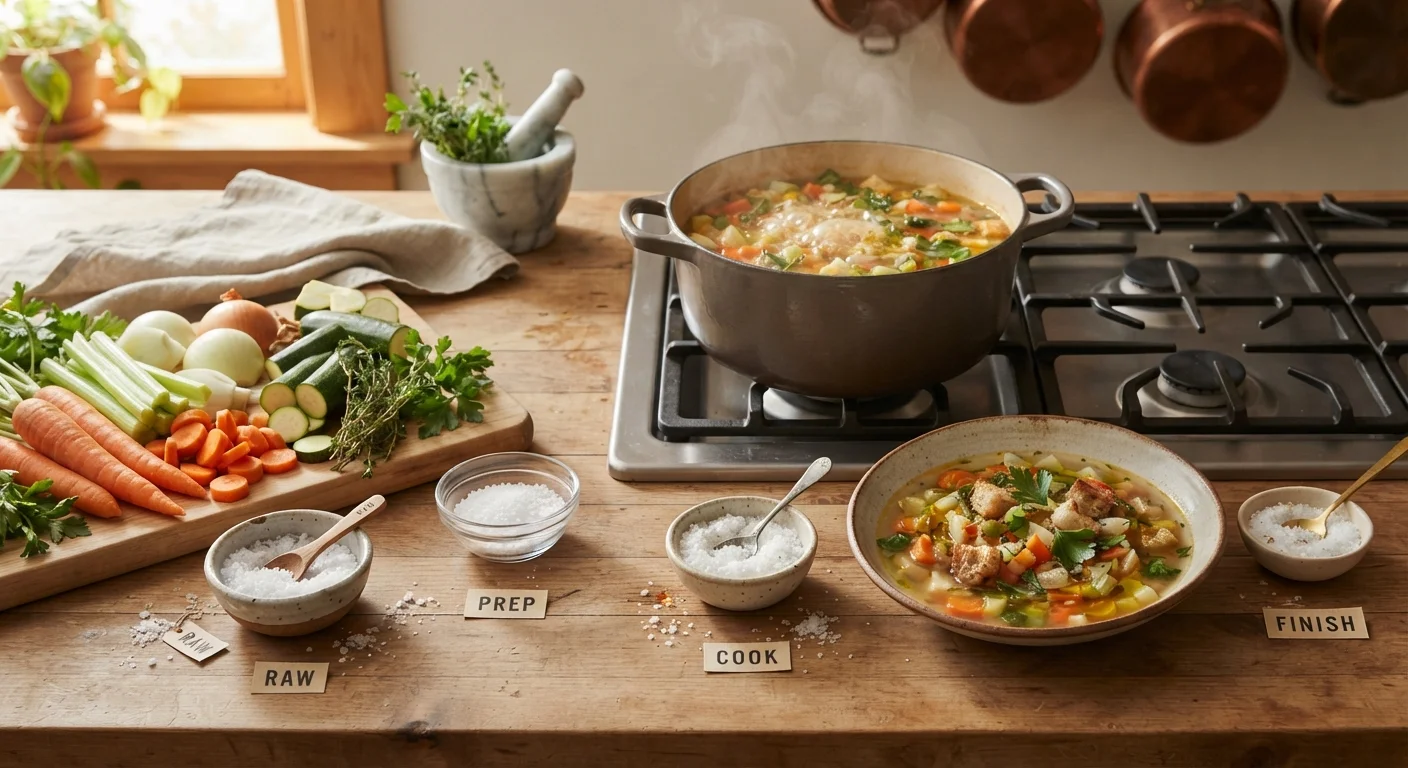
Every dish has natural checkpoints where seasoning can - and should - be applied. Here's how to think about them:
The Raw Stage
Salting meat, fish, or vegetables before cooking is one of the highest-impact habits you can develop. Salt draws moisture out briefly, then the ingredient reabsorbs it along with the dissolved salt, resulting in seasoning that reaches deeper than the surface. For proteins, this also supports better browning by drying the exterior.
Cooking Liquid
Pasta water, blanching water, and cooking liquid for grains represent a one-time opportunity to season from the inside out. Once pasta is cooked in under-salted water, no amount of sauce-level salt will replicate that integrated flavor. The water should taste noticeably salty - not overwhelming, but clearly seasoned.
Building in the Pan
When sweating onions, sautéing aromatics, or deglazing, small additions of salt at each step coax out flavor compounds and prevent the flat, one-dimensional taste that comes from a single seasoning at the end.
Finishing
Finishing salts - flaky varieties like Maldon or coarse sea salt - serve a different purpose. Added just before serving, they provide texture, a burst of salinity, and visual appeal. They're not a substitute for earlier seasoning; they're the final accent on a dish already properly built.
Know Your Salt's Density Before Measuring
Different salts have very different densities. A teaspoon of fine table salt contains roughly twice as much sodium as the same volume of Diamond Crystal kosher salt. If a recipe doesn't specify a salt type, taste as you go rather than measuring blindly. Switching between salt types without adjusting quantities is one of the most common causes of accidentally over-seasoned dishes.
Building the Habit: Quick Wins to Start Now
Changing your seasoning habits doesn't require a complete kitchen overhaul. A few targeted shifts can produce immediate improvements. Before your next meal, take a moment to read through the recipe completely so you can identify the natural seasoning checkpoints before you start cooking.
Keep in mind that salt sensitivity and dietary needs vary from person to person. If you or someone in your household has a condition affected by sodium intake, consult a healthcare professional for personalized guidance - and see how dietary needs shift across life for broader nutritional context.