
Two Terms, One Pan - But Not the Same Thing
Home cooks often use "searing" and "browning" as if they mean the same thing. Both involve high heat, both turn food a rich amber or mahogany color, and both make food taste dramatically better. But they're not identical - one is a specific technique, and the other is the chemical outcome that technique aims to produce.
Browning is the broader term. It refers to the Maillard reaction - a heat-driven process (typically starting above 280°F / 140°C) in which amino acids and reducing sugars combine to create hundreds of new flavor and aroma compounds. This is why roasted coffee, toasted bread, and browned butter all taste more complex than their raw counterparts. Browning is the category.
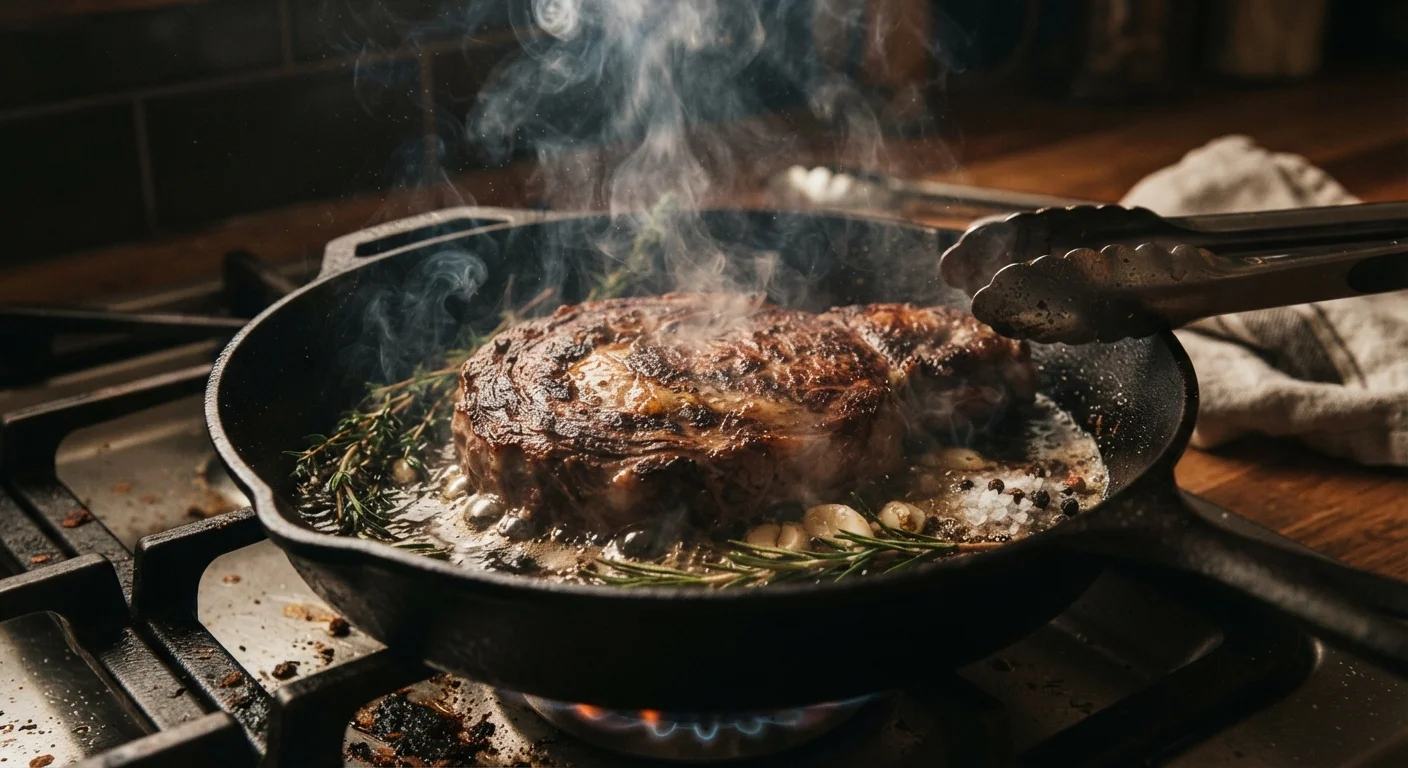
Searing is a specific application within that category. It means applying intense, direct heat to the surface of a protein - usually meat or fish - in a very hot pan with minimal fat. The goal is a distinct, caramelized crust. It's browning with intent, speed, and high temperature as defining features.
If you're cooking ground beef for a Bolognese, you're browning. If you're building a crust on a duck breast before finishing it in the oven, you're searing. Both invoke the Maillard reaction - but the technique, temperature, and intended result differ. For a deeper look at when to finish proteins in the oven versus on the stovetop, see our guide on choosing the right heat source.
The Science Behind the Color
The Maillard reaction was first described by French chemist Louis-Camille Maillard in the early 20th century. It's distinct from caramelization, which involves only sugar. The Maillard reaction requires both protein and sugar, which is why it produces a far wider range of flavors and why different foods brown differently.
280°F
Minimum temperature for Maillard browning
Food scientists widely cite approximately 280-330°F (140-165°C) as the threshold range where the Maillard reaction begins producing significant flavor compounds.
Hundreds
Flavor compounds created during browning
According to food chemistry research, a single browning reaction can produce several hundred distinct volatile and non-volatile compounds that contribute to aroma and taste.
Temperature matters enormously. At too low a heat, proteins release moisture faster than it evaporates, and that liquid keeps the pan surface below the temperature needed for browning. This is why food often steams instead of browns when the pan is crowded or cold - a key reason searing requires a very hot, dry pan and protein that's been patted dry.
Fat also plays a role: it transfers heat evenly across a protein's surface and prevents sticking, but it doesn't cause browning itself. The pan and the food's surface temperature do the work.
Maillard vs. Caramelization: Not the Same
Caramelization is often confused with the Maillard reaction, but they're distinct processes. Caramelization involves only sugars breaking down under heat, starting around 320°F (160°C) for fructose and higher for sucrose. The Maillard reaction requires both sugars and amino acids (proteins), and begins at a lower temperature. Most of what makes browned food taste good is the Maillard reaction, not caramelization - though both can occur simultaneously.
Side-by-Side: How They Compare in Practice
Knowing the conceptual difference matters less than knowing how it changes what you do in the kitchen. The table below maps the practical distinctions between searing and browning across the variables that actually affect your results.
| Criterion | Searing | Browning |
|---|---|---|
| Scope | Specific technique | Broad category |
| Typical heat level | Very high (450°F+) | Medium to very high |
| Common foods | Steaks, chops, fish fillets | Ground meat, onions, vegetables |
| Time on heat | Short, decisive bursts | Varies by food and goal |
| Desired result | Firm, defined crust | Color and flavor depth |
| Fat used | Minimal, high smoke point oil | Variable - butter or oil |
| Surface moisture needed | Bone dry | Dry to slightly dry |
One variable worth emphasizing: crowding the pan is one of the most common reasons browning fails. When too much food is added at once, the pan temperature drops and moisture accumulates. The food steams, turns gray, and never develops color. Working in batches - even when inconvenient - is not optional. This applies to both searing and general browning.
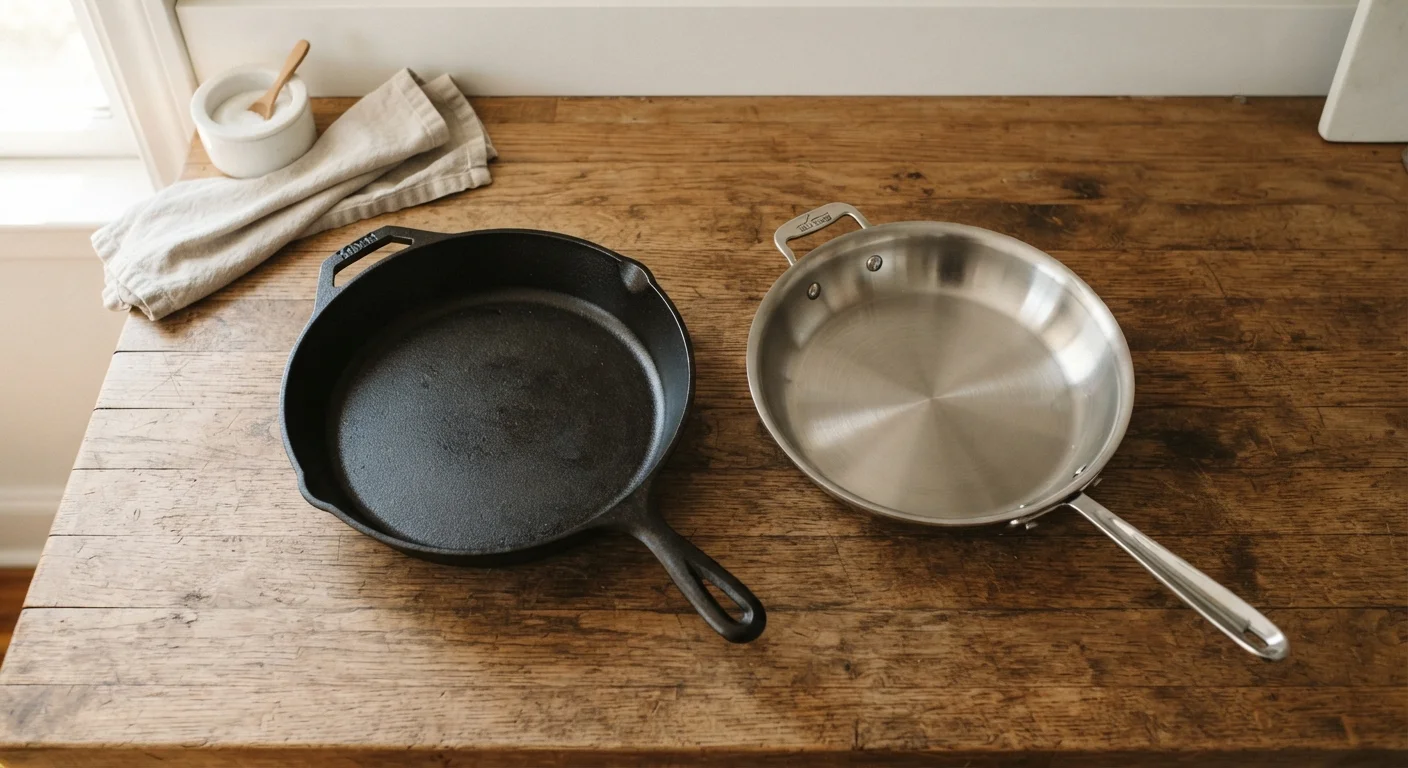
Your pan choice also shapes both outcomes. For more on how cast iron and stainless steel behave differently under heat, see cast iron vs. stainless steel.
What Searing Does Not Do
The most persistent myth about searing is that it "seals in juices." This idea has been repeated in cookbooks for decades, but food scientists - including Harold McGee in his foundational work On Food and Cooking - have thoroughly debunked it. A seared steak loses moisture at a similar rate to an unseared one; the crust is porous, not sealed.
What searing does do is create texture and concentrated flavor on the surface of the protein. The browned crust tastes good. It provides contrast to the tender interior. And when a seared cut goes into a braise, those browned bits dissolve into the liquid and deepen the entire dish. That's a real, measurable outcome - just not the one the myth described.
Understanding this distinction helps you make smarter decisions, like knowing that searing a stew cut before braising it is worth the effort for flavor, even though it won't trap any moisture. Techniques like this are covered in our broader guide to cooking techniques worth learning.
This article is intended for general culinary education and does not constitute professional dietary or nutritional advice.