
How Each Heat Source Actually Works
Before choosing between stovetop and oven, it helps to understand what each one is doing physically. A stovetop burner transfers heat directly through the pan's base - heat moves fast, is concentrated, and responds immediately when you turn the dial. That directness is what makes it excellent for sautéing vegetables, reducing sauces, and searing proteins where surface browning is the goal.
An oven works differently. It fills a sealed cavity with hot air, heating food from all sides simultaneously. This ambient, dry heat is more gradual and consistent, which is why it suits foods that need to cook all the way through without burning the outside - think a whole chicken, a baked potato, or a loaf of bread. The sealed environment also allows moisture released by food to contribute to the cooking atmosphere, unless you're intentionally using convection (fan-assisted) mode to dry it out.
The fundamental rule: stovetop for surface-focused, speed-sensitive, or liquid-driven cooking; oven for even, hands-off heat penetration. Everything else follows from that principle.
When the Stovetop Is the Right Choice
Use the stovetop when you need to react. Sautéed greens can go from perfectly wilted to overcooked in thirty seconds - that kind of control requires being able to cut the heat instantly. The same applies to eggs. As explored in our breakdown of egg techniques, scrambled, fried, and poached eggs each demand precise, responsive heat management that only the stovetop provides.
Stovetop cooking is also the right call when liquid is central to the dish. Soups, pan sauces, risotto, and reductions all depend on visible bubbling action and the ability to monitor consistency as it changes. You can't watch a sauce reduce through an oven door.
Match Your Pan to Your Method
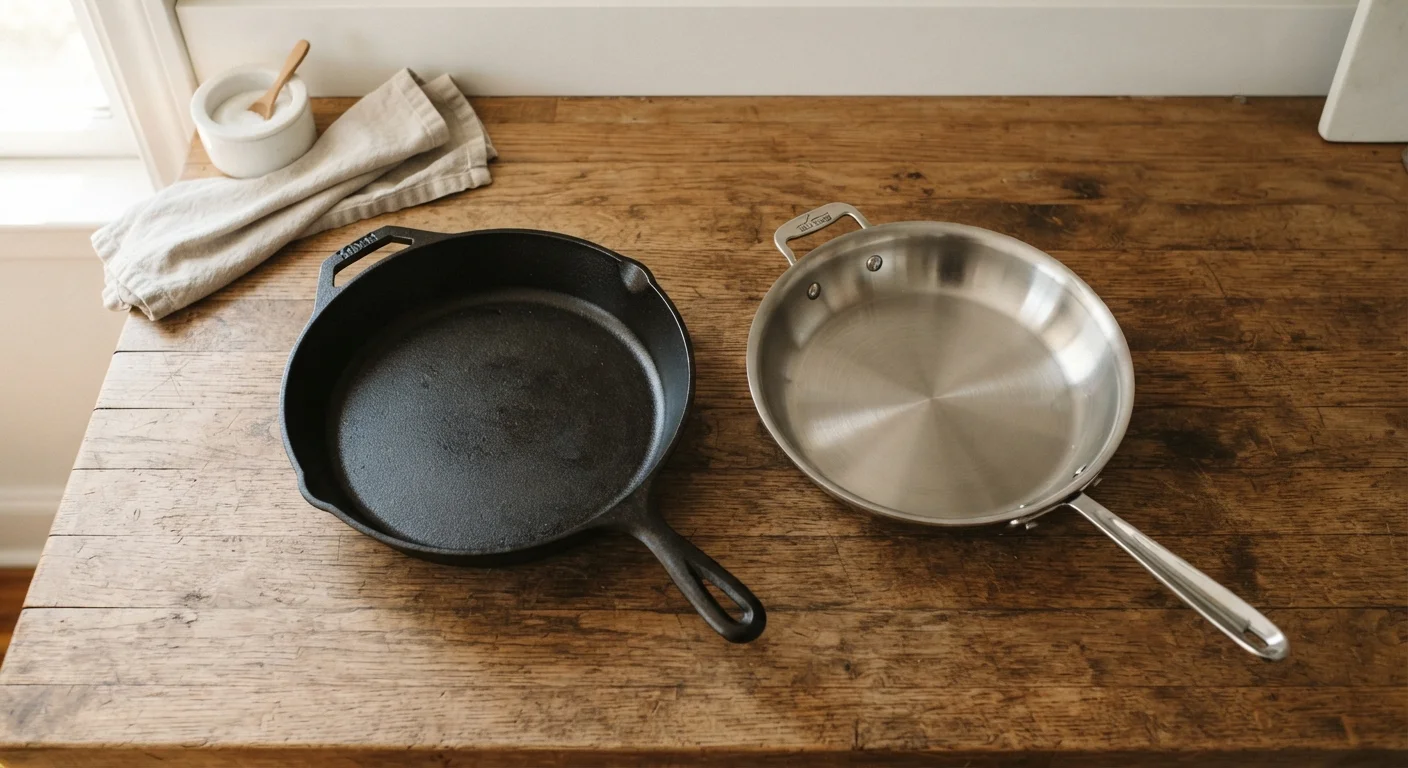
If you're moving a dish from stovetop to oven, make sure your pan is oven-safe - not all skillets are. Cast iron and stainless steel are both oven-safe to high temperatures, while non-stick pans often have lower heat limits. Check the manufacturer's guidance before putting any handle in a hot oven.
High-heat stovetop work - searing, stir-frying - also relies heavily on the right pan. Cast iron and stainless steel behave very differently at high temperatures, and your choice of pan can be just as important as your choice of heat source.
When the Oven Is the Right Choice
The oven is your tool when patience is more useful than attention. A whole roast chicken, a pan of root vegetables, or a casserole all benefit from being left alone in steady heat. Constant stirring or repositioning would actually work against you - the oven's job is to build an even internal temperature without disrupting the food's surface.
Baking is the clearest case: bread, cakes, and pastries depend on precise ambient temperature to trigger chemical reactions in sequence. No stovetop can replicate the surrounding heat that makes a biscuit rise or a pie crust set. Dry oven heat is also what produces the caramelized, concentrated flavor on roasted vegetables - moisture escapes, sugars deepen, and surfaces develop texture that steaming or boiling cannot match.
| Stovetop | Oven | Both Combined | |
|---|---|---|---|
| Heat type | Direct, concentrated | Ambient, surrounding | Surface then ambient |
| Best for | Sautéing, sauces, eggs | Roasting, baking, braising | Seared meats, braises |
| Cook time | Fast (minutes) | Slower (30 min+) | Variable by dish |
| Attention required | High - constant monitoring | Low - largely hands-off | High start, low finish |
| Temperature control | Immediate and reactive | Gradual and stable | Precise at each stage |
| Crust/browning ability | Excellent on contact surfaces | Good with dry heat/convection | Best overall results |
For thicker proteins like pork shoulder or leg of lamb, the oven's low, sustained heat allows collagen to break down slowly into gelatin - a process that produces tender, pull-apart texture. That result is chemically impossible at high stovetop heat, which would tighten proteins rather than break them down.
The Combination Approach: Why Many Dishes Need Both
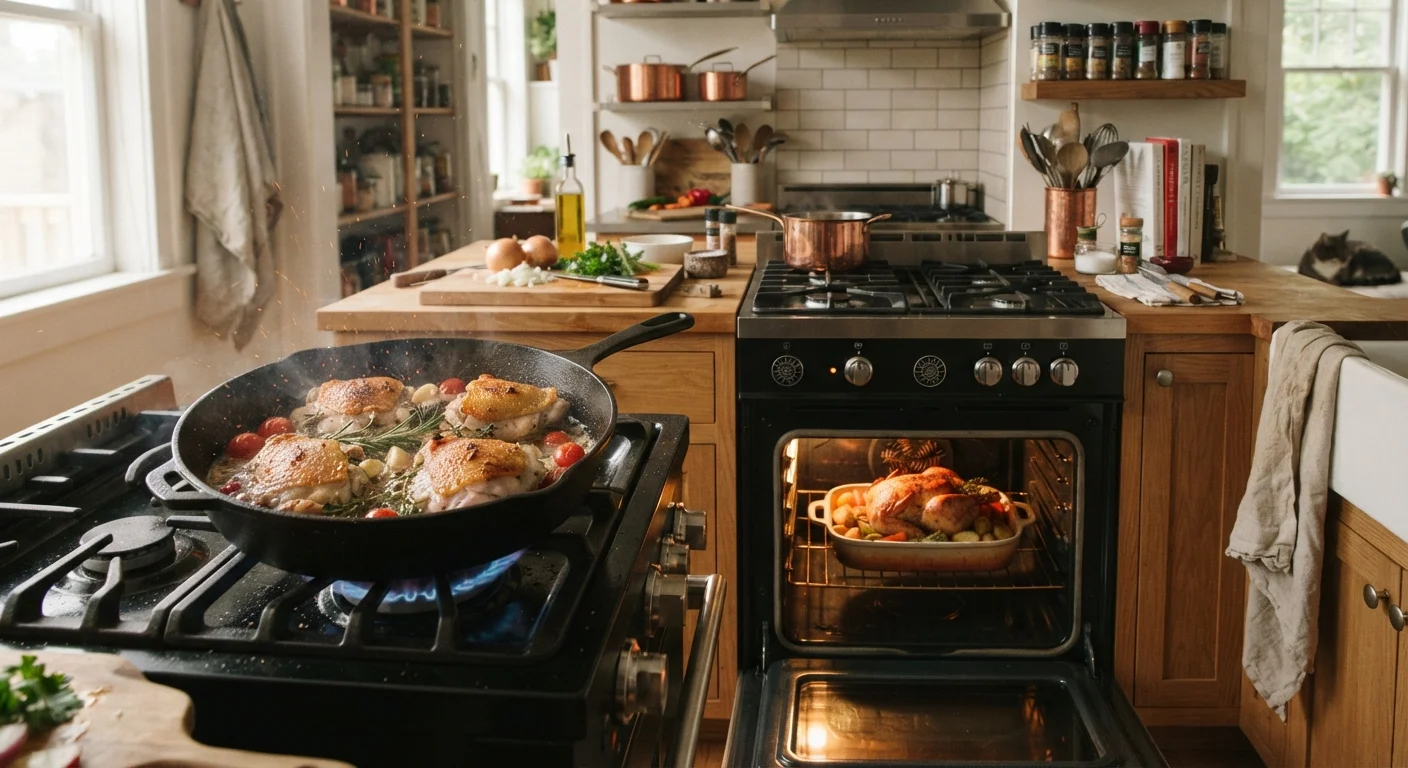
Some of the most reliable techniques in home cooking use the stovetop and oven in sequence. Searing a steak in a hot skillet on the stovetop builds a flavorful crust through the Maillard reaction - but finishing it in a moderate oven allows the interior to rise to temperature evenly without overcooking the exterior. Understanding what searing actually does helps clarify why stovetop heat alone isn't always sufficient for thicker cuts.
Braising follows the same logic. You start aromatics and brown the meat on the stovetop, where direct heat and visible color are essential cues. Then the pot goes into the oven, where even heat surrounds it completely and holds it at a consistent low temperature for hours - something a stovetop burner struggles to maintain without constant adjustment.
Before you commit to either method, running through a quick pre-cook checklist - including preheating your oven and selecting your pan - can prevent mid-recipe scrambles. And if you're building out your cooking skills more broadly, these techniques ranked by usefulness offer a practical roadmap for what to master next.