
Why Enamel Matters - and Why It's Vulnerable
Tooth enamel is the hardest substance in the human body, but it has one significant limitation: it cannot regenerate. Once enamel wears away through a process called dental erosion, the loss is permanent. That's what makes daily beverage habits worth understanding.
Erosion happens when acidic substances soften enamel's mineral structure. The key measure is pH - a scale from 0 to 14, where lower numbers are more acidic. Plain water sits at a neutral 7. Dental professionals generally consider beverages below pH 5.5 to have erosive potential, though duration and frequency of exposure matter as much as pH alone.
A Note on This Article's Scope
The information here covers general patterns in beverage acidity and widely cited enamel-protective behaviors. Individual factors - including saliva composition, existing enamel condition, and oral hygiene - affect personal risk in ways that vary significantly. Always consult a licensed dentist for guidance tailored to your specific situation.
This article is general educational information about beverages and dental health - it is not a substitute for advice from your dentist. If you have concerns about tooth sensitivity or enamel loss, consult a licensed dental professional.
The Acidity Spectrum: Common Drinks Compared
Not all drinks are created equal when it comes to enamel exposure. Here's how common beverages generally fall on the acidity scale:
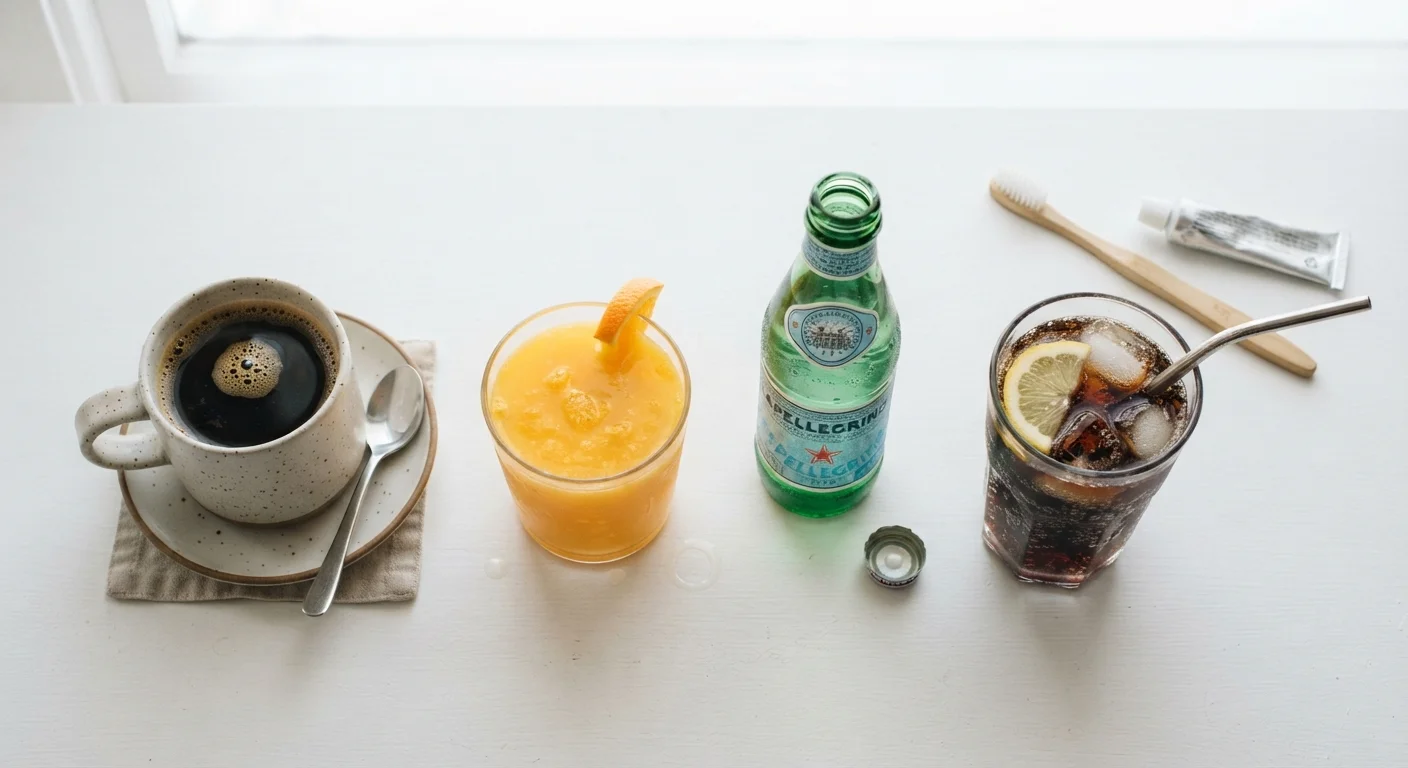
- Citrus juices (orange, lemon, grapefruit): typically pH 2-4, among the most acidic everyday drinks
- Sodas (regular and diet): generally pH 2.5-3.5; phosphoric and citric acids are common ingredients
- Sports and energy drinks: often pH 2.9-3.7, and consumed in prolonged sips during activity, extending contact time
- Coffee: typically pH 4.5-5.5, mildly acidic but less erosive than juice or soda
- Tea (unsweetened black or green): usually pH 4.9-6, among the gentler options - see our tea type guide for variety differences
- Sparkling water and seltzer: generally pH 4.5-5.5 when unflavored; flavored versions can be more acidic - learn how these fizzy drinks differ
Still plain water (pH ~7) remains the benchmark: it poses no measurable erosion risk.
pH 2.5-3.5
Typical pH range of cola-type sodas
Research published in dental and nutrition journals consistently identifies carbonated soft drinks as among the most erosive common beverages due to their phosphoric and citric acid content.
30-60 min
Recommended wait before brushing after acid exposure
Dental organizations including the American Dental Association have advised waiting at least 30 minutes after consuming acidic foods or drinks before brushing, to avoid abrading softened enamel.
Pros of Understanding Your Drink's Acidity
Knowing where your daily beverages land on the pH spectrum isn't about restriction - it's about making more confident, informed choices.
Empowers smarter daily beverage choices
When you understand that a morning glass of orange juice is significantly more acidic than black coffee, you can make conscious decisions about timing, quantity, and what you drink alongside it.
Simple habits can meaningfully reduce erosion risk
Rinsing with water, using a straw, and avoiding prolonged sipping are low-effort interventions that dental research consistently supports as effective protective measures.
Helps you spot higher-risk drinking patterns
Many people underestimate how much sports drinks or fruit juices contribute to enamel exposure, especially when consumed frequently during workouts or as meal replacements.
Supports better conversations with your dentist
Being aware of your beverage habits allows you to give your dental professional more useful information when discussing sensitivity, wear, or preventive care options.
Cons and Common Habits That Increase Risk
The harm from acidic drinks is rarely from a single glass. It's the accumulated effect of how, when, and how often you drink them that matters most.
Most erosive drinks are culturally ingrained
Coffee, soda, orange juice, and sports drinks are deeply embedded in daily American routines, making behavioral change genuinely difficult even when the risks are understood.
Enamel loss is silent and cumulative
There's no pain or immediate signal when erosion begins. By the time sensitivity or visible wear appears, meaningful enamel loss has already occurred - often over years.
Added sugars compound the risk
Many acidic drinks also contain sugar, which feeds oral bacteria that produce additional acids. The combination amplifies erosion and cavity risk beyond acidity alone.
Flavored sparkling waters can be misleading
Because sparkling water is perceived as a healthier alternative to soda, people may consume it in larger quantities without realizing that flavored versions can reach erosive pH levels.
Sipping habits often undermine protective intent
Switching to a lower-acid drink but nursing it slowly over an hour can produce greater enamel exposure than quickly finishing a more acidic beverage.
Practical Habits That Dental Professionals Recommend
You don't need to give up coffee or juice to protect your enamel. The strategies that matter most are behavioral:
- Rinse with water immediately after drinking acidic beverages. This dilutes residual acids before they can act on enamel.
- Wait 30-60 minutes before brushing after consuming acidic drinks. Enamel is temporarily softened after acid exposure; brushing too soon can accelerate wear.
- Use a straw for soda, juice, or sports drinks when practical. This reduces direct contact between the liquid and front tooth surfaces.
- Avoid sipping slowly over long periods. A glass of orange juice consumed in five minutes is less damaging than one nursed over an hour.
- Drink more plain water throughout the day. It helps neutralize oral acidity and supports saliva production, which naturally buffers acids.
For those who consume caffeinated drinks regularly, understanding caffeine levels across common beverages can help you evaluate the full picture of your drink choices.
This article provides general educational information about beverages and tooth enamel. It is not medical or dental advice. Please consult a qualified dental professional for guidance specific to your oral health.