
All True Teas Come from One Plant
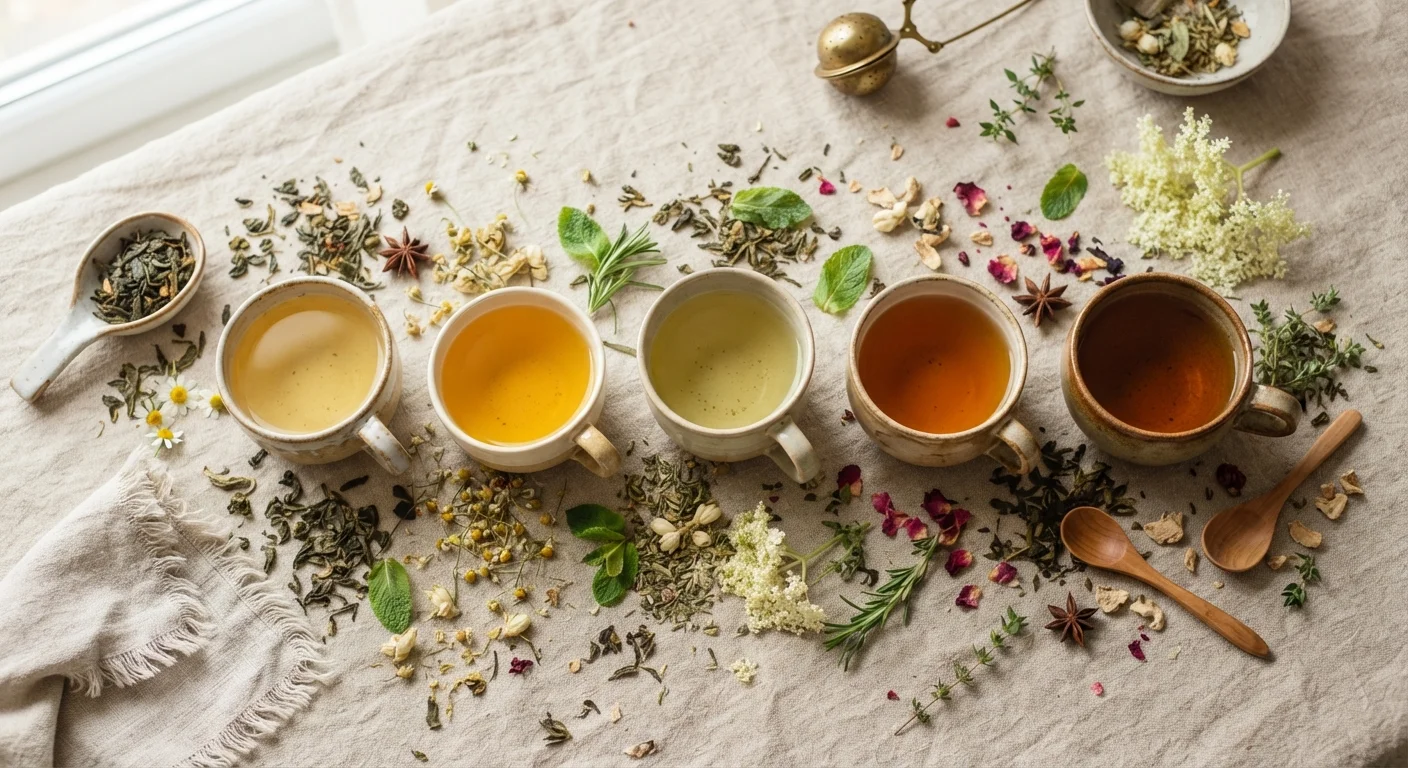
Despite the enormous variety on store shelves, every true tea - green, black, white, oolong, and pu-erh - comes from the leaves of a single plant: Camellia sinensis. What separates one type from another is how those leaves are processed after harvesting. Oxidation is the key variable: exposing the leaves to oxygen changes their color, aroma, and flavor in predictable ways. The less oxidation, the greener and grassier the cup; the more oxidation, the darker and more complex.
Herbal teas sit in a separate category entirely. Technically called tisanes, they contain no Camellia sinensis at all - they're infusions of dried flowers, roots, bark, seeds, or fruits. This distinction matters practically: herbal teas are naturally caffeine-free, while all true teas contain some caffeine. For a closer look at how caffeine levels compare across your daily drinks, see Caffeine in Common Drinks: What the Numbers Actually Mean.
| True tea plant | Camellia sinensis |
| Most oxidized true tea | Black tea (fully oxidized) |
| Least oxidized true tea | White tea (minimal processing) |
| Caffeine-free category | Herbal teas (tisanes) |
| Unique processing method | Pu-erh uses microbial fermentation |
| Oolong oxidation range | Approximately 15%-85% |
A Guide to Each Tea Type
Understanding each category makes it much easier to choose a tea that suits your mood, meal, or time of day.
White Tea
White tea undergoes minimal processing - young buds and leaves are simply dried, often in sunlight. The result is a delicate, lightly sweet cup with floral or honeydew notes. Because oxidation is almost entirely avoided, white tea retains a subtle, clean flavor that works well in the afternoon or alongside light foods.
Green Tea
After harvesting, green tea leaves are quickly heated - either steamed (the Japanese method, producing a grassy, vegetal flavor) or pan-fired (the Chinese method, yielding a nuttier, toasty character). No significant oxidation occurs. The flavor ranges from fresh and grassy to slightly sweet. Green tea is among the most widely studied teas for its antioxidant content, though readers should consult a healthcare professional before making any health-related decisions.
Oolong Tea
Oolong is partially oxidized, placing it in a broad middle ground between green and black. Oxidation levels range roughly from 15% to 85%, producing flavors that span from light and floral to rich and roasty. This variability makes oolong one of the most nuanced categories - worth exploring if you enjoy a complex cup.
Black Tea
Fully oxidized, black tea develops robust, malty, and sometimes astringent flavors. It holds up well with milk and sugar, making it the backbone of classic chai, English breakfast, and Southern-style iced tea. Black tea typically contains the most caffeine of all true teas, though still generally less than brewed coffee.
Pu-erh Tea
Pu-erh is fermented rather than simply oxidized, using microbial activity to age the leaves - sometimes for years or even decades. The resulting flavor is earthy, smooth, and often described as having a woody or mushroom-like depth. Pu-erh is most common in Chinese tea culture and is increasingly available in specialty shops in the US.
Herbal Teas (Tisanes)
Chamomile, peppermint, rooibos, hibiscus, ginger - these blends vary wildly in taste and are often consumed for comfort or relaxation. Because many herbal teas carry wellness claims, it's worth approaching those claims critically. Our article Herbal Tea and Wellness Claims: Separating Evidence from Hype breaks down what the research actually supports.
Oxidation
A chemical process that occurs when tea leaves are exposed to oxygen after harvesting. It darkens the leaves and deepens the flavor - the primary factor distinguishing tea types from one another.
Tisane
The correct term for an herbal infusion made without Camellia sinensis leaves. Chamomile, peppermint, and rooibos are common examples. Tisanes are naturally caffeine-free.
Steaming vs. Pan-firing
Two methods of halting oxidation in green tea. Steaming (common in Japan) preserves a grassy, vegetal flavor. Pan-firing (common in China) creates a nuttier, more toasted character.
Fermentation (Pu-erh)
Unlike oxidation, pu-erh fermentation involves microbial activity that breaks down leaf compounds over time. This process produces the tea's distinctive earthy, smooth flavor profile.
Astringency
A dry, mouth-puckering sensation caused by tannins in tea. Most pronounced in strongly brewed black teas and can be moderated by shorter steeping times or cooler water temperatures.
Brewing Tips That Apply Across All Types
Water temperature and steeping time have a bigger impact on your cup than most people realize. Using boiling water on a delicate green or white tea scorches the leaves and produces bitterness - a common reason people assume they dislike a tea they've simply brewed incorrectly.
- White tea: 160-180°F, 2-3 minutes
- Green tea: 160-180°F, 1-3 minutes
- Oolong tea: 185-205°F, 2-5 minutes
- Black tea: 200-212°F, 3-5 minutes
- Pu-erh tea: 200-212°F, 2-4 minutes
- Herbal tisanes: 200-212°F, 5-7 minutes
Loose-leaf tea generally allows more control over strength and flavor than bagged tea, though high-quality bagged options exist. If you enjoy the ritual of brewing and want to explore a parallel world of carefully processed beverages, Getting Started with Specialty Coffee Without the Overwhelm shows how similar principles apply to coffee.
Tea and Tooth Enamel: A Practical Note
Like coffee and other beverages, tea - especially black and green varieties - is mildly acidic and contains tannins that can stain teeth over time. This doesn't mean you need to avoid it, but rinsing with water after drinking and regular dental care can help. For a broader look at how everyday drinks interact with enamel, see Everyday Drinks and Tooth Enamel: What's Worth Knowing.