
Why Caffeine Amounts Vary So Dramatically
Most people know that coffee has more caffeine than soda - but the actual gap can be surprising. A standard 8-oz brewed coffee typically contains between 80 and 100 mg of caffeine, while a 12-oz can of cola lands closer to 34-45 mg. That's not just a modest difference; it's more than double, often in a smaller serving size.
Several factors drive these variations: the type of plant, how leaves or beans are processed, brewing method, water temperature, and steep time all play a role. Even within a single category like tea, caffeine can swing widely. Black tea averages around 40-70 mg per 8 oz, while white tea - made from younger leaves - often contains less, sometimes under 30 mg. For a deeper look at how tea types differ, see The Everyday Drinker's Map of Tea Types.
Roasting also matters for coffee in ways that aren't always intuitive. Contrary to popular belief, dark roast and light roast coffees have roughly similar caffeine levels by weight - though how you measure affects the outcome. What Roast Level Actually Does to Your Coffee covers this in detail.
| Caffeine in a shot of espresso | 60-75 mg per 1 oz (FDA general caffeine guidance) |
| Caffeine in brewed drip coffee | 80-100 mg per 8 oz (FDA general caffeine guidance) |
| Caffeine in cola soda | 34-45 mg per 12 oz (Commonly reported nutritional data) |
| Daily limit for healthy adults (general guidance) | Up to 400 mg (U.S. Food and Drug Administration) |
| Caffeine half-life in adults | Approx. 5-6 hours (General pharmacological reference) |
| Caffeine in decaf coffee | 2-15 mg per 8 oz (FDA and published nutritional studies) |
A Practical Caffeine Reference by Drink Type
The table below reflects commonly reported ranges from nutritional research and FDA data. Exact amounts vary by brand, preparation, and serving size - treat these as reliable ballpark figures rather than precise guarantees.
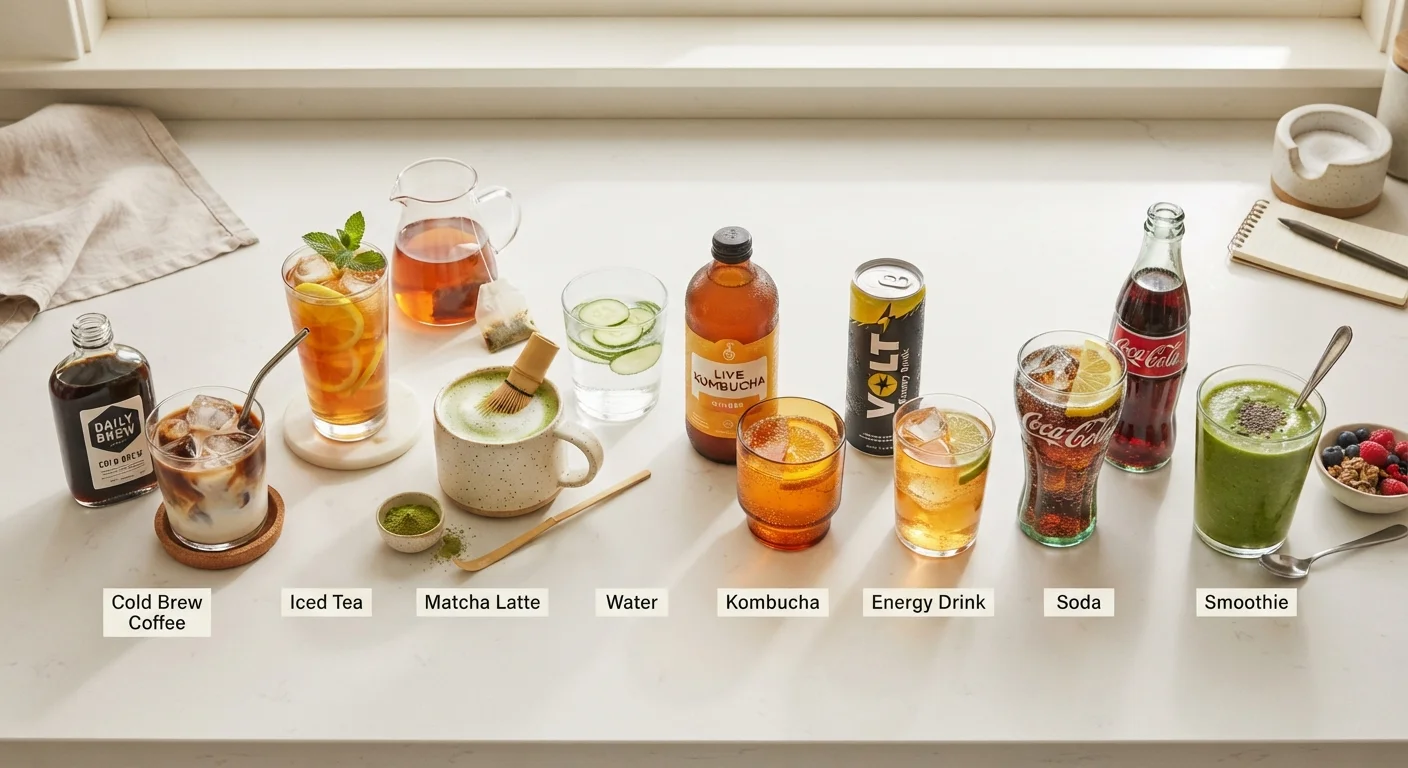
| Drink | Typical Serving | Approx. Caffeine |
|---|---|---|
| Brewed coffee | 8 oz | 80-100 mg |
| Espresso | 1 oz (single shot) | 60-75 mg |
| Cold brew | 8 oz | 100-200 mg |
| Black tea | 8 oz | 40-70 mg |
| Green tea | 8 oz | 20-45 mg |
| White tea | 8 oz | 15-30 mg |
| Matcha (prepared) | 8 oz | 60-80 mg |
| Cola soda | 12 oz | 34-45 mg |
| Energy drinks | 8-16 oz | 80-200 mg |
| Decaf coffee | 8 oz | 2-15 mg |
Notice that cold brew and many energy drinks overlap with - or exceed - a standard cup of drip coffee. That's easy to underestimate, especially when energy drinks are marketed in large cans. It's also worth remembering that many beverages contain added sugar alongside caffeine; understanding added sugar on labels can help you read the full picture.
Energy Drink Labels Can Be Misleading
Many energy drink cans list caffeine content per serving, but the container may hold two servings. Always check whether the listed amount reflects the full can or just a portion. Some large-format energy drinks contain 200 mg or more per can - equivalent to two strong cups of coffee.
Putting the Numbers in Context
The U.S. Food and Drug Administration has noted that up to 400 mg of caffeine per day is generally considered an amount not associated with dangerous negative effects for healthy adults. That said, individual responses to caffeine vary considerably based on body weight, genetics, medication interactions, and tolerance. This article provides general educational information - always consult a healthcare professional if you have questions about caffeine and your personal health.
A few practical takeaways worth noting:
- Serving size misleads: A 16-oz energy drink may list caffeine per 8-oz serving on its label, so double the number for what's actually in the can.
- Decaf isn't caffeine-free: Most decaffeinated coffees still contain 2-15 mg per cup - relevant for those with high sensitivity.
- Time of day matters: Caffeine has a half-life of roughly 5-6 hours in most adults, meaning an afternoon coffee can still affect sleep quality in the evening.
- Acidity is a separate concern: High-caffeine drinks like coffee and some sodas are also acidic. For more on that dimension, see Everyday Drinks and Tooth Enamel.
This article is for informational purposes only and is not medical advice. Speak with a qualified healthcare professional for guidance specific to your health needs.