
Why Cocktail Menus Feel Intimidating
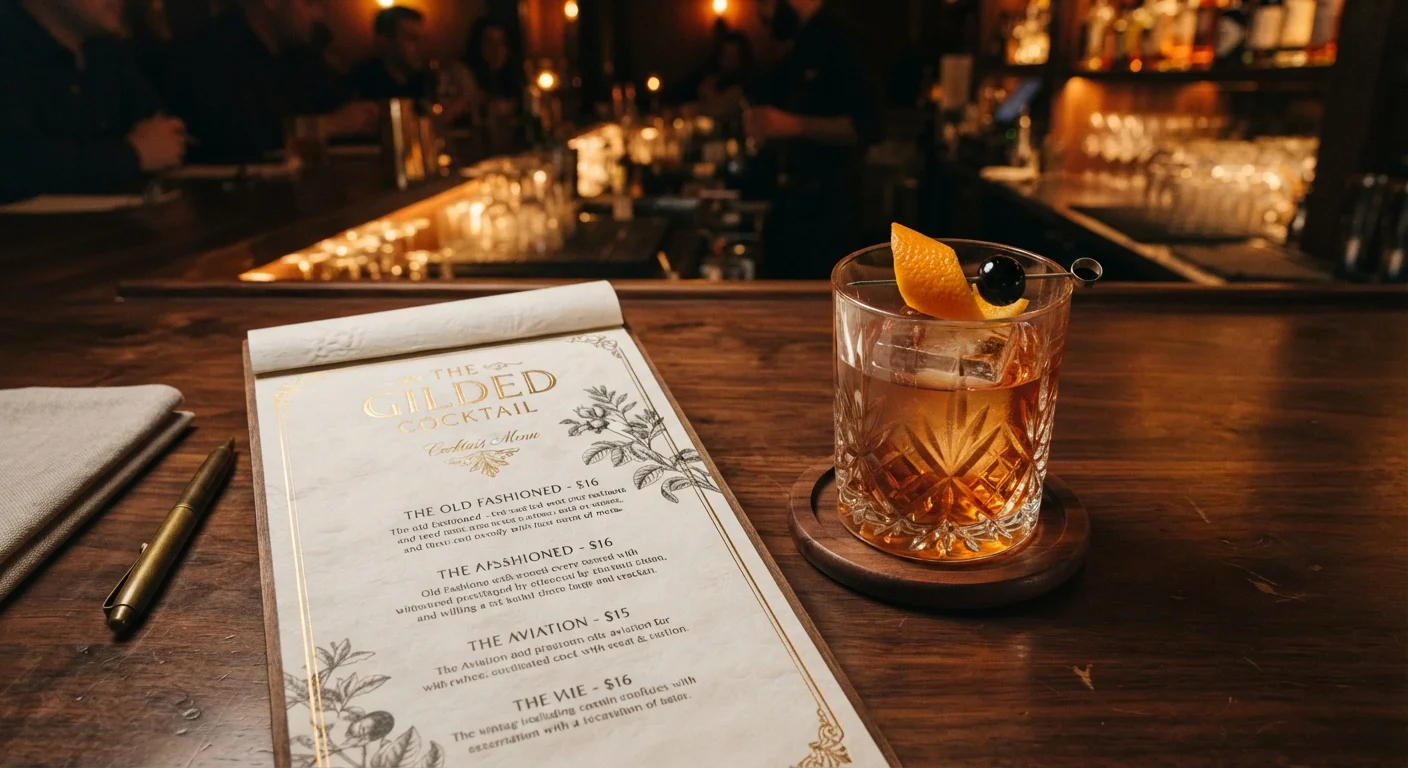
A cocktail menu can read like a foreign language - obscure spirits, unexplained modifiers, and tasting notes borrowed from wine criticism. Most people either default to the same drink they always order or point at something that sounds interesting and hope for the best. Neither approach is wrong, but understanding the structure behind a menu gives you a much more satisfying experience.
The good news: cocktail menus follow a predictable logic. Once you learn to spot the components - spirit base, modifier, balance, and garnish - any menu becomes easier to navigate. Think of it like reading a recipe before you start cooking - the structure is consistent, even when the ingredients change.
What you will need
The Anatomy of a Cocktail
Almost every cocktail on a menu is built from the same framework, regardless of how creative the name sounds.
Spirit base: This is the alcoholic foundation - whiskey, gin, rum, tequila, vodka, or brandy. It defines the drink's dominant character. If you know you enjoy the smoky depth of mezcal or the botanicals in gin, look for those as the base first. To understand how spirits differ fundamentally from beer and wine, see our article on how alcoholic drinks are made.
Modifier: This is what shapes and softens the spirit - liqueurs, vermouths, amari, or fruit juices. A modifier adds secondary flavor and bridges the spirit to the other ingredients.
Balance element: Acid (citrus juice), sweetness (simple syrup, honey), or bitterness (bitters, tonic) keeps the drink from tasting flat or one-dimensional. Tonic water and club soda, for example, play very different roles when used as a balance element in a cocktail.
Garnish: A lemon twist, herb sprig, or salted rim is rarely decorative only. Citrus oils expressed over a drink, or a smoked rosemary sprig, directly influence the aroma you smell before the first sip - and aroma is a large part of flavor perception.
Flavor Families Across Drinks
The same palate instincts that guide your food preferences apply directly to cocktails. If you enjoy bitter greens or dark chocolate, bitter-forward cocktails like Negroni-style builds will likely appeal. If you prefer bright, acidic flavors, citrus-driven shaken cocktails are a natural match. Trust what you already know about your own taste.
How to Read the Menu Step by Step
Identify the spirit base first
Scan each cocktail listing for the spirit listed first or most prominently. Menu writers almost always lead with the base. If you see "bourbon," "mezcal," or "aged rum," that tells you the dominant flavor direction immediately. Narrow the menu to drinks built on spirits you already know you enjoy before reading anything else.
Read the modifiers for flavor direction
Once you've identified the base, look at what sits beside it. Words like "Aperol," "elderflower liqueur," "dry vermouth," or "amaro" each carry distinct flavor signatures - bitter-orange, floral, dry-herbal, and bittersweet, respectively. If a modifier is unfamiliar, the tasting notes in the menu description ("bittersweet," "stone fruit," "herbaceous") will usually clarify it.
Check the preparation method
"Stirred" cocktails are silky and spirit-forward - the liquid is chilled with minimal dilution and no air introduced. "Shaken" cocktails are lighter in texture, slightly diluted, and often citrus-driven. "Built" means assembled directly in the glass, common for simpler highball-style drinks. The method signals texture and intensity before you take a sip.
Match the flavor profile to your preference
Use the menu's tasting notes as a shortcut. Words like "bright," "citrus," and "refreshing" point toward acid-forward drinks. "Rich," "velvety," and "warming" suggest sweetness and body. "Dry," "herbal," and "complex" indicate bitter or savory profiles. Map these descriptors against what you already know you enjoy in food and drink - your palate is consistent across both.
Note any classic cocktail family references
Many craft cocktails are riffs on classics: a Sour (spirit + citrus + sweetener), a Negroni-style (spirit + bitter liqueur + vermouth), a Collins (spirit + citrus + soda), or a Daisy. If the menu names a drink as "our take on a Sour" or lists similar structural ingredients, you can predict the flavor territory accurately even if the specific ingredients are unfamiliar.
When You're Still Not Sure - Ask
Even experienced drinkers ask bartenders questions. A good bartender expects it. The most useful question you can ask isn't "what's good?" - it's more specific: "I enjoy drinks that are - which of these would fit that?" That single framing gives the bartender enough to work with.
If you're curious about flavor-building logic more broadly, the same principles that make a cocktail balanced - layering fat, acid, and contrast - also apply to food. Our guide on building flavor without a recipe explores those principles in a kitchen context.
Alcohol Content Varies Widely
A cocktail's complexity doesn't correlate directly with its alcohol content. Some visually simple drinks are highly spirit-forward, while elaborate-sounding builds may be lower in ABV due to heavy dilution or liqueur ratios. If alcohol content is a concern for you, it's always appropriate to ask the bartender before ordering.