

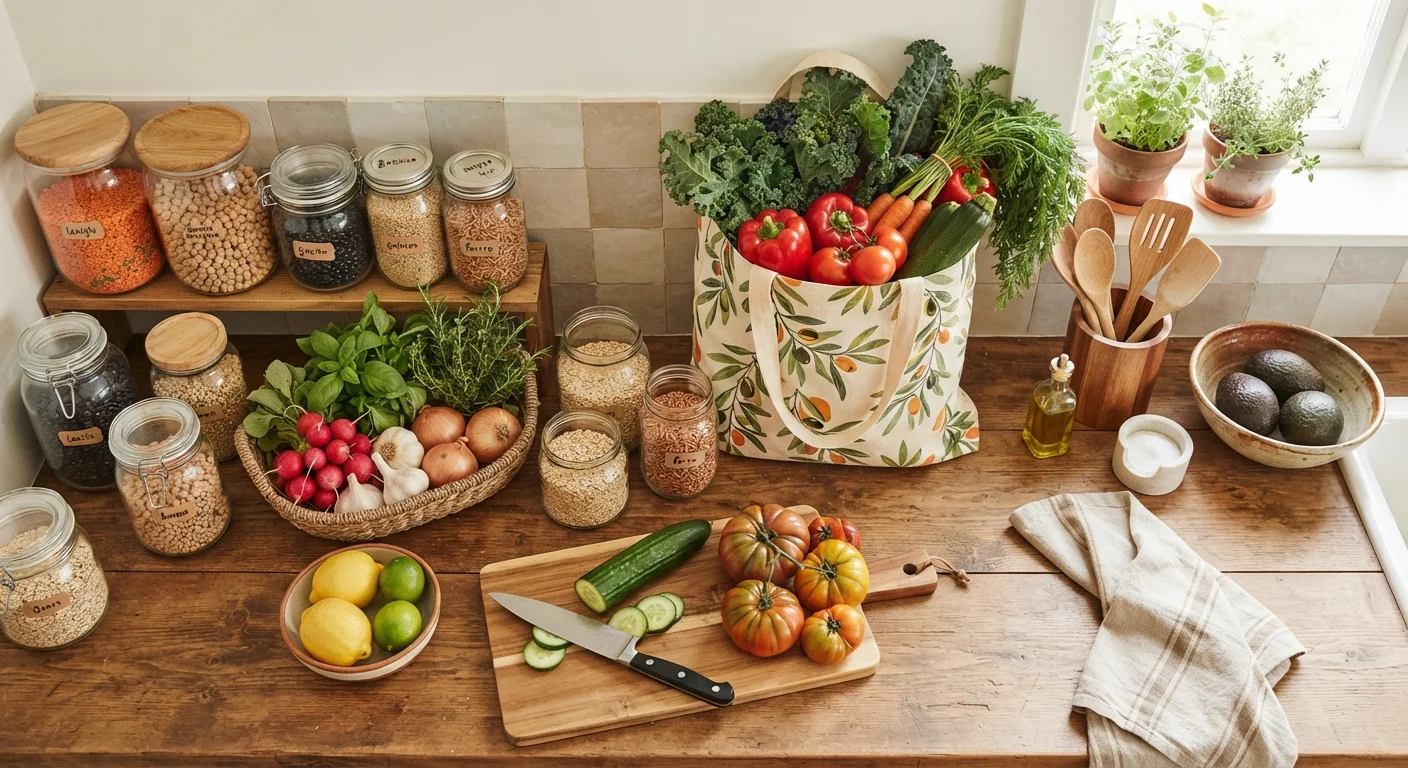
Why Budget and Nutrition Don't Have to Conflict
The idea that eating healthily requires spending more is one of the most persistent myths in food culture. In reality, some of the most nutritionally complete foods - dried beans, whole grains, eggs, seasonal vegetables - are also among the most affordable items in any grocery store.
The gap between perception and reality often comes down to planning. Without a system, it's easy to overspend on convenience, waste produce that doesn't get used, or fall back on takeout when the fridge looks bare. With a few consistent habits, the same grocery budget can reliably support nutritious, satisfying meals throughout the week.
If you're new to thinking about nutrition more broadly, our practical starting point for healthier eating lays out what a balanced diet actually looks like before you start adjusting your spending.
“The most sustainable healthy eating pattern is one you can actually afford to maintain. Nutrient-dense doesn't have to mean expensive - whole grains, legumes, and vegetables form the foundation of diets associated with long-term health outcomes across the world.”
— Marion Nestle, Professor Emerita of Nutrition, Food Studies, and Public Health at New York University
Core Practices for Nutritious, Affordable Eating
The following practices are built around the foods and habits that consistently deliver the most nutritional value per dollar spent. They work across different household sizes, cooking skill levels, and dietary preferences.
Anchor your grocery list around dried or canned legumes as your primary protein source.
Legumes - lentils, chickpeas, black beans, kidney beans - are among the most nutrient-dense foods per dollar available. They deliver protein, fiber, iron, and complex carbohydrates in a single, shelf-stable package.
Plan your weekly meals around store sale cycles and seasonal produce rather than fixed recipes.
Rigid recipe-first planning often leads to buying small quantities of expensive specialty items. Reversing the process - starting with what's discounted or in season - naturally reduces costs while increasing variety.
Stock a rotating pantry of whole grains, healthy fats, and aromatics that work across many dishes.
A strong pantry eliminates the need to shop daily and prevents expensive last-minute takeout decisions. Core staples provide the base for dozens of meals without requiring restocking every week.
Shift at least half your weekly meals toward plant-based proteins.
Meat and seafood are consistently the highest per-meal cost in most grocery carts. Replacing several meals per week with eggs, tofu, legumes, or dairy-based proteins maintains nutritional completeness while meaningfully reducing spending.
Buy frozen fruits and vegetables in bulk as a nutritional safety net.
Frozen produce is picked at peak ripeness and retains most key nutrients, making it a reliable substitute when fresh options are expensive or unavailable. Bulk frozen bags are almost always cheaper per serving than fresh equivalents.
Cook in larger batches and repurpose leftovers intentionally.
Batch cooking reduces both time and per-meal cost by maximizing the yield from a single cooking session. Intentional repurposing - rather than eating the same meal twice - keeps variety high without added effort.
For a closer look at navigating the grocery store with both nutrition and budget in mind, grocery shopping with nutrition in mind offers a practical aisle-by-aisle approach.
Frozen and Canned Produce Count
Frozen vegetables are typically harvested and flash-frozen at peak ripeness, locking in most of their nutrients. Canned beans and tomatoes are similarly nutritious and shelf-stable. Look for canned options with no added salt or rinse them before use to reduce sodium content.
Start Here: Quick Actions for This Week
Overhauling a food routine all at once rarely works. The practices above are most effective when introduced gradually - starting with one or two changes that fit your current schedule and preferences. These quick wins are designed to create immediate, noticeable impact without requiring a complete kitchen overhaul.
For a deeper look at building balanced meals without getting caught up in calorie tracking, the everyday plate guide offers a useful visual framework. And if you want to understand which affordable pantry foods also help close common nutritional gaps - fiber in particular - fiber: the nutrient most Americans under-eat is worth a read.
This article is for general informational and educational purposes only. It does not constitute medical, nutritional, or financial advice. For guidance specific to your health conditions or dietary needs, consult a qualified healthcare professional or registered dietitian.