
Why the Plate Method Works Better Than Calorie Math
Calorie counting can be a useful tool in specific clinical settings, but for most people eating day-to-day, it creates more friction than benefit. Mentally tallying every bite is time-consuming, imprecise, and - for many - a source of unnecessary anxiety around food. A simpler framework exists, and it's backed by mainstream nutrition guidance: the plate method.
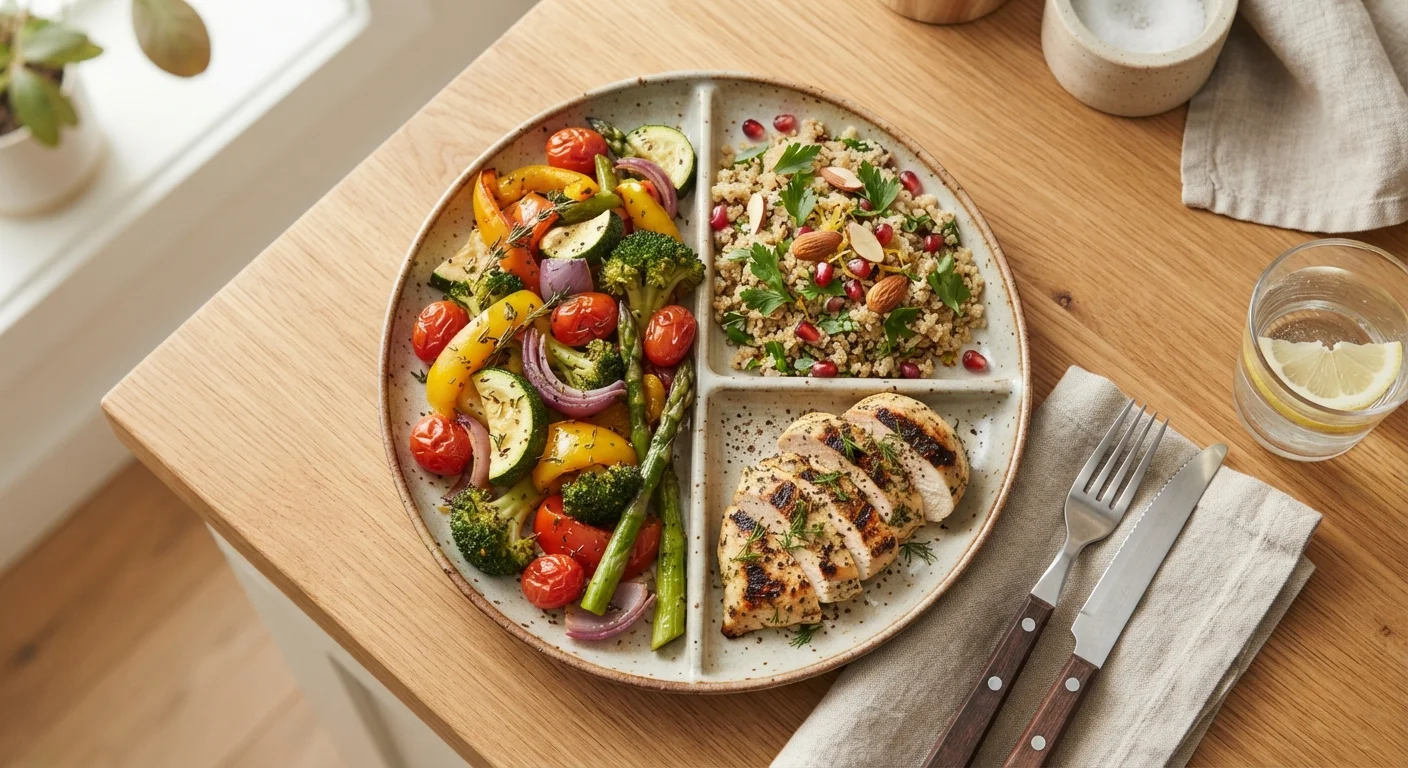
The plate method uses visual proportions on a standard dinner plate (roughly 9 inches in diameter) as your guide. No app required. It reflects the same food group balance promoted in the USDA's MyPlate framework and widely recommended by registered dietitians. The goal isn't perfection at every meal - it's a reasonable, repeatable pattern that adds up over time.
If you're new to thinking about nutrition from the ground up, see Your First Steps Toward Healthier Eating for a plain-language primer on the basics before diving in here.
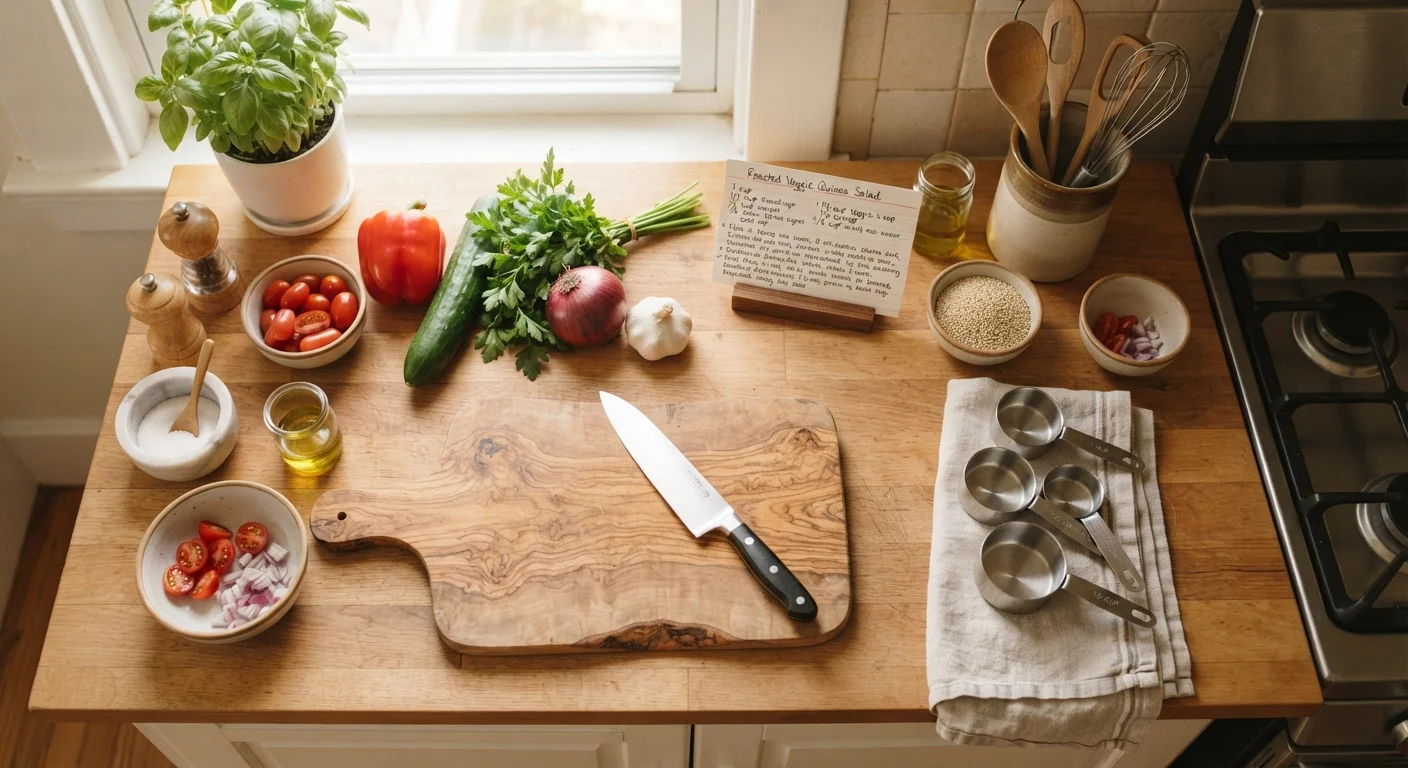
What you will need
How to Build Your Balanced Plate, Step by Step
The steps below apply to lunch and dinner. Breakfast can follow a looser version of the same logic - swap the grain-heavy half for oats or whole-grain toast, and the protein section for eggs, Greek yogurt, or legumes.
Fill half your plate with non-starchy vegetables (and some fruit)
This is the foundation. Aim for half your plate to be vegetables - leafy greens, roasted broccoli, sliced peppers, cucumber, tomatoes, carrots, or whatever is on hand. At lunch, raw vegetables or a simple salad work well. A small portion of whole fruit can count toward this half if you prefer it alongside a meal.
The key is variety over perfection. You don't need five different vegetables at every meal - two or three rotating types across the week is enough to broaden your nutrient intake meaningfully.
Reserve one quarter for a protein source
One quarter of your plate should hold a protein: chicken, fish, eggs, tofu, beans, lentils, cottage cheese, or lean meat. Protein supports satiety and provides amino acids your body uses for muscle maintenance and other functions.
A serving roughly the size and thickness of your palm is a practical visual guide - no weighing needed. Rotating between animal and plant-based proteins over the course of the week adds nutritional variety and aligns with patterns linked to long-term health. See how plant-based and omnivore diets compare for a balanced look at the evidence.
Fill the remaining quarter with a fiber-rich carbohydrate
The last quarter of your plate goes to a carbohydrate that provides lasting energy: brown rice, quinoa, whole-grain bread, barley, sweet potato, corn, or regular potato with the skin on. Whole or minimally processed grains and starchy vegetables retain more fiber and micronutrients than their refined counterparts.
If you're building a meal around legumes as your protein, this quarter can be smaller - legumes already contribute significant carbohydrates and fiber.
Add a small amount of healthy fat
Fat is not a food group that gets its own plate section, but it plays an important role in absorbing fat-soluble vitamins (A, D, E, and K) found in vegetables, and in keeping meals satisfying. A modest addition - a drizzle of olive oil, a few slices of avocado, a small handful of nuts or seeds, or a dressing made with a plant-based oil - is all that's needed.
The emphasis is on unsaturated fats (from plants and fish) as the primary fat source, used in reasonable amounts.
Eat slowly and check in with hunger cues
Once the plate is assembled, how you eat matters as much as what's on it. Eating slowly - putting down your fork between bites, chewing thoroughly, limiting distractions - gives your body time to register fullness, which takes roughly 15-20 minutes after eating begins according to general physiology. This doesn't mean you must eat in silence, just that a slower pace tends to result in more accurate portion calibration without conscious effort.
If you're still genuinely hungry after finishing a balanced plate, adding more vegetables or a small additional protein portion is a reasonable response. If you're consistently overfull, the plate proportions may need slight adjustment.
Adapt the Plate for Mixed Dishes
Not every meal comes as separate components on a plate. For soups, stews, stir-fries, or grain bowls, apply the same proportions mentally: roughly half the volume from vegetables, a quarter from protein, a quarter from grains or starchy vegetables. It works just as well for composed dishes as for separate sides.
Common Pitfalls and How to Avoid Them
Even with a straightforward framework, a few habits can quietly undermine a balanced plate.
- Oversized plates: A 12-inch plate makes the same portions look small, which often leads to overfilling. Using a standard 9-inch dinner plate is a practical anchor. For more on how our sense of normal serving sizes has shifted, see Understanding Portion Distortion.
- Low vegetable variety: Eating the same one or two vegetables repeatedly limits the range of nutrients you get. Rotating colors and types widens that range - What 'Eating the Rainbow' Actually Means explains why plant pigments matter nutritionally.
- Forgetting drinks: Sweetened beverages can add significant sugar alongside a meal that otherwise looks balanced. Water, unsweetened tea, or sparkling water are neutral choices that don't disrupt the plate's balance.
- Treating it as all-or-nothing: One unbalanced meal doesn't unravel good habits. The plate method is a pattern, not a rule that resets every time you eat pizza.
This Is General Nutrition Guidance
The plate method is a general framework for everyday healthy eating - it is not medical advice and is not tailored to individual health conditions. People managing diabetes, kidney disease, food allergies, or other conditions that affect dietary needs should work with a registered dietitian or physician to adapt any eating framework to their specific situation.
If cost is a barrier to building variety into your plate, Healthy Eating on a Budget offers practical strategies for eating nutritiously without overspending.