

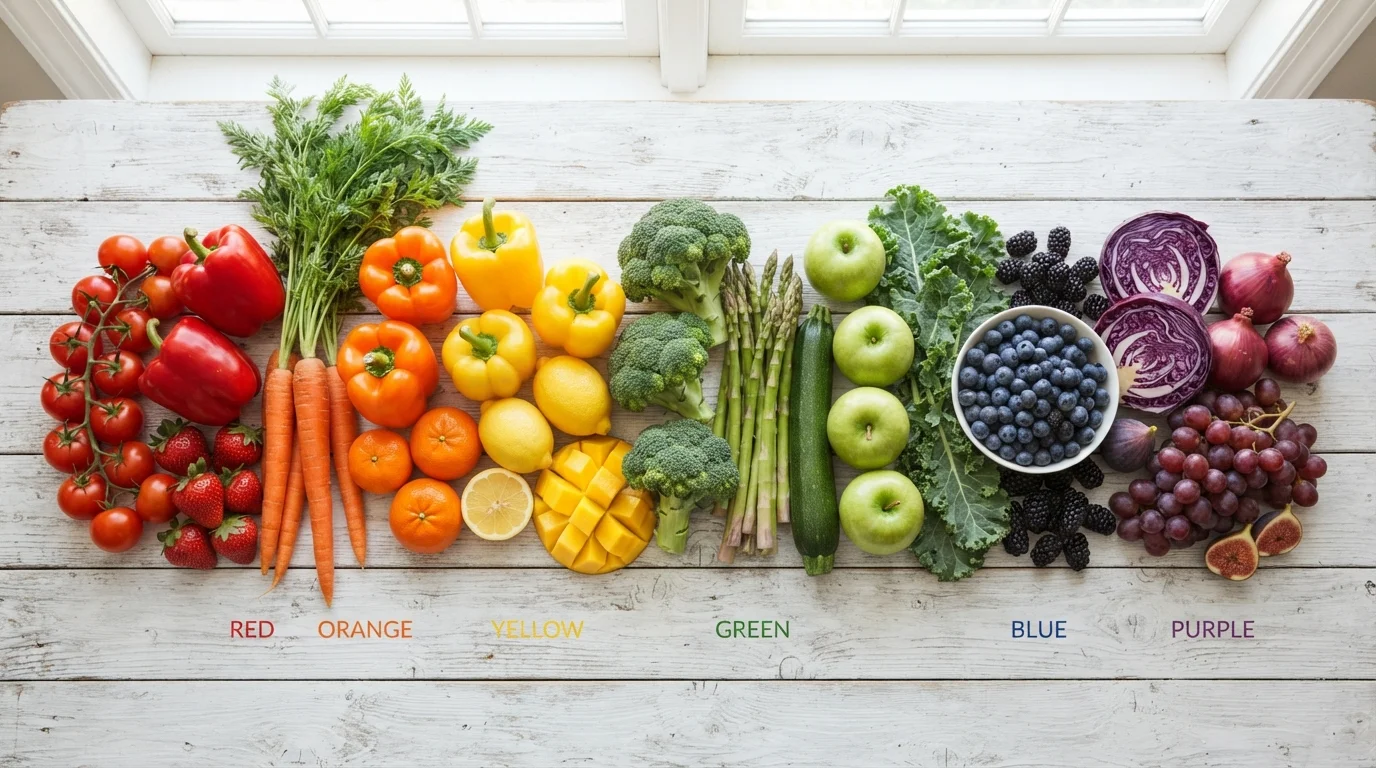
The Science Behind Plant Color
When you see a deep red tomato or a bunch of purple grapes, you're looking at chemistry in action. Plants produce pigments primarily to attract pollinators, deter pests, and protect themselves from UV damage. For humans, these same compounds - broadly called phytonutrients (or phytochemicals) - interact with our biology in ways that researchers have linked to reduced inflammation, improved cellular function, and lower risk of certain chronic diseases.
The main color categories and their associated compounds include:
- Red: Lycopene and anthocyanins (tomatoes, red peppers, watermelon, strawberries)
- Orange & Yellow: Beta-carotene and other carotenoids (carrots, sweet potatoes, mangoes, yellow squash)
- Green: Chlorophyll, lutein, folate, and glucosinolates (spinach, broccoli, kale, peas)
- Blue & Purple: Anthocyanins and resveratrol (blueberries, eggplant, purple cabbage, beets)
- White & Tan: Allicin, quercetin, and beta-glucans (garlic, onions, cauliflower, mushrooms)
These aren't interchangeable. Each compound behaves differently in the body, which is why no single fruit or vegetable - however nutritious - can cover all the bases on its own.
Cooking Can Change - But Doesn't Eliminate - Phytonutrients
Some compounds, like lycopene in tomatoes, actually become more bioavailable when cooked. Others, like certain vitamins in leafy greens, are partially reduced by heat. The practical takeaway: a mix of raw and cooked produce across the week captures the broadest range of benefits. Don't stress about always eating vegetables raw.
Why Variety Matters More Than Any One 'Superfood'
The term "superfood" is popular in marketing but has no formal scientific or regulatory definition. What nutrition research does support is the value of dietary diversity - eating a wide range of whole plant foods rather than loading up on one perceived nutritional hero.
Think of phytonutrients as a team rather than individual players. Lutein and zeaxanthin in leafy greens support eye health. Lycopene in cooked tomatoes has been studied for its role in cardiovascular health. Anthocyanins in berries are associated with cognitive function in observational research. These compounds also interact with each other and with vitamins, minerals, and fiber in ways that isolated supplements typically can't replicate.
Eating a varied, colorful diet also naturally increases fiber intake, which supports digestive health, blood sugar regulation, and satiety. For a broader look at how color variety fits into a full plate, see how to build a balanced meal without counting calories.
“The evidence points clearly toward plant food diversity - not any single ingredient - as a key driver of diet quality. When you eat a variety of colorful produce, you're covering nutritional ground that no supplement or superfood can replicate on its own.”
— Walter Willett, Professor of Epidemiology and Nutrition, Harvard T.H. Chan School of Public Health
Practical Ways to Add More Color
Eating the rainbow doesn't require exotic ingredients or a complete kitchen overhaul. Small, consistent swaps can significantly widen your color range over time.
Start With One Color You're Missing
Rather than overhauling your diet at once, identify one color group you rarely eat and add just one food from that category this week. Small, specific changes build lasting habits more effectively than sweeping overhauls. Over a month, these incremental additions can meaningfully broaden your phytonutrient range.
Some straightforward strategies:
- Build by color at the grocery store. Before checking out, scan your cart for color gaps. If everything is green, add one orange or red item.
- Use frozen produce freely. Frozen vegetables and fruit are harvested at peak ripeness and retain most of their phytonutrient content - a convenient, often more affordable option.
- Make color a visual cue. A plate that looks monotone (all beige or all green) is a signal to diversify, not necessarily eat more.
- Rotate your staples. If you eat spinach every week, swap it for purple cabbage or Swiss chard occasionally to shift your phytonutrient profile.
- Treat white produce as part of the spectrum. Garlic, onions, and cauliflower are often forgotten in the rainbow conversation but carry distinct beneficial compounds.
It also helps to understand what your food choices actually contain. Reading nutrition labels can help you see where packaged foods fit alongside fresh produce in your overall diet.
Common Misconceptions Worth Clearing Up
A few myths tend to follow the "eat the rainbow" concept:
- Myth: More color always means more nutrition.
- Color indicates the type of phytonutrients, not necessarily the quantity. A pale-green iceberg lettuce has less nutritional density than darker romaine - but white cauliflower is nutritionally rich despite its lack of pigment.
- Myth: You need to eat every color every single day.
- Nutritional variety is best assessed over days and weeks, not each individual meal. A steady pattern of diverse choices matters more than any one day's plate.
- Myth: Juicing is the most efficient way to get the rainbow.
- Juicing removes most of the fiber from produce and can concentrate natural sugars. Whole fruits and vegetables deliver the same phytonutrients along with fiber, which is an important part of the picture.
For more on how popular nutrition ideas hold up under scrutiny, common nutrition myths are worth reviewing.
9+
Servings of produce recommended weekly per color group
The USDA Dietary Guidelines recommend Americans consume a variety of vegetables from all subgroups - dark green, red and orange, legumes, starchy, and other - across the week.
~1 in 10
US adults meeting daily fruit and vegetable intake recommendations
CDC surveillance data has consistently found that only about 1 in 10 American adults consume the recommended amounts of fruits and vegetables daily.
This article is for general informational and educational purposes only and is not a substitute for advice from a registered dietitian or qualified healthcare provider.