
Why Some Upgrades Actually Move the Needle
Homeowners are often told that nearly any improvement will lower their energy bills. In practice, results vary dramatically depending on which upgrade is chosen, how well it's installed, and how the home is actually used. Some changes deliver consistent, measurable reductions in utility costs. Others look promising on paper but barely register on your bill.
The upgrades below are grounded in documented performance data from sources like the U.S. Department of Energy and ENERGY STAR. They're ranked not by cost, but by their demonstrated ability to reduce energy consumption in typical American homes. If you're also thinking about which upgrades translate into resale value, it's worth reviewing renovations that rarely recoup their cost at resale - energy efficiency and resale value don't always align.
Air Sealing Throughout the Building Envelope
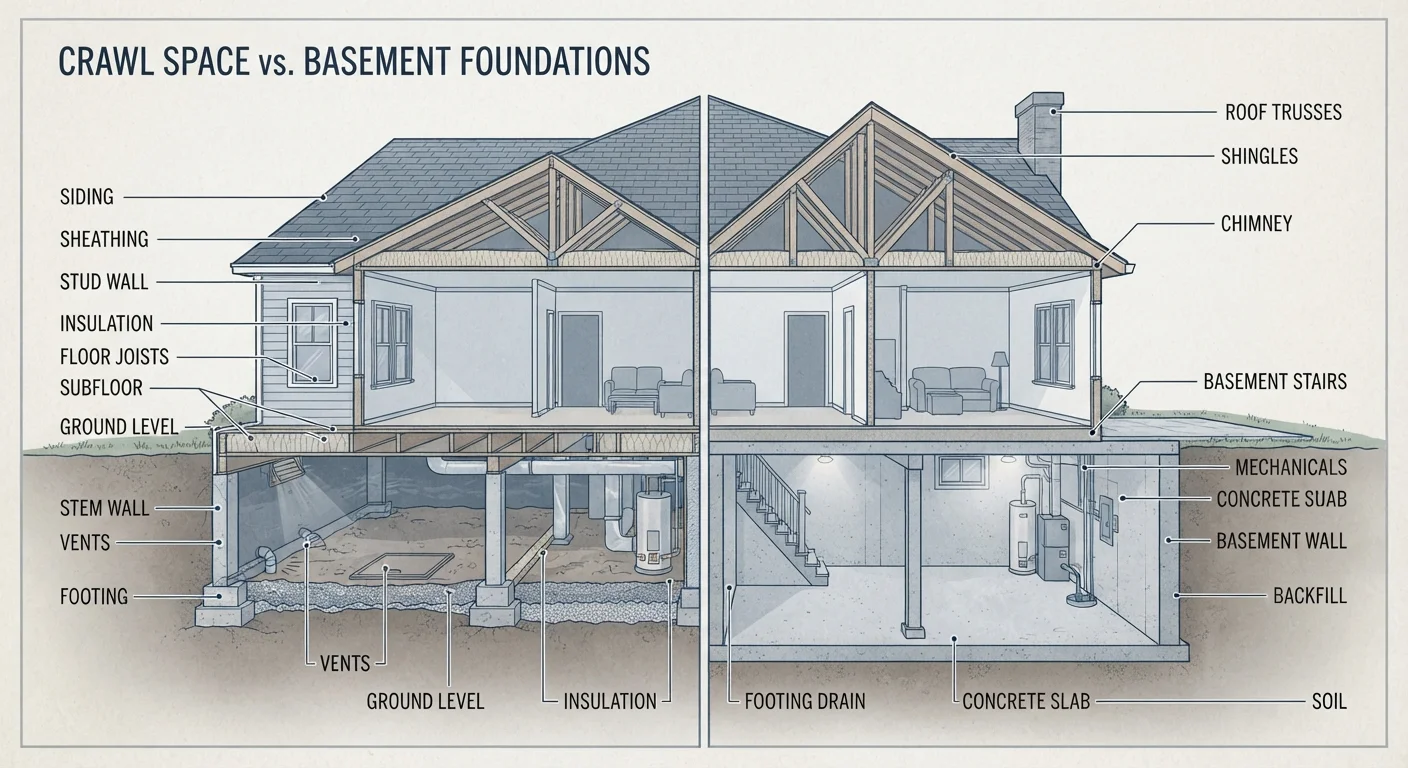
Gaps and cracks in a home's envelope - where walls meet floors, around electrical outlets, at penetrations for pipes and wires - allow conditioned air to escape continuously. The U.S. Department of Energy estimates that sealing air leaks and adding insulation can reduce heating and cooling costs by up to 15%. Unlike equipment upgrades, air sealing is relatively low-cost and often DIY-friendly in accessible areas.
Common sealing materials include caulk for stationary gaps and expanding foam or weatherstripping for moving components like doors. Areas around attic hatches, recessed lighting, and plumbing chases deserve particular attention - they're frequently overlooked but can be significant sources of leakage.
Sealing air leaks is one of the lowest-cost, highest-impact steps any homeowner can take.
Attic Insulation to Recommended R-Values
Heat rises, and in under-insulated homes, significant amounts escape through the attic in winter - or enter through it in summer. The recommended R-value for attic insulation varies by climate zone, but many existing homes fall well short of current guidelines. Adding blown-in or batt insulation to bring attic levels up to code-recommended minimums typically yields one of the fastest payback periods of any home upgrade.
According to ENERGY STAR, properly insulating and air sealing the attic can save homeowners an average of 15% on heating and cooling costs. Before adding insulation, any existing air leaks in the attic floor should be sealed - insulation alone won't compensate for bypasses around light fixtures or framing gaps.
Bringing attic insulation to recommended R-values is among the fastest-payback upgrades available.
Heat Pump Water Heaters
Conventional electric resistance water heaters convert electricity directly to heat at roughly 1:1 efficiency. Heat pump water heaters work differently: they move heat from the surrounding air into the water, making them two to three times more energy efficient than standard electric models. The U.S. Department of Energy has cited heat pump water heaters as one of the most significant electricity-saving appliances available for residential use.
They perform best in unconditioned or semi-conditioned spaces like garages or basements where there's adequate ambient air volume. Installation cost is higher than a standard unit, but the operating savings - particularly for households with high hot water demand - can substantially offset that difference over time. Check whether federal tax credits or utility rebates apply in your area, as incentive programs have made these units more accessible in recent years.
Heat pump water heaters can be two to three times more efficient than standard electric models.
Smart Thermostats Used Consistently
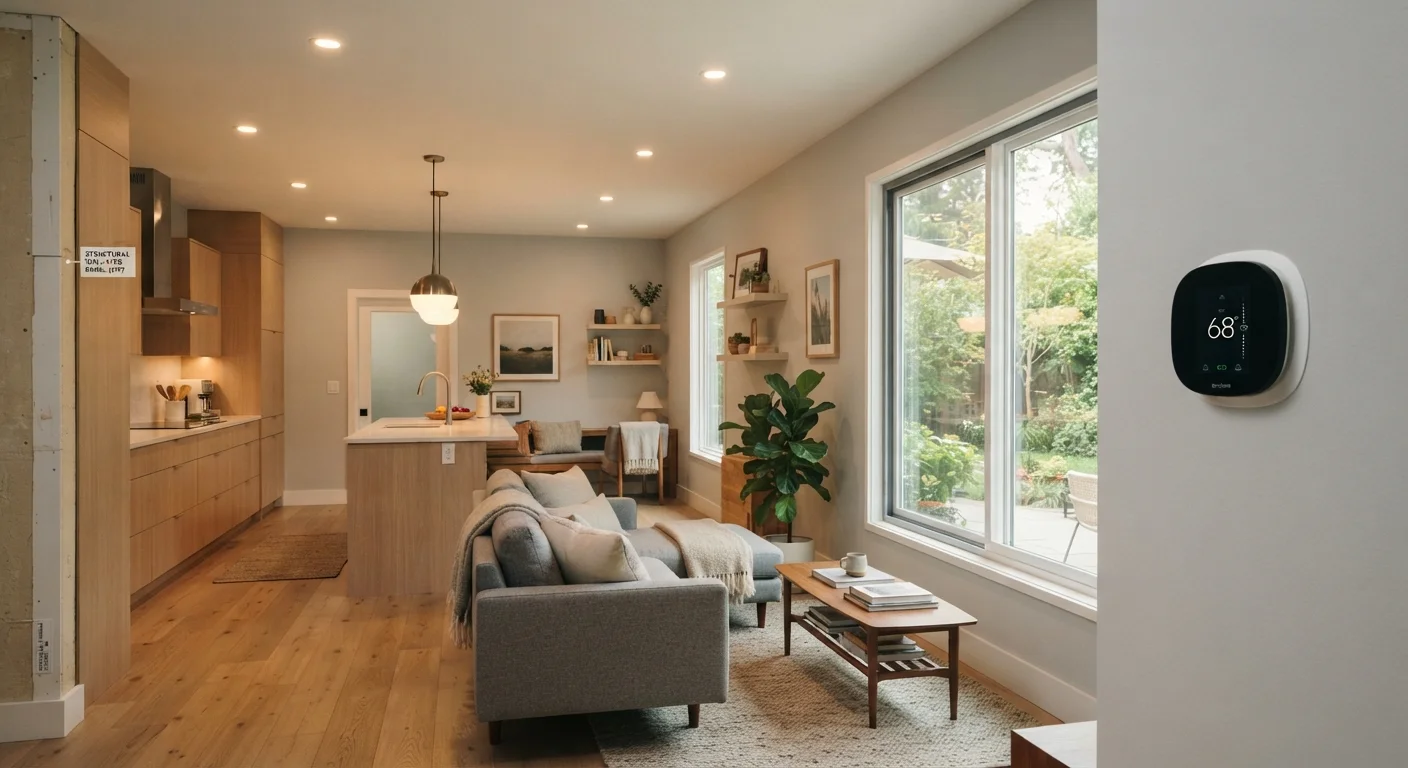
A smart thermostat only saves energy if it's programmed and used as intended. When set up with meaningful temperature setbacks - lower heat or higher cooling targets during sleeping hours or away periods - these devices can trim heating and cooling costs noticeably. ENERGY STAR-certified smart thermostats have been shown to save an average of about 8% on heating and cooling bills in independent studies.
The key is consistent use. A thermostat that's manually overridden frequently or left on a flat schedule provides little advantage over a basic programmable model. Taking time during installation to configure schedules that reflect your household's actual patterns is where the savings originate.
Smart thermostats only deliver savings when programmed to reflect your household's real schedule.
LED Lighting Replacing Incandescent Bulbs
LED bulbs use roughly 75% less energy than traditional incandescent bulbs and last significantly longer. While individual bulb savings are modest, whole-home conversion - especially in high-use fixtures - adds up meaningfully over a year. Lighting accounts for roughly 15% of an average home's electricity use, according to the U.S. Energy Information Administration.
LEDs have also improved considerably in color rendering and dimming performance, making them suitable for nearly every fixture type. The upfront cost per bulb is higher than incandescent, but the combination of lower energy use and reduced replacement frequency makes them economically straightforward over time.
LED bulbs use about 75% less energy than incandescent equivalents and last far longer.
High-Efficiency HVAC When Replacement Is Due
Upgrading to a high-efficiency furnace, air conditioner, or heat pump makes the most financial sense when an existing system is already near or past its expected lifespan - typically 15 to 20 years for most equipment. Replacing a functional but aging system early may not recoup costs. But when a system needs replacement, choosing a unit with a higher SEER (Seasonal Energy Efficiency Ratio) or AFUE (Annual Fuel Utilization Efficiency) rating delivers long-term operating savings. Understanding home improvement myths that keep costing people money can help you avoid over-investing prematurely in this category.
Air-source heat pumps, in particular, have seen substantial efficiency improvements and can now operate effectively in colder climates than older models permitted. For homes transitioning from electric resistance heat, a heat pump can cut heating energy use significantly.
High-efficiency HVAC delivers the best return when timed with a system's natural replacement cycle.
Making Your Investment Count
The best energy upgrades share a common trait: they address the root cause of energy loss rather than adding features on top of an inefficient foundation. Starting with air sealing and insulation before upgrading equipment means your new HVAC or water heater works in a tighter, better-prepared home - which amplifies results.
Start With an Energy Audit
Before investing in upgrades, consider requesting a home energy audit from your utility company or a certified energy auditor. Auditors use tools like blower door tests and thermal imaging to identify exactly where your home is losing energy. This removes guesswork and helps you prioritize improvements by actual impact rather than assumption.
For a granular look at where air is escaping room by room, the room-by-room air sealing guide offers a practical walkthrough. And if you're planning around aging systems, understanding the lifecycle of common home systems helps you time upgrades before an emergency forces a rushed decision. Energy efficiency done thoughtfully is also a form of financial discipline - one that avoids the savings habits that quietly erode your progress that come from letting preventable costs accumulate month after month.