
How Your HVAC System Actually Moves Air
Your heating and cooling system is essentially a continuous loop: it pulls indoor air in, conditions it, and pushes it back out through your living spaces. Understanding this loop makes every maintenance task easier to contextualize.
The blower fan inside your air handler draws return air from the home through return vents and ducts. That air passes across the evaporator coil (where heat exchange occurs), then travels through supply ducts and out through registers into each room. The refrigerant circuit connects the indoor air handler to the outdoor condenser unit, transferring heat energy between them. Every component in this path - filter, coil, duct, and fan - must work together for the system to perform efficiently.
For a broader look at how HVAC fits into overall home upkeep, the First-Time Homeowner's Introduction to Maintaining a House is a solid starting point.
Air Filters: More Than Just Dust Catchers
The air filter does double duty: it protects internal components from dust and debris while also improving the quality of air circulating through your home. When a filter becomes saturated, both jobs suffer.
Understanding MERV Ratings
Filters are rated on the Minimum Efficiency Reporting Value (MERV) scale, which runs from 1 (very coarse) to 20 (hospital-grade). For most residential systems, a MERV rating between 8 and 12 strikes the right balance - capturing fine dust, pollen, and pet dander without restricting airflow excessively. Filters above MERV 13 can be too dense for residential equipment designed for lower static pressure, potentially starving the blower of adequate airflow.
How Often Should You Change It?
The standard guidance is every one to three months, but several factors shift that range:
- Homes with pets or multiple occupants need changes closer to every 30-45 days.
- A vacation home with no occupants may go three months between changes.
- Dusty construction nearby or heavy seasonal pollen can shorten the interval significantly.
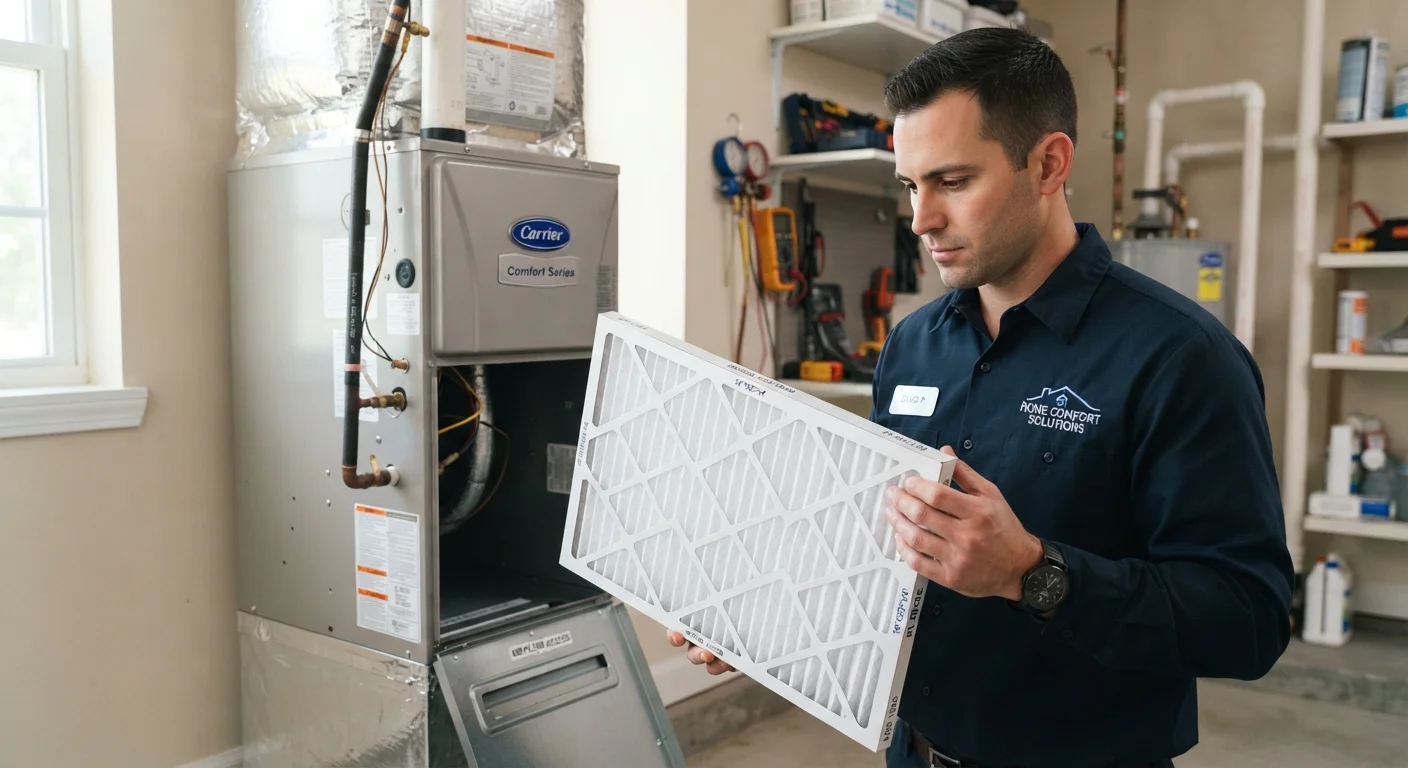
Rather than going strictly by the calendar, check the filter monthly. Hold it up to light - if you can no longer see light through the media, it is time to replace it.
Buy filters in multi-packs and store them near the air handler. The less friction between you and the task, the more likely you are to do it on time.
Consistency matters more than perfection with filter changes. Having supplies immediately available removes the most common reason homeowners delay.
After replacing the filter, write the installation date directly on the filter frame with a marker. A quick glance tells you exactly how old it is without digging through records.
Simple tracking methods dramatically improve maintenance compliance. This approach costs nothing and eliminates guesswork about when the last change occurred.
Evaporator and Condenser Coils: The Heat Exchange Team
Your HVAC system has two coils, each with a distinct job. Understanding both helps you recognize problems early.
The Evaporator Coil (Indoor)
Located in the air handler, the evaporator coil contains cold refrigerant that absorbs heat from the air passing over it. Because warm, humid air flows across this coil constantly, it is also a prime surface for dust and mold accumulation - especially when the air filter is neglected. A dirty evaporator coil acts as an insulating layer, slowing heat transfer and making the system work harder. In severe cases, restricted airflow causes the coil surface temperature to drop below freezing, leading to ice formation that can completely block airflow and damage the compressor.
The Condenser Coil (Outdoor)
The outdoor unit's condenser coil releases the heat absorbed from inside your home to the outside air. Grass clippings, cottonwood seeds, dirt, and debris accumulate on the fins over time, reducing the coil's ability to dissipate heat. This forces the compressor to run longer cycles and at higher pressures, shortening its lifespan.
Never Pressure-Wash Condenser Fins
Condenser fins are thin aluminum and bend easily under high-pressure spray. Bent fins restrict airflow just as effectively as debris does, and straightening them requires a special fin comb. Use a standard garden hose at low pressure only, and direct the spray outward from the center.
Keeping two feet of clearance around the outdoor unit and rinsing the condenser fins gently with a garden hose each spring are simple habits with meaningful payoffs.
Airflow Problems: Signs and Causes
Poor airflow is one of the most common HVAC complaints, and it almost always traces back to something preventable. Watch for these indicators:
- Weak supply airflow at registers - often a clogged filter, closed damper, or detached duct section.
- Hot or cold spots between rooms - can signal duct leakage, blocked vents, or an undersized system.
- Ice forming on the indoor unit - usually a dirty evaporator coil or severely restricted filter.
- Higher-than-usual energy bills without obvious cause - the system is running longer cycles to compensate for inefficiency.
- Unusual noise from the air handler - a whistling or rattling sound frequently indicates airflow restriction or a loose panel.
25-40%
Energy wasted by a clogged HVAC filter
The U.S. Department of Energy has noted that a dirty or clogged filter can increase HVAC energy consumption by 25 to 40 percent.
15-20 years
Typical residential central HVAC lifespan
Industry sources generally estimate that a well-maintained central air conditioning system lasts 15 to 20 years under typical residential conditions.
~50%
Share of home energy use from heating and cooling
The U.S. Energy Information Administration reports that space heating and cooling typically account for about half of a home's total energy consumption.
Many of these problems share a common root: deferred maintenance. As explained in our article on why skipping routine maintenance often leads to bigger repair bills, small oversights compound into expensive failures over time - and HVAC systems are no exception.
Maintenance Tasks You Can Do Yourself
Several meaningful HVAC maintenance steps fall well within a homeowner's capability and require no special tools or licenses.
- Replace the air filter on schedule. Keep a small supply of the correct size filter on hand so there is no excuse for delay. Note the arrow on the filter frame - it must point toward the blower, in the direction of airflow.
- Clear the area around the outdoor unit. Trim back vegetation to maintain at least two feet of clearance on all sides. Remove debris from the top of the unit after storms.
- Rinse the condenser coil fins. Spray gently from the inside out with a garden hose (not a pressure washer) in spring. Allow the unit to dry before restoring power.
- Check and clear the condensate drain line. This PVC pipe removes moisture collected by the evaporator coil. A clogged line can cause water damage or trigger a safety shutoff. Flushing monthly with plain water during the cooling season helps prevent algae buildup.
- Inspect supply and return vents. Ensure furniture, rugs, and curtains are not blocking registers. Closed or blocked vents disrupt system balance and can cause pressure problems.
Run a Monthly Filter Check
Set a recurring monthly reminder on your phone to inspect the filter - regardless of your official replacement schedule. Early detection of a clogged filter prevents the cascade of problems that follow restricted airflow. It takes under two minutes and can save a service call.
Attic ductwork and ventilation also play a role in system performance - our guide on attic ventilation explains the relationship between attic conditions and HVAC efficiency.
When to Call a Licensed HVAC Technician
Some tasks are outside safe DIY territory and require a certified technician. Knowing where that line falls protects both you and your equipment.
Contact a licensed professional for:
- Refrigerant handling. Adding or recovering refrigerant requires EPA Section 608 certification. Low refrigerant is not something to top off casually - it usually signals a leak that must be located and repaired first.
- Evaporator coil cleaning. While the condenser coil can often be rinsed by a homeowner, the evaporator coil typically requires disassembly and chemical cleaners best handled by a technician.
- Electrical components. Capacitors, contactors, and control boards hold dangerous charges even when power is off. Leave these to qualified trades.
- Ductwork repairs or modifications. In many jurisdictions, significant duct alterations require permits and inspections. Verify local requirements before starting any duct work.
- Annual professional tune-up. A qualified technician checks refrigerant charge, measures static pressure, inspects electrical connections, and calibrates the thermostat - tasks that require instruments most homeowners don't own.
Understanding where your HVAC falls in its expected lifespan also helps you plan maintenance investments wisely. The lifecycle of common home systems provides useful context for aging equipment decisions.
Annual Tune-Ups Are Widely Recommended
Most HVAC manufacturers and industry associations recommend professional service at least once a year - ideally in spring for cooling systems and fall for heating. Some manufacturers also tie warranty validity to documented professional maintenance records, so check your equipment documentation.