
What Soil Is Actually Made Of
Garden soil is a mixture of four components: mineral particles, organic matter, water, and air. The mineral portion - made up of sand, silt, and clay in varying ratios - determines your soil's texture, which influences how quickly water drains, how much air reaches roots, and how tightly nutrients are held.
Sand particles are the largest, creating large pore spaces that drain quickly but hold few nutrients. Clay particles are extremely small, packing tightly and holding both water and nutrients well - sometimes too well, causing waterlogging. Silt sits in between. The ideal mix, called loam, balances all three and is often described as the gold standard for gardens.
The remaining portion - organic matter - is where most of the biological action happens. Decomposed plant and animal material feeds microorganisms, improves structure, and acts as a slow-release nutrient reservoir. Even a modest increase in organic matter percentage can meaningfully transform how your garden performs. If you are starting a garden from scratch, understanding your soil's texture before you plant is one of the most valuable steps you can take.
~1 billion
Bacteria in one teaspoon of healthy soil
USDA Natural Resources Conservation Service estimates on soil microbial density in productive agricultural and garden soils.
5-10%
Ideal organic matter content for garden soil
University extension programs generally recommend this range for productive vegetable and ornamental gardens, though native soil averages are often below 2-3%.
6.0-7.0
Optimal pH range for most vegetables
Widely cited by cooperative extension services across the US as the target range for nutrient availability in most food and ornamental gardens.
pH: The Hidden Control Switch
Soil pH measures acidity or alkalinity on a scale from 0 to 14, with 7 being neutral. Most garden plants prefer a range of 6.0 to 7.0 - slightly acidic to neutral. This matters not because plants care about pH directly, but because pH controls the chemical availability of nutrients already in your soil.
At pH extremes, essential elements like iron, manganese, phosphorus, and calcium can become chemically locked up, unavailable to roots even if they are physically present. A plant that looks nutrient-deficient may actually be growing in soil with plenty of nutrients - just at the wrong pH.
Common causes of acidic soil include heavy rainfall, decomposing pine needles, and high-nitrogen fertilizer use. Alkaline conditions are typical in arid regions or near concrete foundations. Lime raises pH; sulfur lowers it. But adjust only after testing - changing pH without data can cause as many problems as it solves. For gardeners choosing between growing methods, pH control is one reason raised beds offer an advantage - you fill them with known, balanced soil from the start.
Test Before You Amend
Adding lime, sulfur, or fertilizer without a soil test is like prescribing medicine without a diagnosis. A basic soil test typically costs under $20 through a cooperative extension service and gives you precise, actionable information. Testing first prevents over-correction, which can be just as harmful as under-correction.
The Living Part of Soil: Biology Matters
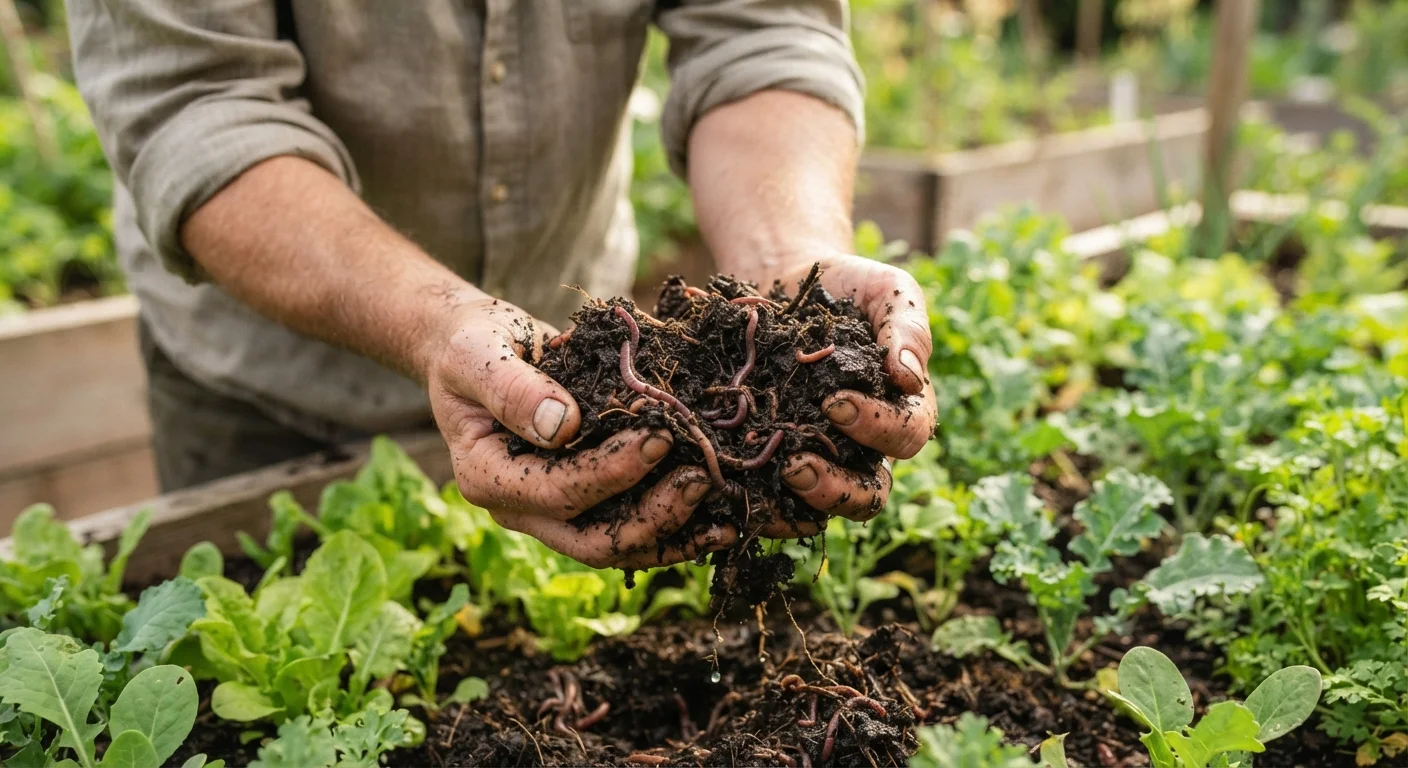
A single teaspoon of healthy garden soil can contain hundreds of millions of bacteria, thousands of fungal species, and a range of organisms including nematodes, protozoa, and earthworms. These organisms are not passive passengers - they are the engine of nutrient cycling.
Mycorrhizal fungi, for example, form symbiotic relationships with plant roots, extending their reach far beyond what roots can access alone. Bacteria break down organic material into plant-available nitrogen. Earthworms aerate the soil and produce castings that are rich in nutrients.
Soil biology is damaged by compaction, synthetic chemical overuse, and excessive tilling. Simple practices like avoiding foot traffic on garden beds, reducing bare soil exposure, and adding organic material support a thriving underground ecosystem. Pairing soil biology awareness with a home composting system is one of the most practical ways everyday gardeners improve soil over time.
Soil Health Applies to Containers Too
Container gardeners face unique soil challenges - potting mixes degrade over time, losing structure and nutrients as organic matter breaks down through repeated watering. Refreshing or replacing potting mix every one to two seasons, and adding compost, keeps containers productive. Learn more about the trade-offs in our guide to container gardening.
Reading and Improving Your Soil
The fastest way to understand your soil is a soil test, available through most county cooperative extension services, university programs, or garden centers. A standard test returns pH, nutrient levels (nitrogen, phosphorus, potassium), and often organic matter percentage. Results include amendment recommendations tailored to what you plan to grow.
For improving soil structure and biology, organic matter additions are consistently effective across soil types. Finished compost, aged wood chips used as mulch, and cover crops all contribute. For more on how surface coverings help, see our guide to mulch types and when to use each one.
Soil improvement is not a one-season fix. It is a gradual process that rewards patience and consistency. Gardeners who understand what is beneath their plants - and make small, informed adjustments season by season - consistently outperform those who rely on more fertilizer to compensate for poor soil. How you water also intersects with soil health; misguided habits can undermine even well-amended beds, as explored in our look at common watering myths.