
The Three Numbers That Shape Every New Car Deal
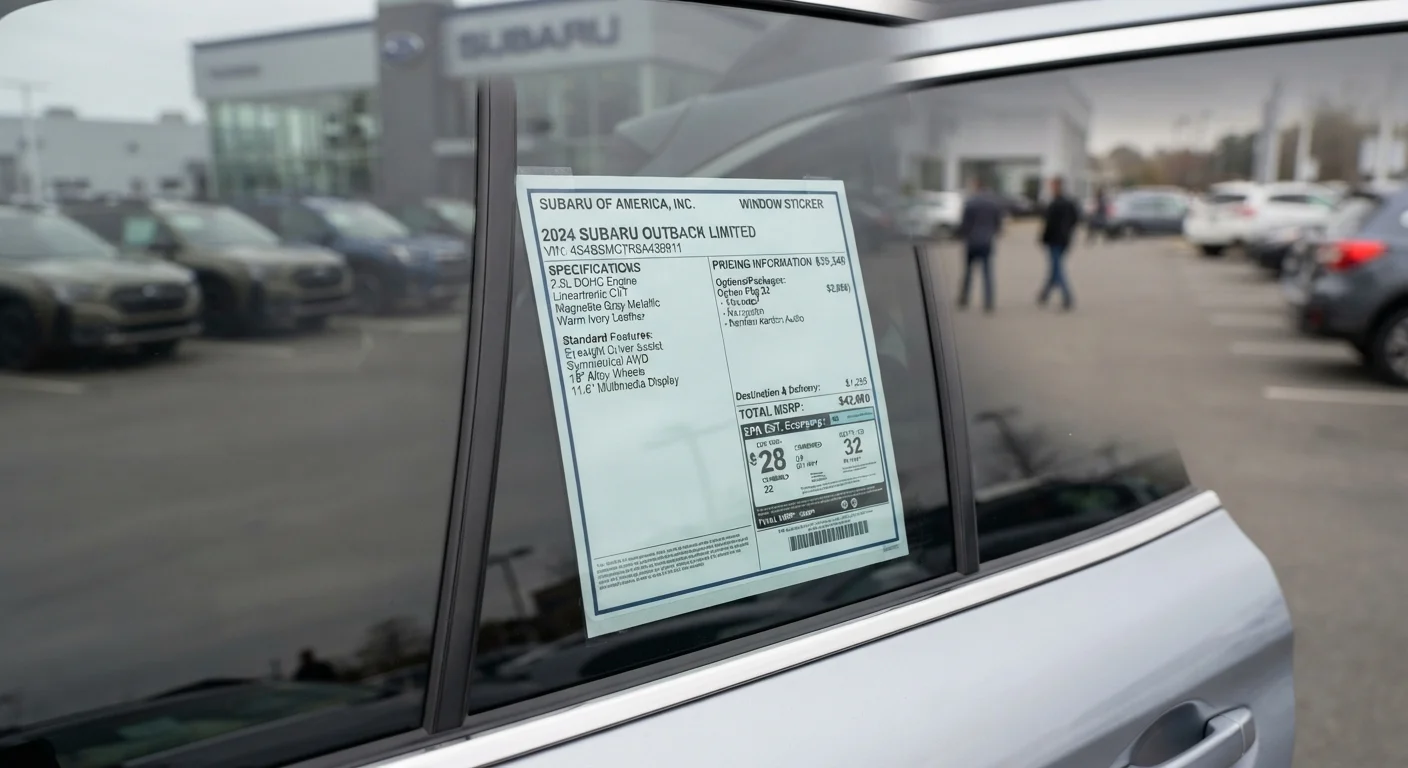
Walk onto any new car lot and you'll encounter a window sticker - the Monroney label - listing the vehicle's MSRP. That number feels authoritative, but it's the opening line of a conversation, not a final price. To negotiate effectively, you need to understand three distinct figures: MSRP, invoice price, and what buyers in your market are actually paying.
MSRP is set by the manufacturer. It covers the base vehicle, factory-installed packages, and a destination charge. It does not include taxes, dealer fees, or add-ons pitched in the finance office.
Invoice price is what the dealer paid the manufacturer. For most vehicles, invoice runs roughly 2-8% below MSRP, though this varies widely by segment. This number is publicly available through automotive research tools and gives buyers a useful reference point.
True dealer cost is lower still. Manufacturers pay dealers a holdback - typically 1-3% of MSRP - after the car sells, effectively reimbursing a portion of the invoice. Dealers may also qualify for volume bonuses and regional incentives that further reduce what they net on each unit.
2-8%
Typical MSRP-to-invoice gap on new vehicles
The spread varies by vehicle segment and manufacturer; luxury and specialty vehicles often have wider margins than mainstream models.
1-3%
Typical dealer holdback as a share of MSRP
Holdback is paid by the manufacturer to the dealer after the vehicle sells, reducing the dealer's true cost below the invoice price.
$1,000+
Potential financing cost from a 1% rate increase
On a $35,000 vehicle financed over 60 months, a single percentage point difference in APR can add more than $1,000 in total interest paid.
Why Negotiating From MSRP Leaves Money on the Table
Most shoppers mentally anchor to MSRP because it's the number in front of them. Dealers know this. If you enter a negotiation offering a modest discount from sticker, you may still be well above what the market actually supports.
A more effective starting point: research the average transaction price for your target vehicle. Published market data - available from automotive pricing databases - reflects what real buyers are paying, factoring in incentives and current inventory levels. On a popular model with thin supply, that number might be above MSRP. On a slow seller, it could be below invoice.
Understanding this landscape also helps you avoid a common trap: negotiating the monthly payment instead of the total price. Stretching a loan term can lower your monthly figure while costing you significantly more overall. For more on this and similar pitfalls, see car-buying myths that cost shoppers real money.
Get Your Financing Sorted Before You Negotiate
Arriving at a dealership with a pre-approved loan from your bank or credit union gives you a concrete rate to compare against dealer financing. Even if the dealer beats it, you negotiate from a position of knowledge rather than reliance. This one step can save as much as - or more than - any discount on the vehicle price itself.
What Actually Determines Your Final Price
The negotiated vehicle price is just one component of what you'll pay. Dealers can recover margin through several other channels - all of which affect your true out-of-pocket cost.
- Documentation fees: These vary by state but can run from under $100 to several hundred dollars. Most are non-negotiable but worth knowing about in advance.
- Dealer add-ons: Paint sealants, fabric protection, and security packages are often presented as already installed. Many carry markups far above their actual value. Learn which add-ons are often not worth the cost before you sit down with the finance manager.
- Financing: Dealers earn income on loans they arrange. A higher interest rate, spread across a 60- or 72-month term, can cost more than the discount you negotiated on the price. Your credit score shapes these terms more than most buyers realize.
- Taxes and registration: These are set by state and local law and aren't negotiable. Factor them into your budget before you settle on a vehicle price. For a full picture, see the hidden costs that inflate a car's true price.
Documentation Fees Vary Widely by State
Some states cap documentation fees dealers can charge; others do not. In uncapped states, doc fees can exceed $500 at some dealerships. Research your state's rules before signing - and ask for the fee amount before you get deep into negotiation so it doesn't surface as a surprise at the end.
Putting It All Together Before You Walk In
Informed buyers are harder to overcharge. Before visiting a dealership, look up the invoice price for the exact trim and option packages you want. Check market transaction data to understand what leverage - if any - current conditions give you. Get pre-approved financing from a bank or credit union so you have an independent rate to compare against dealer financing.
Separate the negotiation into distinct conversations: agree on the vehicle price first, then discuss trade-in value, then financing. Keeping these separate prevents the numbers from being blended in ways that obscure what you're actually paying for each piece.
If you're weighing dealership purchase against other options, buying privately vs. through a dealership covers the trade-offs in consumer protection, pricing, and process.
The sticker is a starting point. Knowing what sits behind it - invoice, holdback, fees, and financing - is what gives you a realistic picture of a fair deal.