
Why Fluid Checks Matter
Your vehicle depends on a handful of fluids to protect moving parts, transfer force, manage heat, and keep systems running safely. When any of these drops too low or degrades, you're often looking at accelerated wear - or outright failure. The good news: checking most fluids takes under five minutes and requires nothing more than a clean rag and the ability to read a dipstick or sight glass.
New drivers especially benefit from building this habit early. Our guide to car maintenance for new drivers covers the broader maintenance picture, but fluids are often the fastest indicator that something needs attention.
The Six Fluids to Check Regularly
Each fluid has a specific location, a correct level range, and visual cues that tell you whether it's still doing its job.
Engine Oil
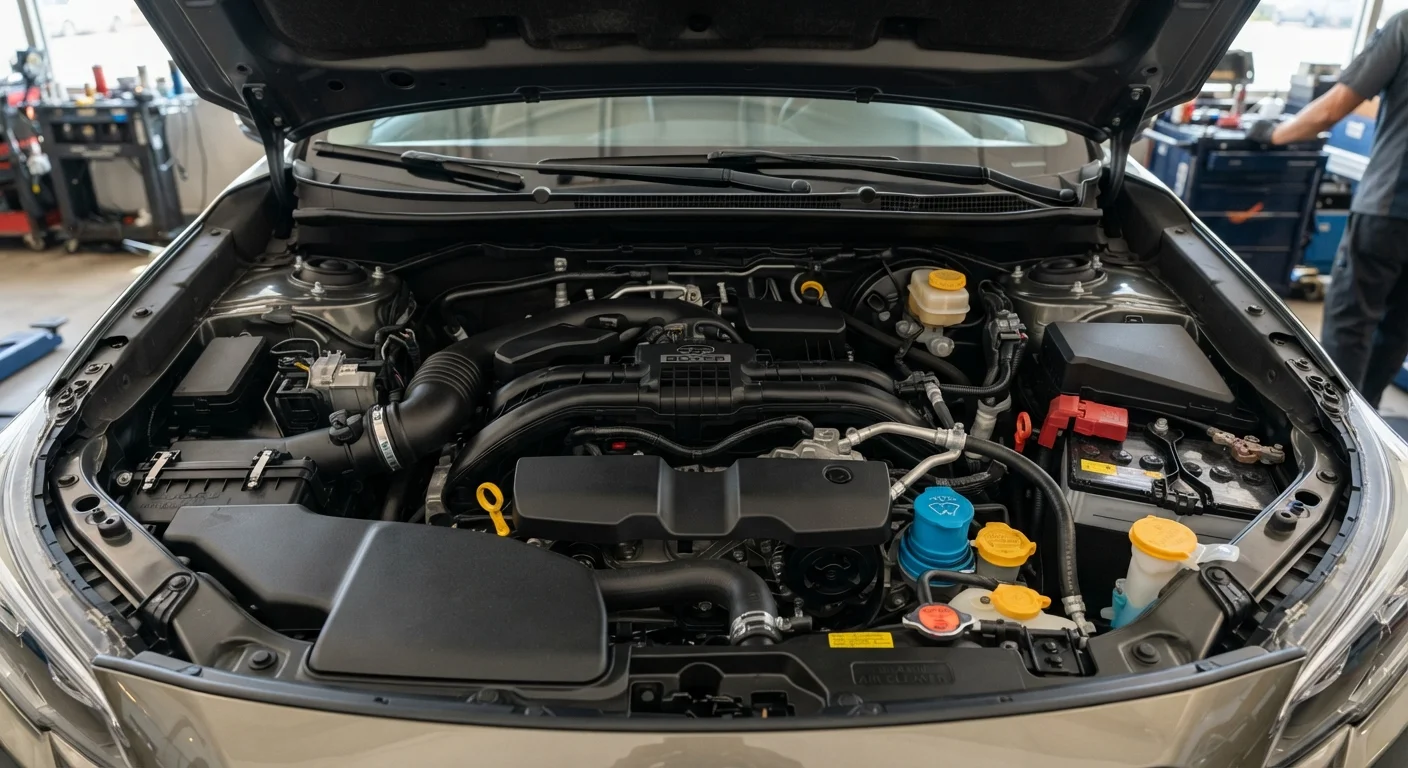
Oil lubricates internal engine components and absorbs heat. Pull the dipstick (usually a brightly colored handle), wipe it clean, reinsert it fully, and pull it again. The oil should fall between the two marks. Color matters too: fresh oil is amber; dark brown or black oil is overdue for a change. A milky appearance can indicate coolant contamination - a serious issue requiring immediate attention from a mechanic.
Coolant (Antifreeze)
Coolant prevents the engine from overheating in summer and freezing in winter. Check the translucent plastic reservoir - never open the radiator cap when the engine is hot. The level should sit between the MIN and MAX lines. Coolant should appear bright green, orange, or pink depending on the type used. A brownish or rusty color signals it needs to be flushed.
Brake Fluid
Brake fluid transmits the force from your pedal to the brake calipers. Most reservoirs are semi-transparent, letting you read the level without opening them. The fluid should be pale yellow; a dark brown color indicates moisture absorption and reduced performance. Low brake fluid can also signal worn brake pads or a leak. For more on what brake symptoms mean, see our brake warning signs guide.
Power Steering Fluid
If your car has hydraulic power steering (many newer vehicles use electric systems and have no fluid to check), the reservoir is typically near the front of the engine bay. Check the level via the dipstick built into the cap or the markings on the reservoir. Low fluid often causes a whining noise when turning.
Transmission Fluid
Transmission fluid lubricates the gearbox and keeps shifts smooth. Some vehicles have a dipstick; others are sealed and require a lift for inspection. When accessible, the fluid should be red or pink - dark red or brown fluid with a burnt smell means it's past due. Ignoring this is one of the maintenance habits that shorten a car's lifespan.
Windshield Washer Fluid
Not a mechanical fluid, but visibility is a safety issue. The reservoir is usually clearly labeled with a windshield icon. Use a formulated washer fluid - plain water can freeze in winter and doesn't cut road grime effectively.
Dipstick
A long metal rod inserted into the engine oil reservoir used to measure fluid level. Markings at the bottom indicate minimum and maximum safe levels.
Coolant
A liquid mixture (typically water and antifreeze) that circulates through the engine to regulate temperature. Also called antifreeze.
Brake fluid
A hydraulic fluid that transmits braking force from the pedal through the lines to the brake calipers. It absorbs moisture over time, which lowers its boiling point.
Transmission fluid
Oil-based fluid that lubricates the gears and components inside the transmission, enabling smooth gear changes.
Power steering fluid
Hydraulic fluid used in vehicles with traditional (non-electric) power steering systems to assist with steering effort.
When to Check and What to Do If Something's Wrong
A good rule of thumb: check oil and coolant monthly and before any long trip. The others can be inspected every few months or whenever you notice a related symptom. Our pre-trip safety checklist includes fluids as a core step before extended drives.
If a fluid is consistently low despite topping it off, that points to a leak - not just evaporation. Puddles under the car, unusual smells, or warning lights are signals to have the vehicle inspected. Don't wait. For high-mileage vehicles, fluid condition deserves extra scrutiny; the high-mileage vehicle maintenance overview breaks down what to prioritize past 100,000 miles.
Use Your Owner's Manual as the Final Word
Fluid type specifications vary significantly between vehicles. The correct engine oil viscosity, coolant formulation, and transmission fluid grade are spelled out in your owner's manual. Using an incompatible fluid can void warranties or cause system damage. When in doubt, ask a qualified mechanic before topping off.
Always consult your owner's manual for the correct fluid types and service intervals specific to your vehicle. Using the wrong fluid - especially in the transmission or brake system - can cause damage.