
Why Small Habits Have Outsized Consequences
Most cars don't fail catastrophically overnight. They wear down through a steady accumulation of skipped services, overlooked warnings, and habits that seem harmless in isolation. The problem is that mechanical systems are interdependent - a degraded fluid stresses a component, which strains another, and the repair bill that eventually arrives reflects all of it.
Understanding which habits cause the most damage - and why they're so easy to fall into - is the first step toward avoiding them. This isn't about perfection; it's about knowing where neglect costs the most. For a broader look at how deferred maintenance compounds financially, see why skipping routine maintenance often leads to bigger repair bills.
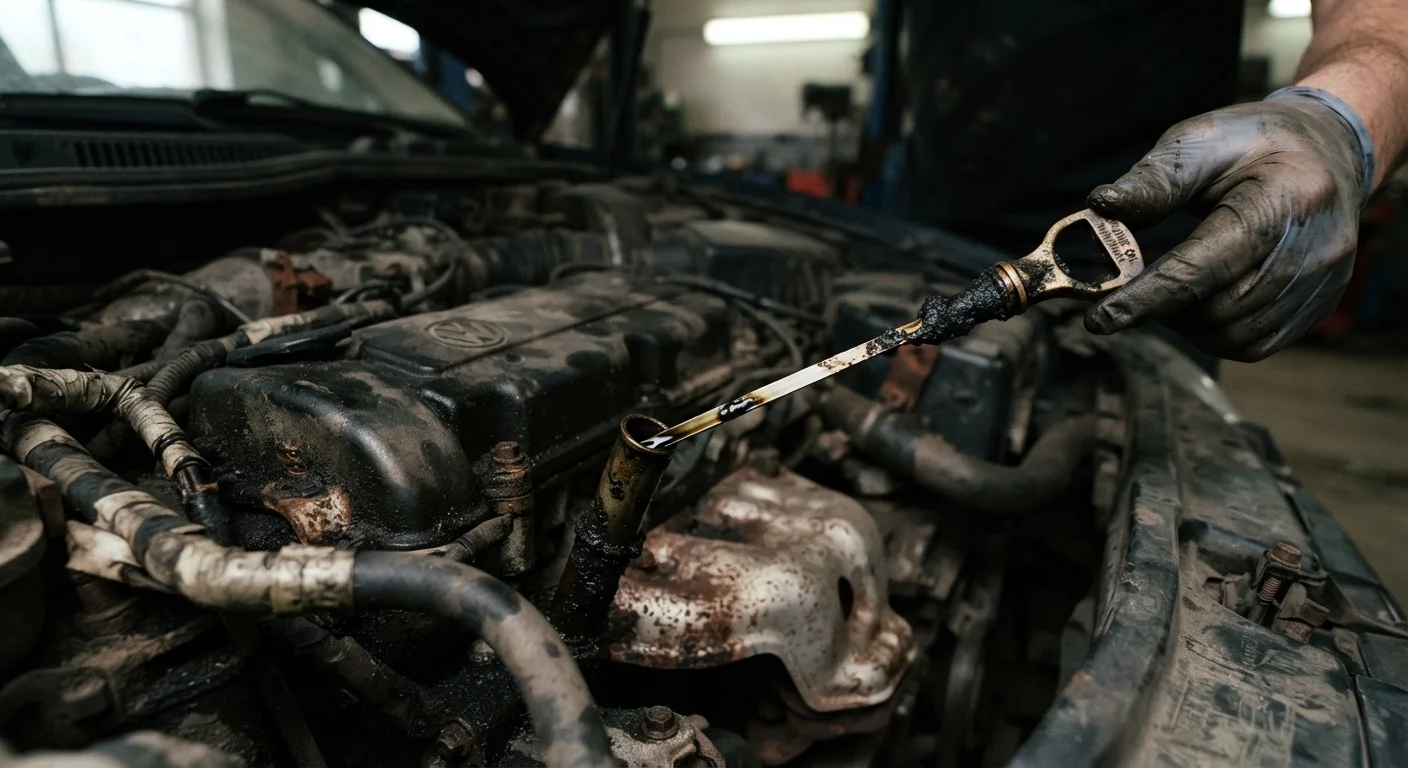
Stretching oil changes well beyond the manufacturer's recommended interval.
Why it happens: The old "every 3,000 miles" rule is outdated for most modern vehicles, and without a clear current standard, many drivers simply delay until it feels urgent.
Ignoring dashboard warning lights, especially the check engine light.
Why it happens: Warning lights are easy to dismiss when the car still seems to drive normally, and many drivers assume they indicate minor sensor issues.
Running tires at incorrect inflation pressure - either over- or under-inflated.
Why it happens: Tire pressure isn't visually obvious until it's severely low, so many drivers skip regular checks and rely on appearance alone.
Neglecting coolant and transmission fluid until a problem appears.
Why it happens: These fluids are out of sight, and without obvious symptoms, they rarely come to mind between scheduled services.
Delaying brake inspections when symptoms first appear.
Why it happens: Squealing or minor pulling can feel tolerable, and drivers often wait for a more definitive sign before scheduling service.
Driving Habits That Accelerate Wear
Maintenance isn't only about what happens in the shop. How a car is driven between services matters just as much.
~40%
Of engine wear occurs at cold start
Engineering research has consistently found that a disproportionate share of engine wear happens in the minutes immediately after a cold start, before oil fully circulates.
1 in 4
US vehicles with underinflated tires
The National Highway Traffic Safety Administration has estimated that roughly one in four passenger vehicles on US roads has at least one significantly underinflated tire.
Short trips under two miles are harder on engines than most drivers realize. The engine never fully reaches operating temperature, which means moisture and fuel residue don't burn off properly - they accumulate in the oil and exhaust system instead. If most of your driving is local and short, more frequent oil changes are warranted.
Aggressive braking and hard acceleration wear brake pads, rotors, and drivetrain components faster than smooth driving. It also stresses the transmission under repeated high-load shifts. None of this is dramatic on any individual trip, but the pattern matters over tens of thousands of miles.
Neglecting warm-up time in cold weather is another common issue. Modern fuel-injected engines don't need a long idle warm-up, but driving hard immediately after a cold start - before oil has circulated fully - adds real wear. Thirty to sixty seconds of gentle driving from a cold start is a reasonable habit. For seasonal context, seasonal car maintenance guidance covers what cold and hot weather specifically demand from your vehicle.
Consistent Short Trips Need More Frequent Oil Changes
If the majority of your driving involves trips under five miles, your engine oil accumulates contaminants faster than the standard mileage interval assumes. This is one case where more frequent oil changes - regardless of what the odometer reads - are genuinely warranted. Check your owner's manual for 'severe duty' or 'short-trip' service intervals, which many manufacturers include specifically for this driving pattern.
If you'd like to understand which tasks are most critical and how often they actually matter, the car maintenance overview for new drivers is a solid plain-language reference - useful for experienced drivers too.