
The Chain Reaction Nobody Talks About
Vehicle systems don't operate in isolation. Your engine, transmission, cooling system, and brakes are all interconnected - and when one falls behind on maintenance, the stress doesn't stay contained. It radiates outward.
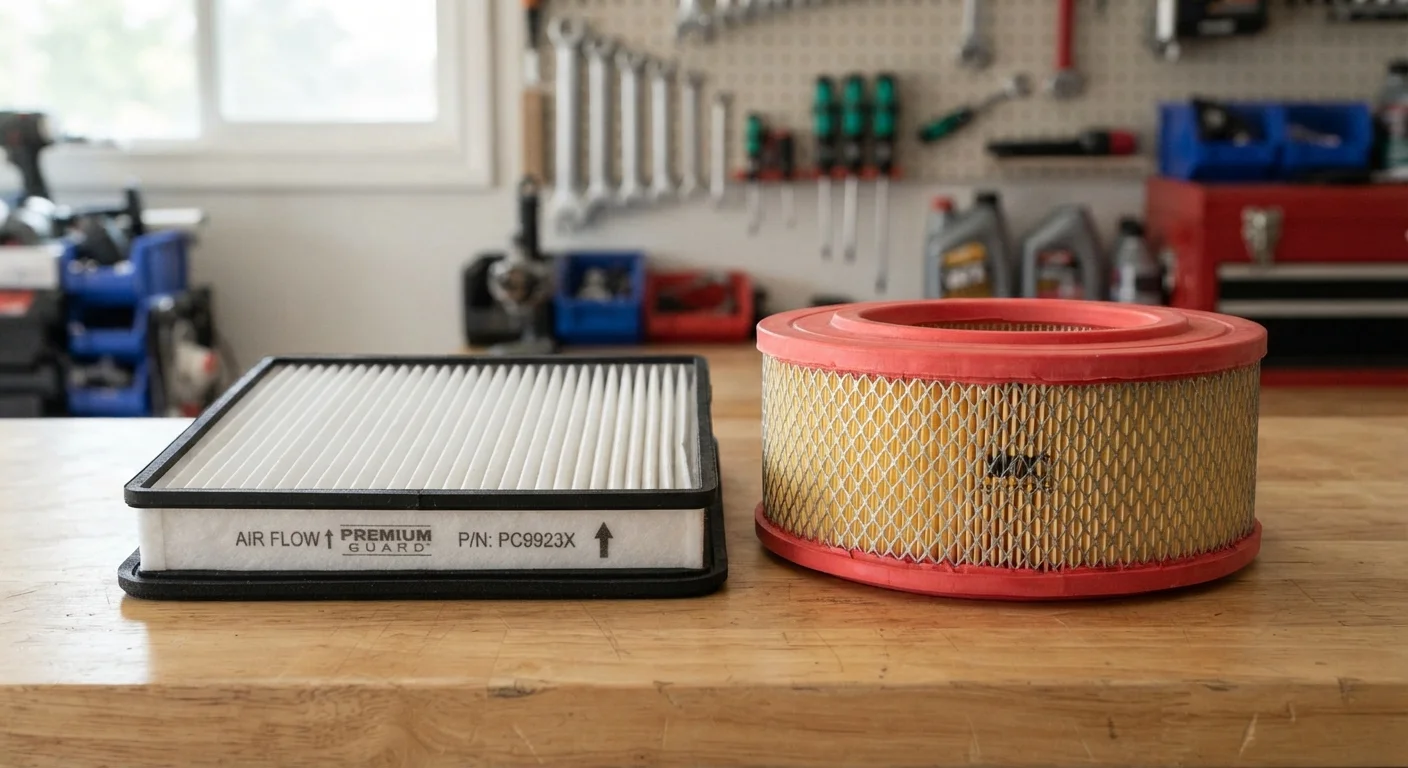
Consider a clogged cabin air filter. On its own, it seems minor. But a severely restricted filter forces the HVAC blower motor to work harder, shortening its lifespan. A dirty engine air filter reduces combustion efficiency, which can affect fuel economy and long-term engine performance. These aren't hypothetical edge cases - they're the predictable consequences of letting small tasks slide.
The same principle applies across the vehicle. Old transmission fluid loses its ability to protect gears and clutch packs, leading to rough shifting and eventually costly internal damage. Worn coolant becomes acidic, corroding the aluminum components it was designed to protect. Each neglected task quietly accelerates wear on the parts around it.
Your Owner's Manual Is the Most Reliable Guide
Every vehicle has a manufacturer-specified maintenance schedule in the owner's manual. It outlines service intervals based on actual engineering requirements for that engine and drivetrain - not general estimates. Referring to it directly is more reliable than relying on a third-party reminder sticker or dealer recommendation alone.
Where the Real Cost Comes From
The financial logic of routine maintenance isn't complicated, but it's easy to lose sight of when a service appointment feels inconvenient or the car seems fine. The comparison is stark when laid out plainly:
- Oil change skipped repeatedly: Engine sludge buildup, bearing wear, potential engine replacement - a repair that can exceed $4,000 to $10,000 depending on the vehicle.
- Coolant flush deferred: Overheating risk increases, leading to potential head gasket failure - a repair commonly ranging from $1,500 to $3,000 or more.
- Brake fluid ignored: Moisture absorption degrades braking performance and can damage ABS modules and calipers - components that cost far more than a $100 flush.
- Timing belt interval missed: On interference engines, a snapped belt causes immediate, catastrophic engine damage that often totals the vehicle.
The pattern is consistent: the cost of the neglected service is a small fraction of the repair it eventually causes. For a broader look at how deferred upkeep compounds financially, the same principle applies to homes - and the math is just as unforgiving.
~$0.09/mile
Average routine maintenance cost per mile driven
AAA vehicle ownership cost studies consistently show that routine maintenance represents a small fraction of total per-mile driving costs compared to repair and emergency expenses.
Up to 3x
Cost multiplier when maintenance is deferred
Industry repair data indicates that addressing a mechanical issue at its early stage typically costs a fraction of the repair needed once the problem has cascaded to adjacent components.
75%
Of roadside breakdowns linked to maintenance neglect
According to AAA, a substantial majority of roadside assistance calls involve issues that regular maintenance - including fluid checks, battery testing, and tire care - would likely have prevented.
High-Mileage Vehicles Face Amplified Risk
As a vehicle accumulates miles, component tolerances tighten and wear margins shrink. A newer engine running slightly degraded oil may tolerate it reasonably well - an engine with 120,000 miles on it has far less margin for error. The same skipped maintenance interval that's a minor issue at 30,000 miles can be genuinely damaging at 150,000.
This doesn't mean high-mileage vehicles are fragile - many run reliably well past 200,000 miles with consistent care. But that consistency becomes non-negotiable as mileage climbs. Fluids, seals, and filters all need more attention, not less. If you're managing an older, higher-mileage vehicle, a dedicated high-mileage maintenance approach is worth understanding in detail.
It's also worth knowing which tasks are genuinely DIY-friendly and which require professional equipment and expertise. Overstretching on a complex repair can create new problems. Knowing where that line sits can save both money and headaches.
Making Maintenance a Habit, Not a Crisis
The most effective shift any driver can make is treating maintenance proactively rather than reactively. A warning light or strange noise is the vehicle telling you it's already stressed - catching issues earlier, through regular inspections and service, almost always costs less.
A few practical habits make a real difference:
- Keep your owner's manual accessible and review the maintenance schedule. Manufacturer intervals are the baseline, not suggestions from a service shop looking to upsell.
- Track service history with receipts or a simple log. This also protects resale value.
- Don't ignore warning lights. They exist to flag early-stage problems. Addressing them immediately is nearly always cheaper than waiting.
- Get a full inspection annually - brakes, tires, belts, hoses, and fluid levels. A qualified mechanic can identify wear patterns before they become failures.
For a practical breakdown of what actually needs attention and when, common maintenance oversights that accelerate wear is a useful companion read. And if you're newer to car ownership, this overview for new drivers covers the essentials in plain language.
“Preventive maintenance is not an expense - it's the cheapest form of vehicle ownership. The drivers who spend a little consistently almost never face the ones who spend a lot all at once.”
— A Senior ASE-Certified Master Technician, Automotive industry professional with over 20 years of diagnostic and repair experience