
Before You Start the Engine
Most driving mistakes begin before the car moves. Taking two minutes to set up correctly pays dividends every time you drive.
- Seat position: Your seat should place you close enough to fully depress the brake pedal without stretching. Your knee should have a slight bend - not locked straight - at full pedal travel.
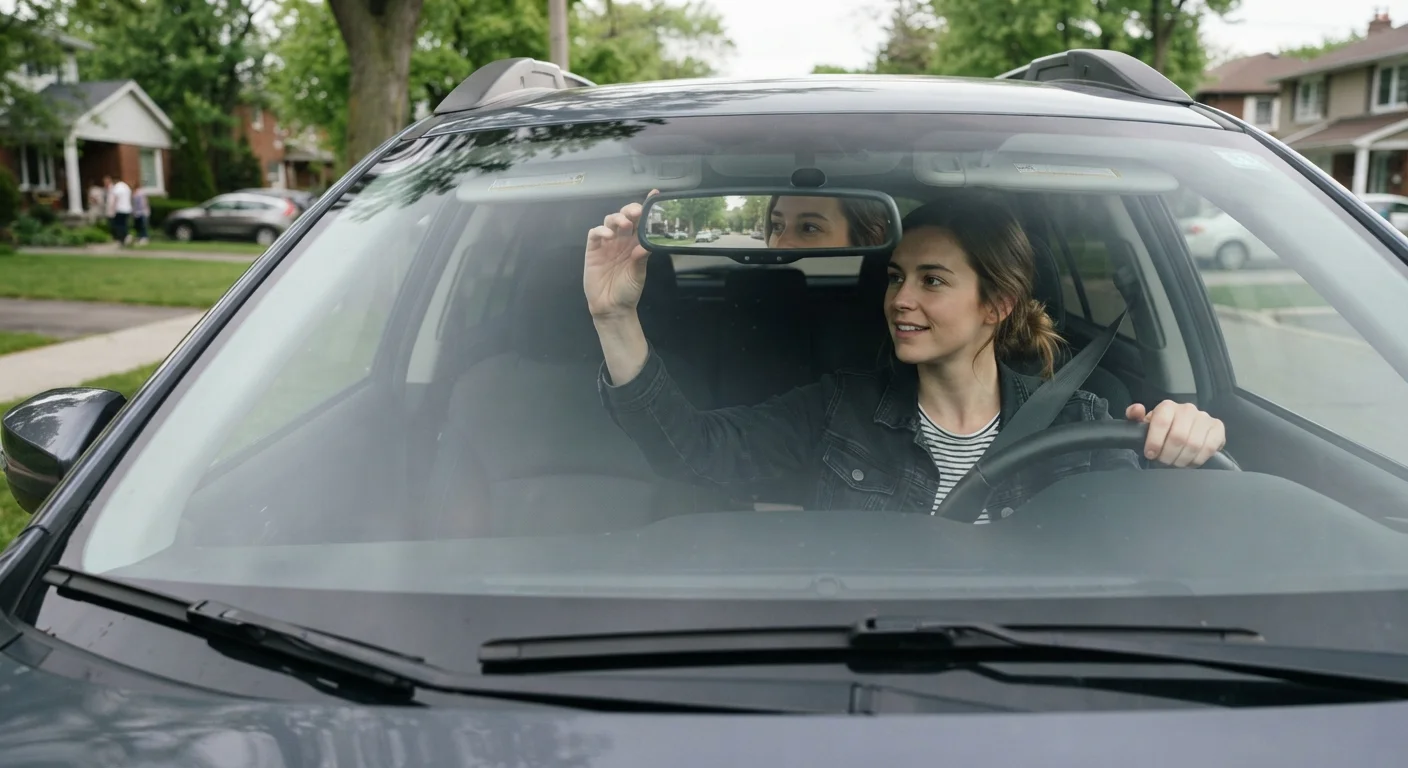
- Mirrors: Adjust all three mirrors after settling into your seat. The rearview mirror should frame the full rear window. Each side mirror should show a sliver of your car's rear quarter panel and as much of the lane beside you as possible.
- Seatbelt: Buckle before anything else. The shoulder strap should cross the chest and collarbone - not the neck.
- Steering wheel: Tilt and telescope the wheel so it's aimed at your chest, not your face, and your hands rest comfortably at 9 and 3 o'clock.
These adjustments aren't formalities - they directly affect what you can see and how quickly you can react. For a deeper look at what mirrors still can't show you, see our guide on blind spots and mirror gaps.
Do a Walk-Around Before Every Drive
Before getting in, walk around the vehicle and do a quick visual check: tires look inflated, no visible damage, nothing behind or beside the car that wasn't there before. It takes under 30 seconds and catches problems - like a flat tire or an object behind a rear wheel - before they become emergencies.
Understanding the Controls
New drivers often focus on the steering wheel and forget about everything else. Knowing your controls cold - before you're moving - prevents dangerous fumbling.
Following distance
The space between your vehicle and the one ahead, measured in time. A three-second gap gives you enough room to brake safely if the car ahead stops suddenly.
Right-of-way
The legal priority that determines which driver or pedestrian goes first at an intersection or merge point. It doesn't guarantee safety - it just establishes who is responsible for yielding.
Blind spot
An area around your vehicle that neither your mirrors nor your normal forward vision covers. All vehicles have them, typically along the rear quarters on each side.
Graduated Driver Licensing (GDL)
A staged licensing system used in most US states that restricts new drivers - usually teens - as they build experience before earning full driving privileges.
Hazard lights
Flashing amber lights on all four corners of the vehicle, used to signal that the car is stopped or disabled in a potentially dangerous location.
- Accelerator and brake: Use one foot only - your right. Keep light, progressive pressure on both pedals. Jerky inputs unsetttle the car and reduce traction.
- Gear selector (automatic): Park (P), Reverse (R), Neutral (N), and Drive (D) are the four positions you'll use regularly. Always come to a complete stop before shifting between Drive and Reverse.
- Turn signals: Activate them at least three seconds before turning or changing lanes - not as you're already moving over.
- Hazard lights: Used when stopped in a dangerous position (breakdown, obstruction). Not a substitute for proper parking or for slow driving in rain - both are common misuses.
Knowing where your headlights, wipers, and defrost controls are before you need them in the dark or rain is equally important. Spend time parked, familiarizing yourself with every switch.
Core Rules of the Road
Traffic laws aren't arbitrary - most encode decades of crash data. The ones that matter most to new drivers:
- Right-of-way: At a four-way stop, the first vehicle to arrive goes first. If two arrive simultaneously, the driver on the right has priority. Yield signs mean slow and give way - they don't mean stop unless traffic requires it.
- Following distance: Maintain at least a three-second gap behind the car ahead in normal conditions. Double it in rain, and triple it in snow or ice. Rear-end collisions are one of the most preventable crash types.
- Speed limits: Posted limits are maximums for ideal conditions. In rain, fog, or heavy traffic, driving below the limit is appropriate and legal.
- Lane discipline: Keep right except to pass on multi-lane roads. Signal every lane change. Never straddle lane markers.
Merging onto a highway is one of the early tests that trips up new drivers. Our article on highway merging technique walks through it step by step.
Don't Rely on Other Drivers to Follow the Rules
Right-of-way rules tell you who should go - not who will. Assume that other drivers may run stop signs, fail to signal, or misjudge gaps. Always confirm that an intersection is clear before entering, even when you have the green light. Your legal right of way won't prevent a collision.
Building Situational Awareness
New drivers tend to fixate on the car directly in front of them. Experienced drivers scan constantly - up the road, to both sides, and in mirrors - building a continuous mental picture of traffic flow.
Practical habits to develop from day one:
- Look 10-15 seconds ahead. At city speeds, that's roughly a full block. On the highway, it's further. The earlier you spot a hazard, the more time you have to respond without braking hard.
- Check mirrors every 5-8 seconds. Not staring - quick glances that keep your mental map current.
- Anticipate, don't just react. A truck's brake lights two cars ahead, a pedestrian stepping toward the curb, a car idling at a side street - all are early signals worth noticing.
- Minimize distractions. Phone use - even hands-free - measurably degrades reaction time. Keep music at a volume that lets you hear sirens and horns.
Situational awareness is the core of defensive driving - a skill set worth developing from your very first solo trip. Night driving and adverse weather add complexity; our articles on night driving hazards and driving in rain, ice, and snow cover those conditions specifically.
Graduated Licensing and Next Steps
Most US states use a Graduated Driver Licensing (GDL) system that restricts new drivers - typically teenagers - during the statistically highest-risk period. Common restrictions include nighttime driving curfews, passenger limits, and prohibitions on phone use. These aren't obstacles; they're evidence-based guardrails.
Even if GDL restrictions don't apply to you, the underlying logic does: build exposure gradually. Start with familiar roads in daylight. Add complexity - unfamiliar routes, night driving, highway entry - one layer at a time. Rushing into high-demand situations before your foundational skills are solid is the single most common setup for early crashes.
For a full breakdown of how GDL programs are structured and why they work, see our guide on graduated licensing for teen drivers. And once you're ready to think about owning a vehicle, our car-buying guidance and car maintenance essentials are practical next reads.
Licensing Requirements Vary by State
GDL rules, minimum driving ages, and required supervised hours differ significantly from state to state. Always check your specific state's DMV website for the current requirements that apply to you. Rules also change periodically, so verify current standards rather than relying on what someone else remembers from when they got their license.