
Why Your Pantry Determines Dinner
Most weeknight cooking struggles aren't skill problems - they're supply problems. When the right ingredients are already on the shelf, pulling together a satisfying meal in 30 minutes becomes realistic rather than heroic. A strategic pantry removes the nightly question of "what do we even have?" and replaces it with genuine flexibility.
This reference covers the staple categories that consistently deliver: dry goods that form meal bases, canned and jarred items that add depth quickly, and condiments that do the flavor heavy-lifting. For a broader look at eating nutritiously within a budget, see our guide to healthy eating on a budget.
The Core Categories and What to Keep
A practical weeknight pantry breaks into four working groups. Each category fills a different role on the plate.
Dry Goods and Grains
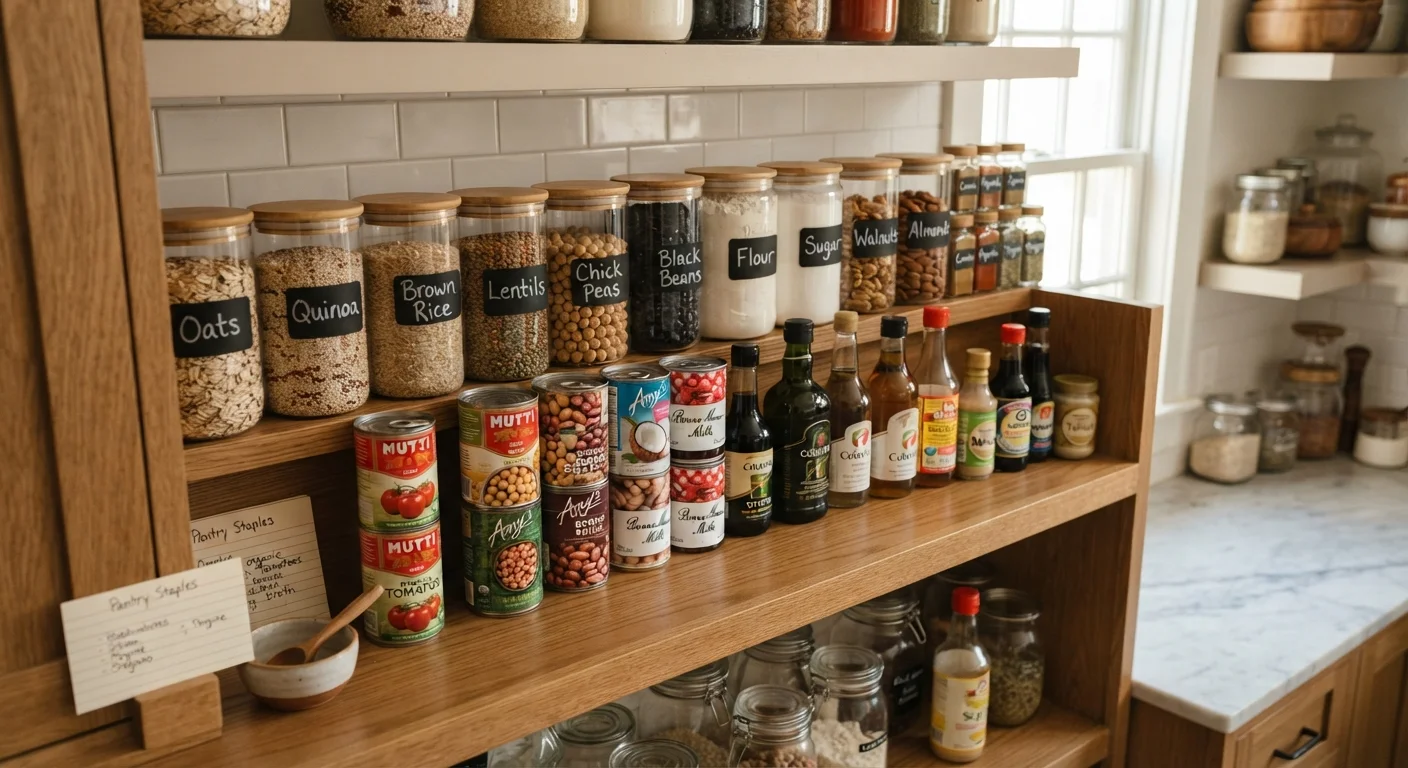
Whole grains and legumes are the backbone of most budget-friendly, nutritious meals. Keep at least two or three of these on hand:
- Long-grain white or brown rice - versatile base for stir-fries, grain bowls, and soups
- Dried pasta (multiple shapes) - short cuts like penne suit chunky sauces; long cuts like spaghetti suit oil- or broth-based preparations
- Dried lentils - cook faster than other legumes without soaking; red lentils dissolve into soups and dals in under 25 minutes
- Rolled oats - not just breakfast; they thicken soups and form the base of savory veggie patties
- Panko or breadcrumbs - add texture to baked proteins and pasta bakes
Umami
Often called the fifth basic taste, umami describes a savory, deeply satisfying flavor. Ingredients like soy sauce, fish sauce, Parmesan, and mushrooms are rich sources.
Deglazing
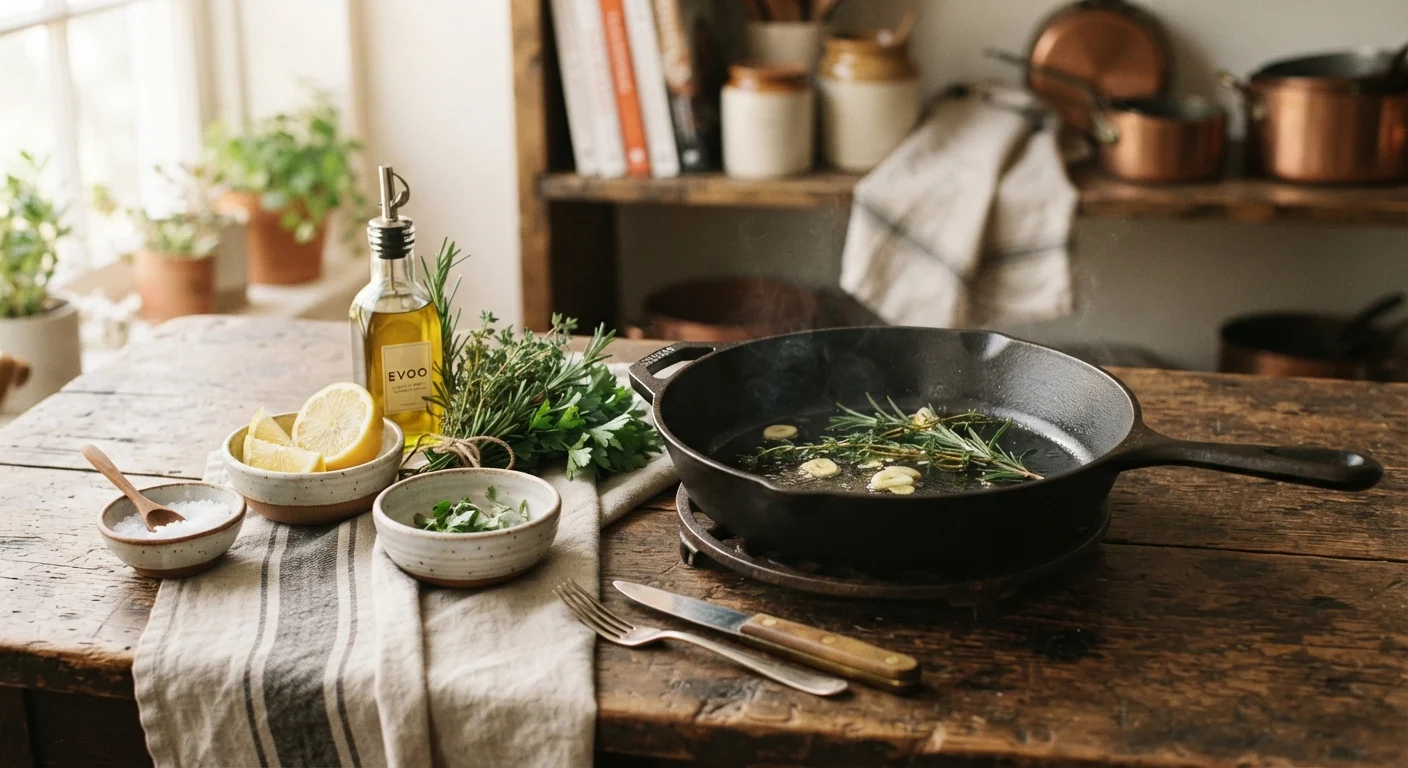
Adding liquid (broth, wine, or water) to a hot pan after searing to lift the browned bits from the bottom. Those bits, called fond, add concentrated flavor to sauces.
Mise en place
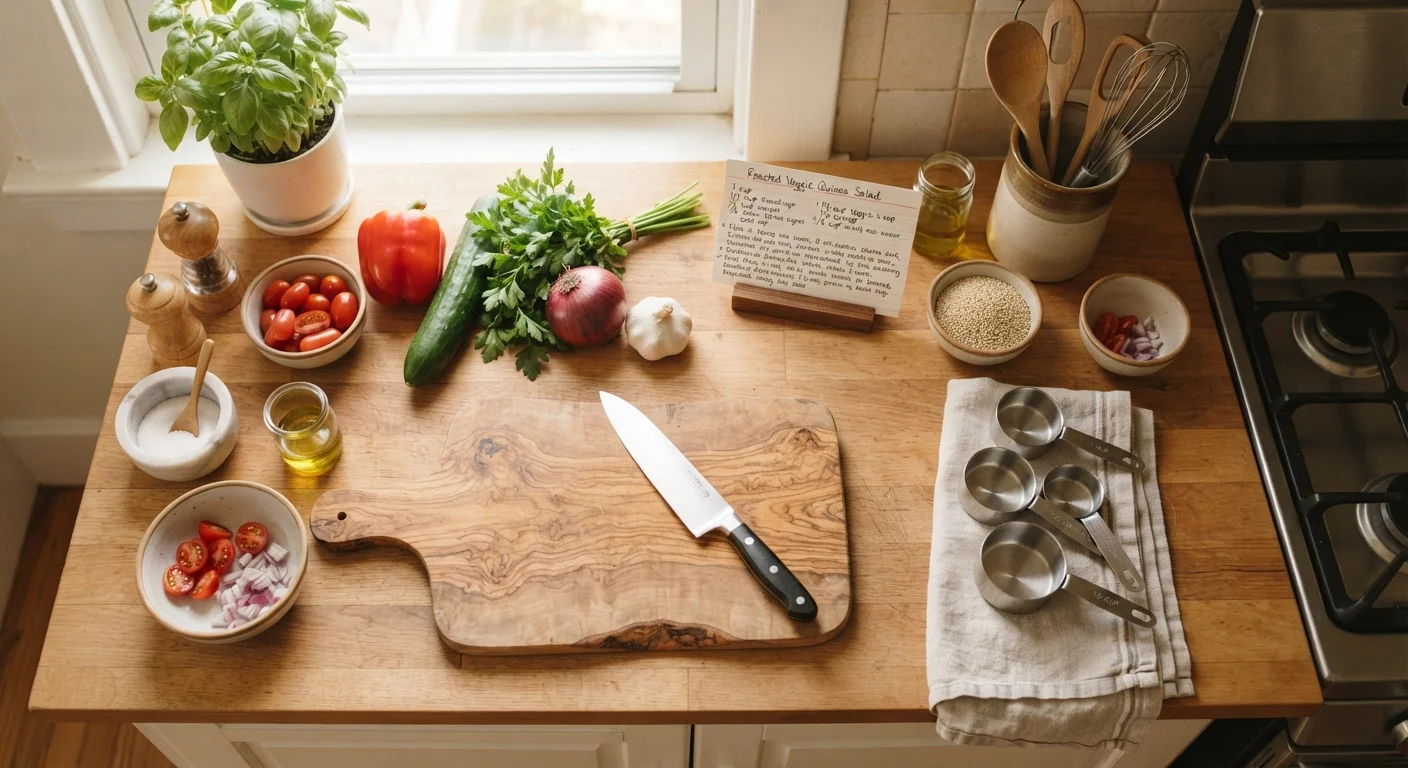
A French culinary term meaning 'everything in its place.' It refers to measuring, prepping, and organizing all ingredients before you begin cooking - a habit that reduces chaos and mistakes.
Emulsify
To blend two liquids that don't normally mix - like oil and vinegar - into a stable, uniform mixture. Mustard is a common emulsifier used in vinaigrettes.
Canned and Jarred Goods
Canned goods are pre-cooked shortcuts that still carry real nutritional value. Prioritize:
- Canned whole or crushed tomatoes - the building block of pasta sauces, braises, and shakshuka
- Canned chickpeas and white beans - add protein and bulk to nearly any dish without a long cook time
- Canned coconut milk - transforms a basic curry or soup with richness
- Low-sodium broth (chicken, vegetable, or beef) - liquid gold for deglazing pans and building sauces
- Canned fish (tuna, sardines, salmon) - shelf-stable protein ready in seconds
Condiments and Flavor Builders
These items do the most work per tablespoon. A small investment in variety here dramatically expands what you can cook:
- Soy sauce or tamari - umami depth for Asian-inspired dishes and marinades alike
- Dijon mustard - emulsifies vinaigrettes and adds sharpness to pan sauces
- Fish sauce - a few drops amplify savory depth without a strong fish flavor
- Apple cider or red wine vinegar - acid that brightens any dish that tastes flat
- Hot sauce - table-side adjustment; also useful as a cooking ingredient
Oils and Dry Aromatics
Keep a neutral high-heat oil (such as canola or avocado oil) for searing and a more flavorful option (olive oil) for finishing. For dry aromatics, garlic powder, smoked paprika, cumin, oregano, and red pepper flakes cover the majority of flavor profiles across cuisines.
Once your pantry is dialed in, pairing it with smart prep habits makes weeknight cooking even smoother - our article on prep work habits that separate calm cooks from frantic ones walks through the routines that reduce kitchen chaos.
Putting the Pantry to Work
Knowing what to stock is only half the picture. The other half is thinking in formulas rather than fixed recipes. A reliable weeknight formula looks like: protein source + grain or starch + vegetable + sauce. Your pantry handles at least two of those four elements on any given night.
For example, canned chickpeas + rice + a can of crushed tomatoes + cumin and smoked paprika becomes a one-pot dinner without a grocery run. Pasta + olive oil + canned tuna + capers (a useful pantry addition) + lemon zest is a ten-minute meal with genuine flavor.
4 of 4
Meal formula elements a pantry can cover
Protein, starch, sauce, and flavor layers can all come from shelf-stable staples on a well-stocked pantry night.
10 min
Time to dinner with pantry-only pasta
A pasta dish built from canned tuna, olive oil, capers, and lemon requires no fresh grocery haul and minimal prep.
The goal isn't a perfectly curated pantry restocked all at once - it's building the habit of replacing items as you use them and adding one new staple each shop. Over time, this compounds into real cooking confidence. Pair this approach with deliberate grocery shopping; our guide to grocery shopping with nutrition in mind offers a practical framework for making nutritious choices at the store.
If you're ready to extend this into a full weekly system, meal prep fundamentals covers how a few hours of Sunday preparation can make every weeknight significantly easier.