
Why Prep Habits Change Everything
There's a reliable pattern among cooks who seem effortlessly calm in the kitchen: they do most of their work before the cooking actually starts. The chaos that derails a meal - burned garlic, forgotten ingredients, mistimed sides - almost always traces back to skipped or rushed preparation, not lack of skill.
The French term for this approach is mise en place, and while it originated in professional kitchens, the underlying logic applies directly to cooking at home. The more decisions and physical tasks you handle before the heat is on, the more mental bandwidth you have to actually cook.
Mise en Place: What It Actually Means
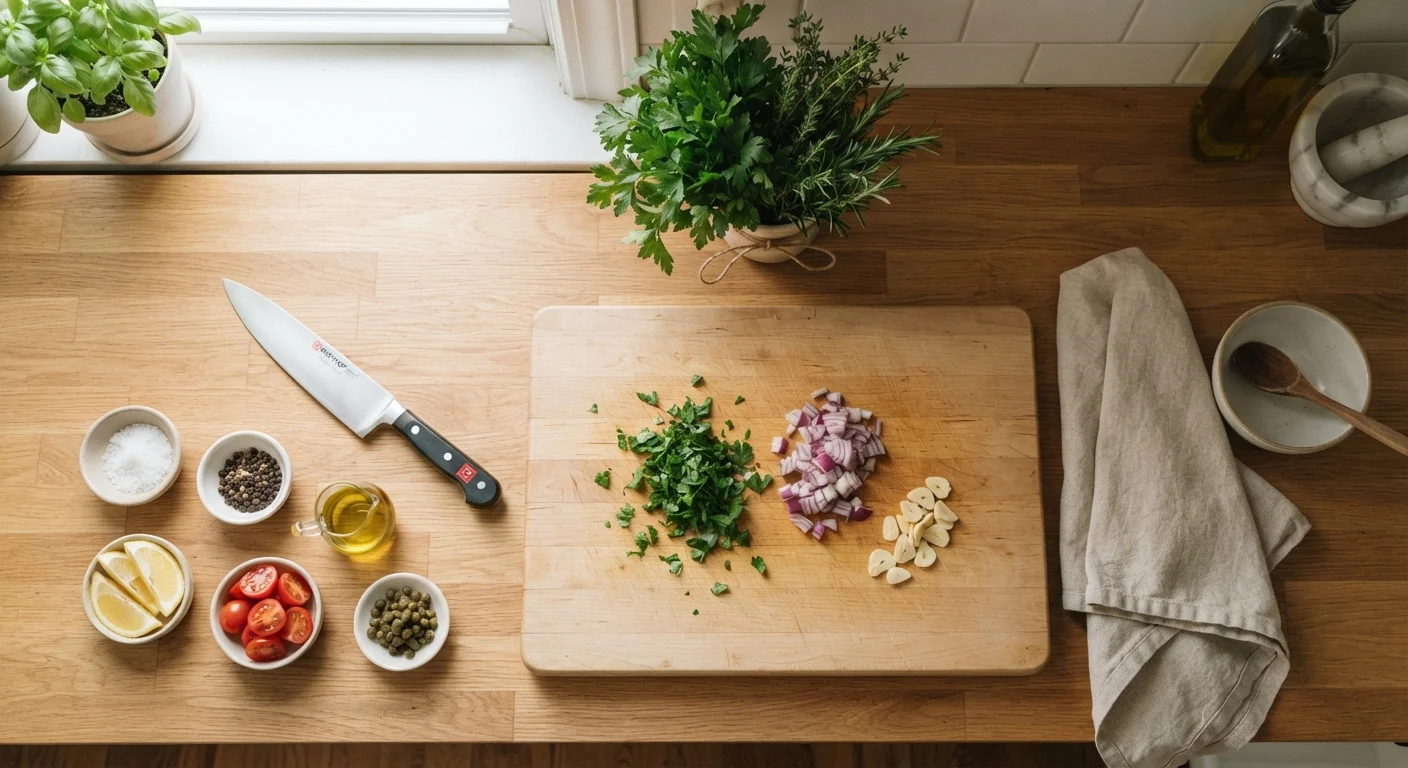
Mise en place (pronounced "meez ahn plahs") is a French culinary phrase meaning "everything in its place." Professional kitchens run on this principle - every ingredient is prepped, measured, and staged before cooking begins. Home cooks who adopt even a simplified version of this habit consistently report less stress and fewer mistakes during meal preparation.
This isn't about following a rigid system. It's about building a set of habits that reduce cognitive load at the moments when cooking demands your full attention. Whether you're making a weeknight pasta or a weekend roast, the same foundational habits apply. See also: how to mentally prep before you touch a pan.
The Core Prep Habits Worth Building
These six practices form the backbone of a calm, efficient prep routine. They're ordered intentionally - each one builds on the last and reinforces a consistent workflow you can apply to almost any recipe.
Read the entire recipe from start to finish before touching anything.
Recipes often contain steps that require advance action - marinating overnight, resting dough, or preheating an oven. Discovering these mid-cook creates rushed workarounds. A full read gives you the complete picture before commitment.
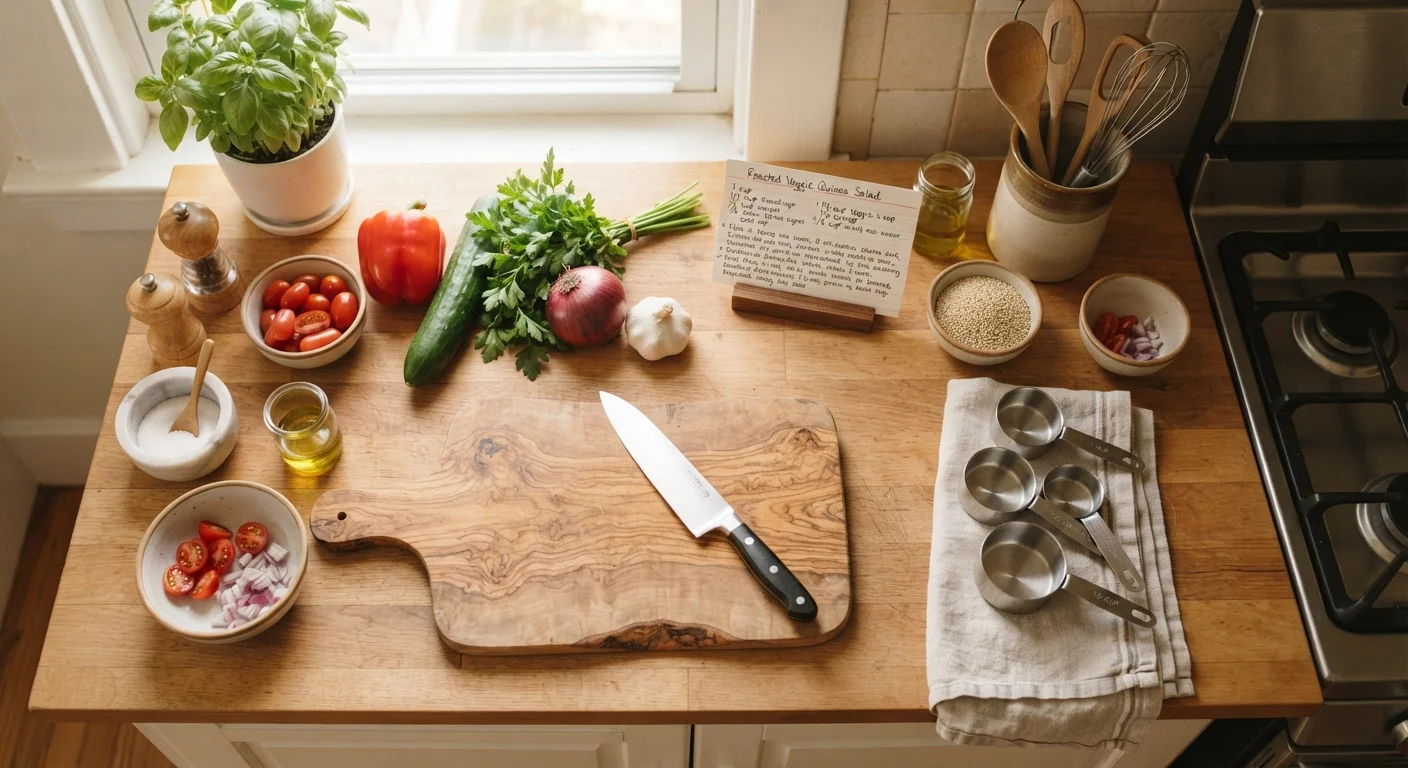
Gather every ingredient and tool before you turn on any heat.
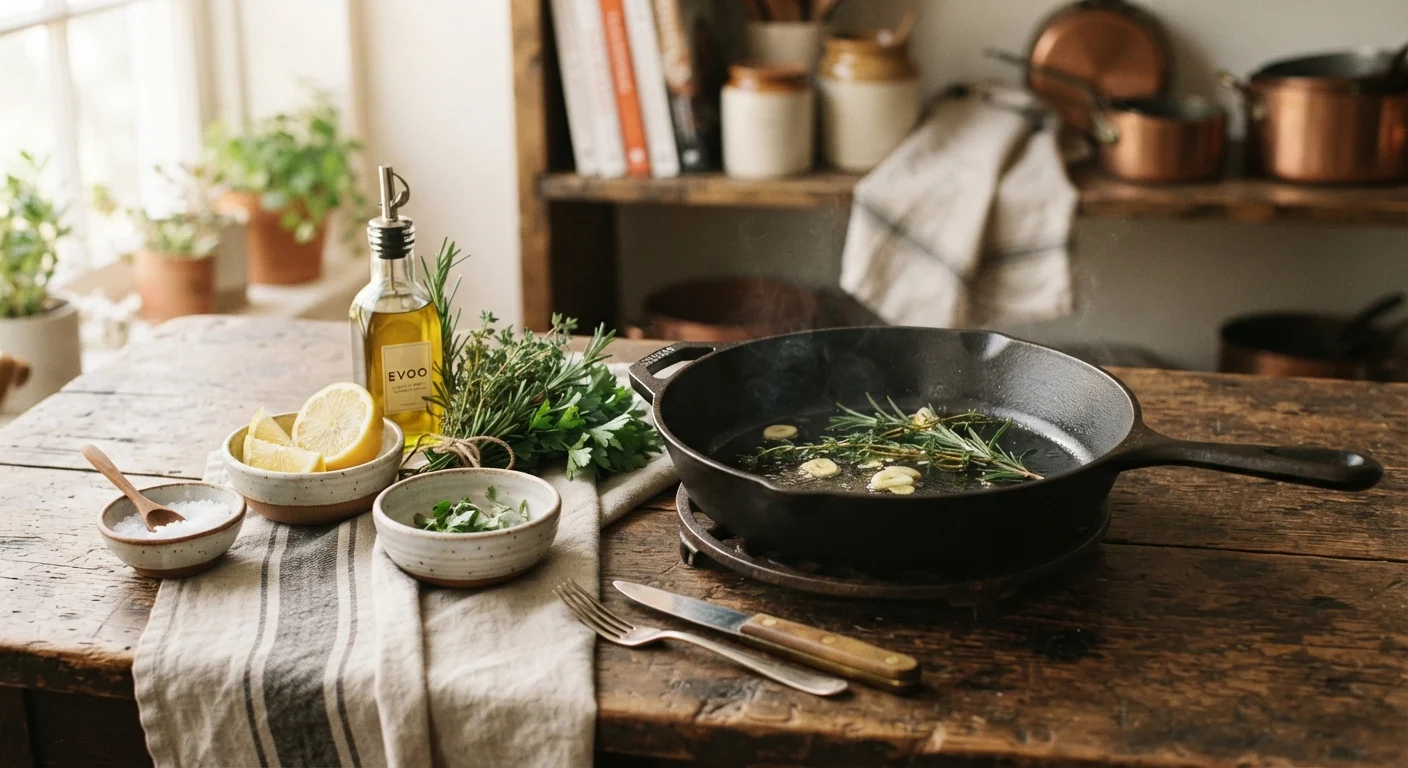
Heat doesn't wait. A pan of sautéed garlic can burn in under 60 seconds while you're rooting through a cabinet for a lid. Staging everything in advance means your attention stays on the stove where it belongs.
Pre-measure and portion ingredients into small bowls or ramekins before cooking.
Measuring spices or liquids while something is actively cooking introduces errors and spills. Pre-portioning takes the pressure off and matches how professional kitchens operate during service.
Clean and clear your workspace before you begin prep.
A cluttered counter physically limits where you can work and mentally signals disorder. Starting with a clear surface - wiped down, with only what you need - makes every subsequent task feel more manageable.
Sequence your prep tasks from longest to shortest.
Time compounds when you front-load slower tasks. Caramelized onions take 25 minutes; mincing garlic takes two. Starting with the slow work means nothing is waiting on you when it counts.
Keep a small bowl on your cutting board for scraps and trimmings.
Repeatedly walking to the trash breaks rhythm and clutters your board. A dedicated scrap bowl keeps your prep zone clean and your momentum intact throughout the task.
Good prep habits also reinforce better knife technique. Confident, purposeful cutting is easier when your board is clear and you know exactly what needs to be sliced. Our guide to knife skills every home cook should know covers the foundational cuts that make prep faster and safer.
Start Today: Quick Wins You Can Apply Right Now
You don't need to overhaul your entire cooking routine to feel the difference. These immediate actions will produce a noticeable shift in how a cooking session feels - starting with your very next meal.
“Mise en place teaches you to work clean, think ahead, and respect the process. It's not a technique - it's a discipline.”
— Jacques Pépin, Celebrated French-American chef and culinary educator
If you want to extend this thinking beyond a single meal, the same principles that make individual cooking sessions calmer also underpin effective batch cooking. Our meal prep fundamentals guide shows how a few organized hours on the weekend can simplify healthy eating all week. You can also use the pre-meal checklist for home kitchens as a quick reference before every session.