

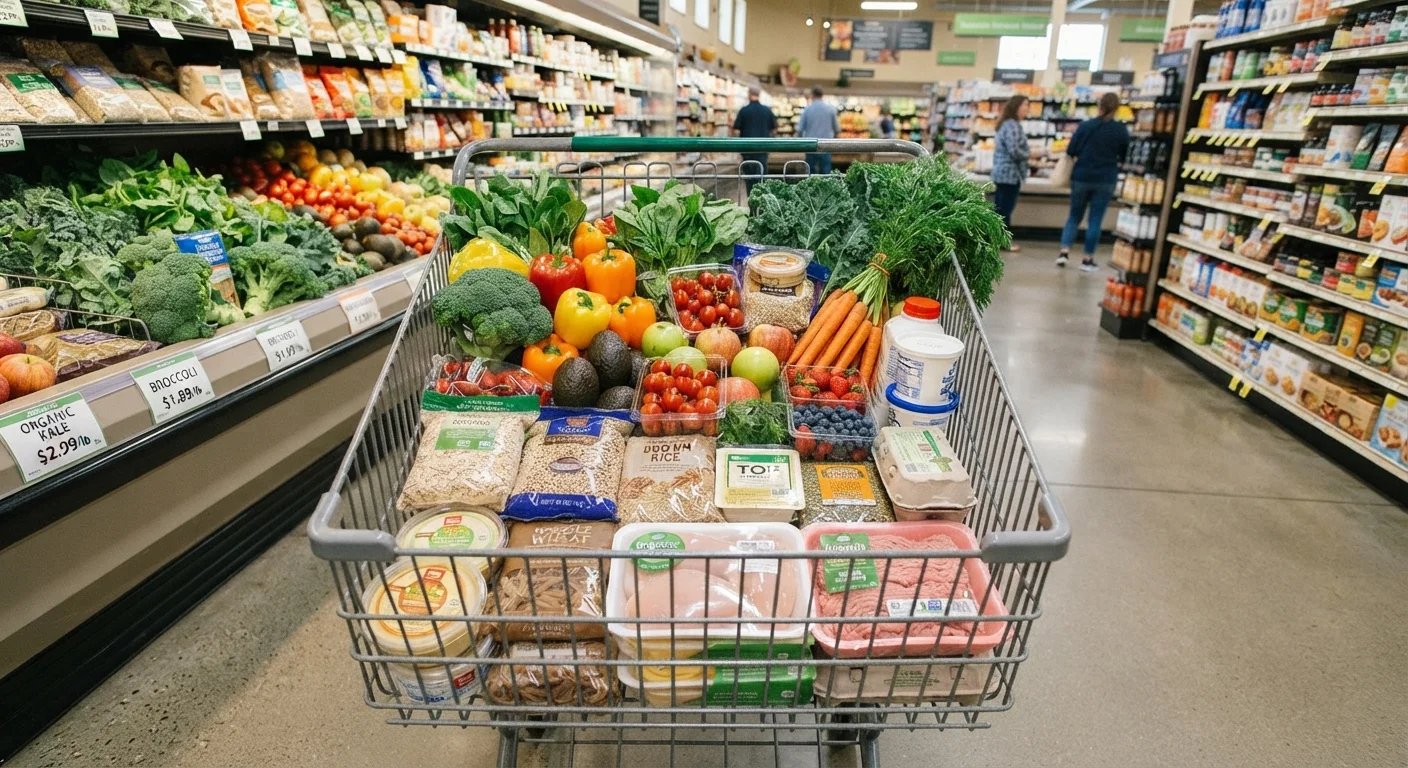
Why a Structured Grocery Checklist Works
Walking into a grocery store without a plan is one of the fastest ways to veer away from your nutrition goals. Bright packaging, end-cap displays, and the sheer volume of options are all designed to compete for your attention. A structured, aisle-by-aisle approach shifts that dynamic - you move with intention rather than impulse.
If you're new to thinking about nutrition, the idea of a "balanced shopping trip" can feel vague. This checklist makes it concrete. It isn't about rigid restriction; it's about making sure your cart reflects your actual health goals by the time you reach the checkout line.
Once you've filled the cart well, the next step is putting those ingredients to work. See our meal prep guide for how a few hours on Sunday can turn your grocery haul into a week of easy, nutritious meals.
Grocery List App or Notepad
Organize your shopping list by store section before you arrive to stay focused and reduce backtracking.
Nutrition Facts Panel (on packaging)
Use the federally standardized label to compare sodium, fiber, and added sugars across similar products.
Reusable Shopping Bags
Useful for keeping produce separate from heavier items and reducing single-use plastic waste.
Meal Plan Outline
A rough outline of the week's meals helps you buy only what you'll actually use, reducing food waste.
The Aisle-by-Aisle Checklist
Work through this checklist section by section as you move through the store. Most supermarkets organize these categories in a predictable pattern, so adapting the order to your local layout takes only a moment. The goal isn't to buy everything listed - it's to make deliberate choices in each zone.
Produce Section
Protein Sources
Grains and Bread
Dairy and Dairy Alternatives
Pantry Staples
Label Reading Checkpoint
Front-of-Package Claims Can Mislead
Terms like "natural," "multigrain," or "made with whole grains" are marketing descriptions, not regulated nutrition standards. A product labeled "multigrain" may still use primarily refined flour. Always turn the package over and check the ingredient list and Nutrition Facts panel before deciding.
If you're shopping on a tighter budget, many of these categories have affordable, nutrient-dense options. Our article on healthy eating on a budget covers practical strategies for maximizing nutrition without overspending.
For a deeper look at how different protein sources compare on completeness and digestibility, the protein sources comparison is a helpful reference to consult before you shop.
Individual Nutritional Needs Vary
This checklist reflects general healthy eating principles for adults, but nutritional needs differ significantly based on age, health conditions, medications, and other factors. If you're managing a specific health condition or have been advised to follow a therapeutic diet, consult a registered dietitian or your healthcare provider before making significant changes to your food choices.
This article is for general informational purposes only and does not constitute medical or dietary advice. Consult a qualified healthcare professional or registered dietitian for guidance tailored to your individual health needs.