

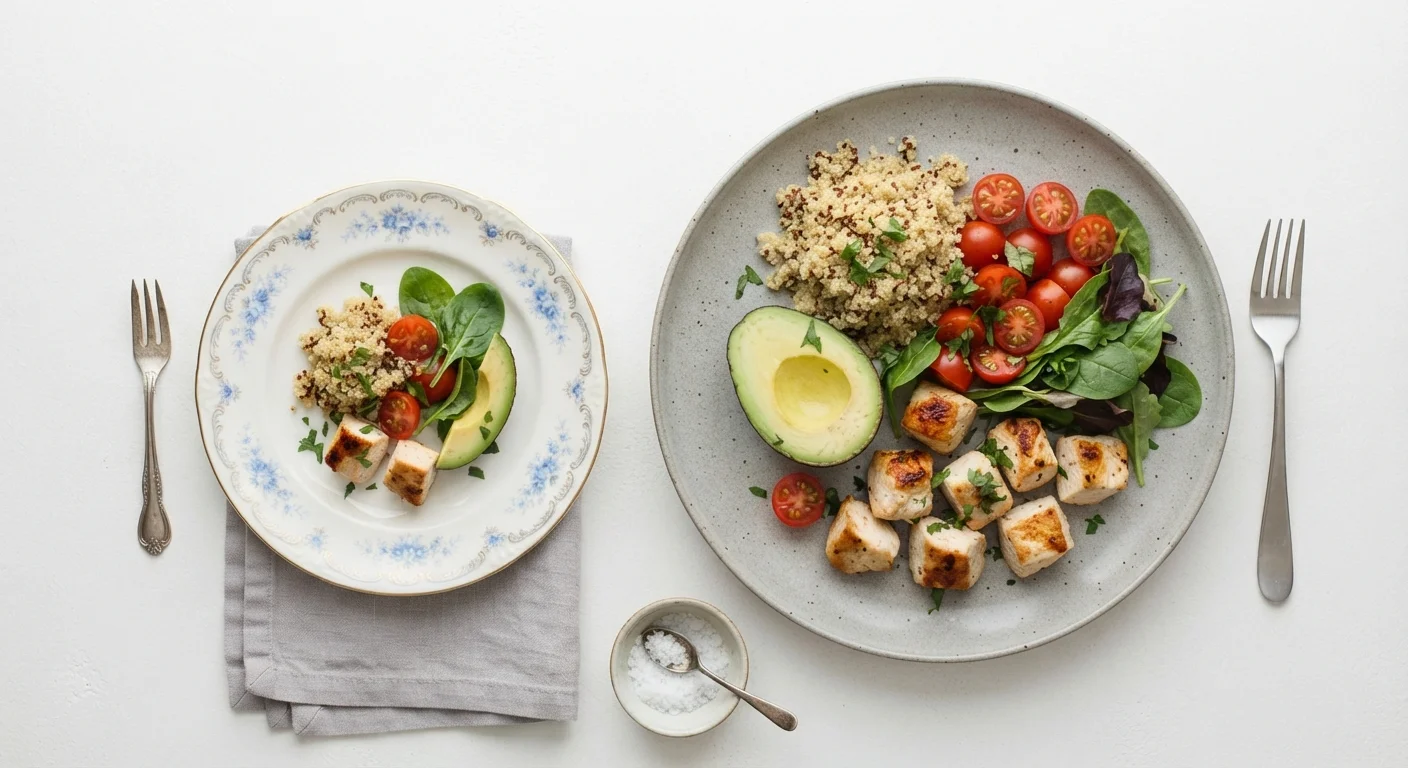
How Portions Got Bigger Without Anyone Deciding To
No single decision inflated American portion sizes. The change happened incrementally, shaped by economics, competition, and consumer psychology. In the restaurant industry, larger portions became associated with better value - a perception that reinforced itself over time. Food manufacturers followed a similar logic: bigger bags and bottles felt like a deal, even when the unit price didn't change.
The result, documented by public health researchers over the past few decades, is striking. Items like muffins, sodas, and deli sandwiches have grown to two, three, or even five times the size of their counterparts from the 1980s. Because this happened gradually, each generation inherited a slightly larger baseline. What felt like an oversized portion to one generation became a standard serving to the next.
The key mechanism is normalization. When every coffee shop cup is large and every pasta bowl overflows, the brain accepts that as the reference point for 'a meal.' Consciously choosing to eat less feels like deprivation, even when it isn't.
3×
Growth in common bagel size since the 1980s
According to portion size comparison resources from the National Heart, Lung, and Blood Institute, a standard bagel has roughly tripled in diameter and calorie count compared to versions from decades earlier.
~92%
Of restaurant food eaten when served
Research published in food behavior literature consistently finds that people eat the majority of whatever portion they're served, regardless of its size - underscoring how much environment drives intake.
2-5×
Size increase for many common restaurant dishes
Public health researchers and organizations tracking portion trends have documented that items like muffins, sodas, and entrees are often two to five times larger than their 1980s counterparts.
The Environment Around Us Shapes How Much We Eat
Research in food psychology - most prominently associated with Cornell University's food and brand lab - has shown repeatedly that the environment powerfully influences how much people eat, often without conscious awareness. Plate diameter, bowl depth, glass shape, serving spoon size, and even the color contrast between food and dishware all nudge consumption up or down.
This is important because it means portion distortion isn't primarily a willpower problem. It's a design problem. When plates grew from roughly 9 inches to 12 inches or more over the 20th century, serving the same-looking plate 'full' automatically increased the amount of food on it. People ate what was in front of them and felt appropriately full - reinforcing the larger quantity as normal.
Understanding this dynamic is liberating: small environmental adjustments can have meaningful effects without requiring constant vigilance or restriction. Using a smaller plate, pre-portioning snacks rather than eating from the bag, and using a tall narrow glass instead of a wide short one are all examples of aligning your environment with your intentions.
Practical Anchors for Recalibrating Without Rigid Rules
You don't need a food scale or a calorie app to develop a more accurate sense of portions. Hand-based visual cues are one accessible starting point: a palm-sized serving for protein like chicken or fish, a cupped hand for cooked grains or legumes, a fist for raw vegetables. These aren't precise measurements, but they offer a consistent personal reference that travels with you everywhere.
Another practical framework is the divided plate - allocating roughly half the plate to non-starchy vegetables, a quarter to a lean protein source, and a quarter to grains or starchy vegetables. This approach focuses on proportions rather than amounts, which sidesteps the need for exact measurement. Our article on building a balanced meal without counting calories walks through this approach in more depth.
For packaged foods, getting in the habit of checking how many servings a container actually holds is one of the most eye-opening exercises available. A single-serving-looking bag of crackers often lists three servings inside. Our guide on reading nutrition labels explains exactly what to look for on the label.
Try the Two-Bite Pause
About two-thirds of the way through any meal, pause for two minutes before deciding whether to continue eating. Satiety signals from the stomach take time to reach the brain, and this brief pause can help you distinguish between true hunger and the habit of finishing what's on the plate. This practice pairs well with slower eating overall.
Ultimately, hunger and fullness cues - eating slowly enough to recognize satisfaction before overfullness - are among the most durable guides available. Recalibrating portions works best as a skill that informs your environment and habits, not a set of rules to follow rigidly. For a broader framework on sustainable eating, see our piece on building a balanced plate without counting every calorie.
Why This Is About Awareness, Not Restriction
The goal of understanding portion distortion isn't to feel guilty about how much you eat or to turn every meal into an exercise in restraint. It's to close the gap between perception and reality - so that your choices feel genuinely intentional rather than driven by environmental defaults you didn't choose.
When you recognize that the oversized restaurant bowl is a product of industry incentives rather than a guide to how hungry you should be, you can make a more conscious decision about how much of it to eat. That's a different mental posture than trying to resist temptation, and a much less exhausting one.
“The best predictor of how much people eat is how much food is in front of them - not how hungry they are.”
— Brian Wansink, Former food psychology researcher and author of studies on environmental influences on eating behavior
For people navigating food choices within a budget, portion awareness can also be a practical financial tool - buying and eating appropriate amounts tends to reduce food waste and stretch ingredients further. Our guide on healthy eating on a budget explores this intersection in more detail.
This article is for general informational purposes only and is not medical or nutritional advice. Individual dietary needs vary. Consult a registered dietitian or qualified healthcare professional for guidance tailored to your personal health circumstances.