

What Happens Inside the Kernel During Processing
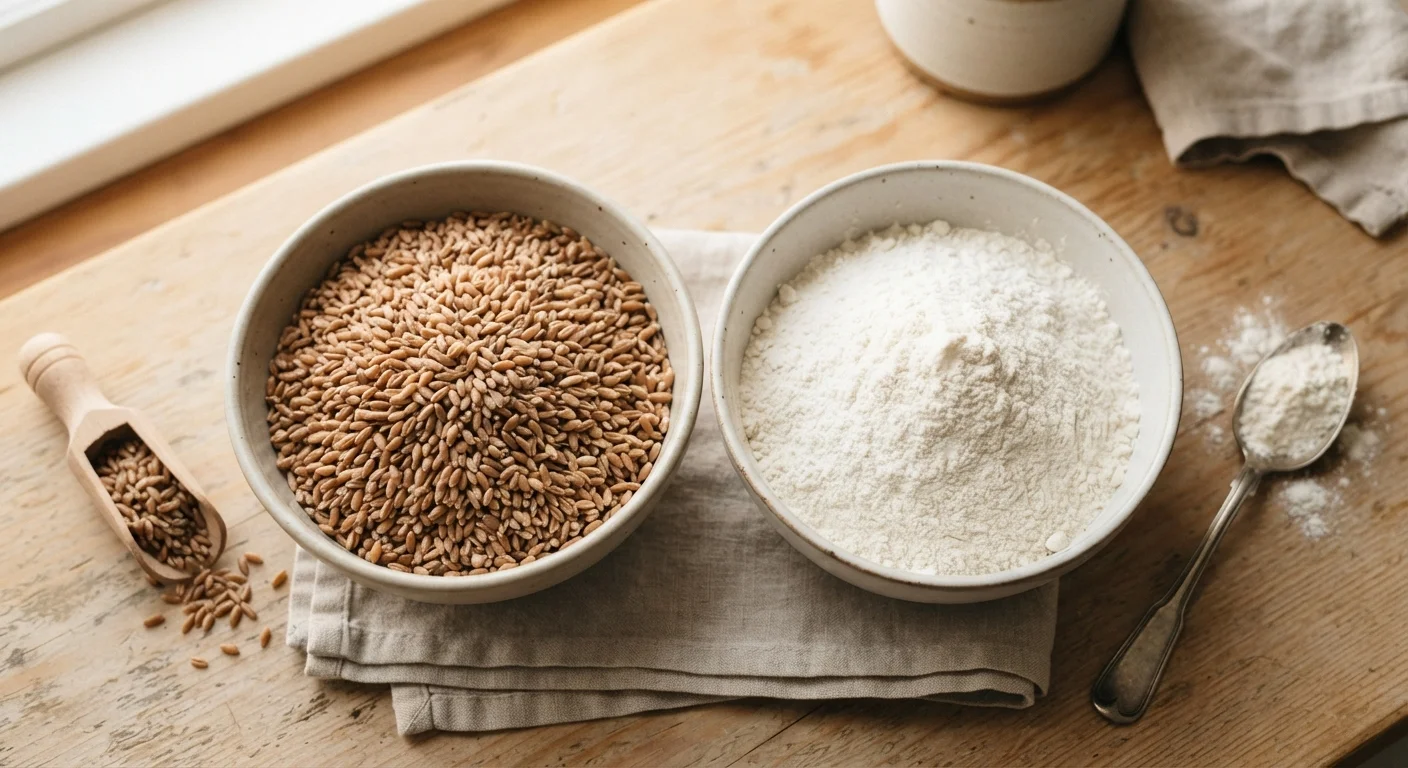
A grain kernel has three distinct parts: the outer bran, the nutrient-rich inner germ, and the starchy core called the endosperm. Whole grains keep all three intact. Refining removes the bran and germ, leaving mainly the endosperm.
That structural change matters more than it might seem. The bran is the primary source of dietary fiber - the nutrient most Americans already fall short on, according to the USDA's Dietary Guidelines. The germ contains healthy fats, vitamin E, B vitamins, and minerals like iron and magnesium. Once those layers are milled away, the resulting flour or grain is nutritionally much leaner.
To understand how this plays out on a nutrition label, see our guide on reading nutrition facts panels - knowing what to look for makes comparing grain products far more practical.
| Criterion | Whole Grains | Refined Grains |
|---|---|---|
| Kernel parts retained | Bran, germ, and endosperm | Endosperm only |
| Dietary fiber | High (naturally occurring) | Very low (not restored) |
| B vitamins | Naturally present | Partially restored via enrichment |
| Iron | Naturally present | Restored via enrichment |
| Antioxidants & phytonutrients | Present in bran and germ | Largely absent after milling |
| Shelf life | Shorter (germ contains fats) | Longer (germ removed) |
| Glycemic response | Generally more gradual | Generally faster spike |
What Enrichment Does - and Doesn't - Restore
Most refined grain products sold in the US are enriched, meaning manufacturers add back certain B vitamins (thiamin, riboflavin, niacin, and folic acid) and iron after processing. Enrichment was introduced in the 1940s to address widespread nutrient deficiencies, and it remains a legal requirement for many refined flour products.
Enrichment genuinely helps. Folic acid fortification, for example, has been linked by public health researchers to a significant reduction in neural tube defects. But enrichment has clear limits: fiber is not restored, and many phytonutrients and antioxidants found naturally in the bran and germ are not added back either.
95%
Americans not meeting whole grain recommendations
USDA Dietary Guidelines data indicate that the vast majority of US adults fall short of the recommended minimum of 3 servings of whole grains per day.
~25%
Fiber retained after grain refining
Milling whole wheat into refined white flour removes roughly 75% of its fiber content, according to general nutritional science literature on grain processing.
3+ servings
Daily whole grain goal per USDA guidelines
The USDA Dietary Guidelines for Americans recommend that at least half of all grains consumed be whole grains, equating to roughly 3 or more daily servings for most adults.
So while an enriched white bread and a whole wheat bread may look similar on a basic nutrient panel for certain vitamins, the fiber gap is real and consequential. Fiber supports digestive health, helps regulate blood sugar response after meals, and contributes to satiety - feeling fuller for longer.
For a broader look at how grains fit alongside other protein and nutrient sources, our protein sources comparison offers useful context.
Making the Switch: Practical Steps That Actually Work
Switching entirely to whole grains overnight is neither necessary nor realistic for most households. A gradual approach - sometimes called the half-and-half method - tends to be more sustainable. Try blending whole wheat flour with all-purpose flour in baking, or alternating brown rice and white rice across different meals during the week.
Some reliable starting points:
- Oats for breakfast - rolled or steel-cut oats are whole grains by default and widely available.
- Whole wheat pasta - most people find the taste difference mild, especially with a sauce.
- Popcorn - yes, plain air-popped popcorn counts as a whole grain snack.
- Whole grain bread - look for "whole wheat" or "whole grain" as the first ingredient, not just "wheat flour."
The deeper nutritional breakdown of grain processing explores the evidence behind these swaps in more detail, including what research says about long-term dietary patterns.
The goal isn't perfection - it's building a pattern where whole grains show up consistently. Even small, consistent shifts add up meaningfully over time.
This article provides general nutrition information and is not a substitute for personalized advice from a registered dietitian or qualified healthcare professional.