
Why Mulch Choice Matters
Mulch does more than make a garden bed look tidy. Applied correctly, it regulates soil temperature, retains moisture, suppresses weeds, and - in the case of organic types - gradually feeds the soil beneath it. The catch is that not every mulch suits every situation. Using the wrong type can waterlog shallow-rooted plants, prevent rain from reaching the soil, or simply break down before it offers much benefit.
Understanding the basic categories - organic versus inorganic - is your starting point. Organic mulches decompose over time, improving soil structure and adding nutrients. Inorganic mulches don't break down, which means they last longer but contribute nothing to soil health. Neither category is universally better; context determines the right pick. For a deeper look at why healthy soil matters beneath whatever you apply on top, see our Soil Health 101 guide.
| Best for vegetable gardens | Straw or shredded leaves |
| Longest-lasting organic mulch | Wood chips (1-3 years) |
| Best for acid-loving plants | Pine needles (pine straw) |
| Best for drought-tolerant plantings | Gravel or river rock |
| Recommended depth (most beds) | 2-3 inches (General horticultural guidance) |
| Minimum clearance from stems/trunks | 2-3 inches (Standard arboricultural practice) |
Organic Mulch Options at a Glance
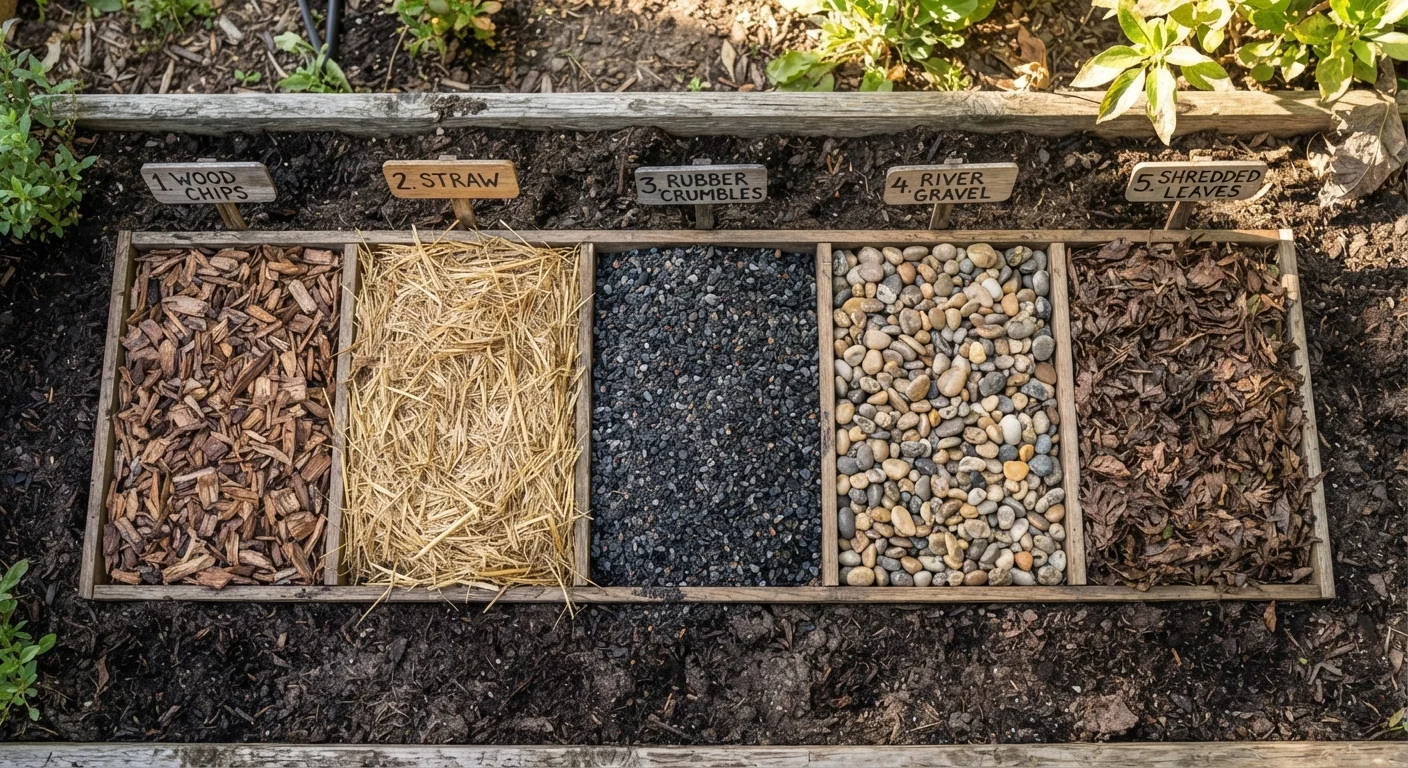
Organic mulches are the workhorses of most home gardens. Here's what each type does best:
- Wood chips and shredded bark: Dense and long-lasting (1-3 years before major decomposition). Excellent for pathways, tree rings, and shrub beds. Avoid piling directly against plant stems or tree trunks, which can trap moisture and invite rot.
- Straw: Lightweight and affordable. A go-to for vegetable gardens and new lawn seedings - it allows water and air through easily without compacting. Note that hay (different from straw) often contains weed seeds; choose certified weed-free straw.
- Shredded leaves: A free resource if you have deciduous trees. Leaf mulch breaks down relatively quickly, feeding the soil with organic matter. Shred leaves before spreading to prevent them from matting into a water-repelling layer.
- Compost: More of a soil amendment than a traditional mulch, but a 1-2 inch layer on top of beds acts as a slow-release nutrient source while suppressing light weed growth. Pair with a thicker mulch layer on top for better moisture retention. You can make your own with our home composting guide.
- Pine needles (pine straw): Ideal for acid-loving plants like blueberries, azaleas, and rhododendrons. They interlock naturally, resist blowing away, and decompose slowly.
Organic mulch
Any mulch derived from plant or animal material that breaks down over time, improving soil structure and adding nutrients as it decomposes. Examples include wood chips, straw, and shredded leaves.
Inorganic mulch
Mulch made from non-decomposing materials such as gravel, rock, or rubber. It provides weed suppression and moisture retention but does not contribute to soil fertility.
Volcano mulching
A harmful practice of piling mulch in a cone shape against a tree trunk or plant stem. It traps moisture, encourages rot, and can kill plants over time.
Soil amendment
Any material worked into or layered on soil to improve its texture, drainage, or nutrient content. Compost is a common example, distinct from surface mulches.
Inorganic Mulch Options at a Glance
Inorganic mulches trade soil-feeding benefits for durability and low maintenance. They're best in situations where you're not counting on the mulch to improve what's beneath it.
- Gravel and river rock: Excellent around drought-tolerant plants, succulents, and Mediterranean-style plantings. Gravel allows fast drainage and retains heat, which suits dry-climate plants but can stress moisture-loving species. It's also a popular choice along driveways and hardscape borders.
- Rubber mulch: Made from recycled tires, rubber mulch is long-lasting and stays in place well. It's a practical pick for playgrounds and high-traffic areas. However, it doesn't improve soil, can get very hot in direct sun, and is not recommended for edible gardens or areas where children may handle it regularly.
- Landscape fabric with topping: Fabric alone is rarely effective long-term - organic debris accumulates on top and weeds eventually root into it. If you use it, pair it with a gravel or chip layer over the top, and expect to replace it every several years.
Rubber Mulch and Edible Gardens
Rubber mulch is generally not recommended for use in vegetable gardens or anywhere edible plants are grown. Concerns exist around the potential for chemical leaching from recycled tire material into soil over time. For food-producing areas, stick with certified organic mulches such as straw, shredded leaves, or wood chips from untreated wood.
If you're mulching raised beds, the type you choose interacts directly with your bed's drainage setup. Compare your options in our raised beds vs. in-ground planting overview.
How Much to Apply - and What to Avoid
Depth matters as much as type. A general rule of thumb:
- 2-3 inches for most organic mulches in garden beds
- 3-4 inches for weed suppression in low-traffic areas
- 1-2 inches for fine or dense mulches (compost, pine needles) that can compact
- 2-3 inches for gravel in decorative or drainage-focused applications
Avoid the common mistake of "volcano mulching" - piling mulch up against tree trunks or plant stems in a cone shape. This traps moisture against the bark, promotes fungal disease, and can slowly girdle the plant. Keep mulch at least 2-3 inches away from stems and trunks, maintaining a flat, even layer.
Refresh organic mulch annually or when you notice it thinning significantly. Inorganic mulches may only need topping up every few years, though gravel beds benefit from periodic raking to remove debris.
25-50%
Reduction in soil moisture loss with mulch
Research from university extension programs consistently shows that a 2-3 inch mulch layer can cut evaporation significantly compared to bare soil.
10°F
Soil temperature buffer provided by mulch
A mulch layer can moderate soil temperature fluctuations by roughly 10°F, protecting roots from heat spikes and late frosts.