
What Actually Sets These Two Methods Apart
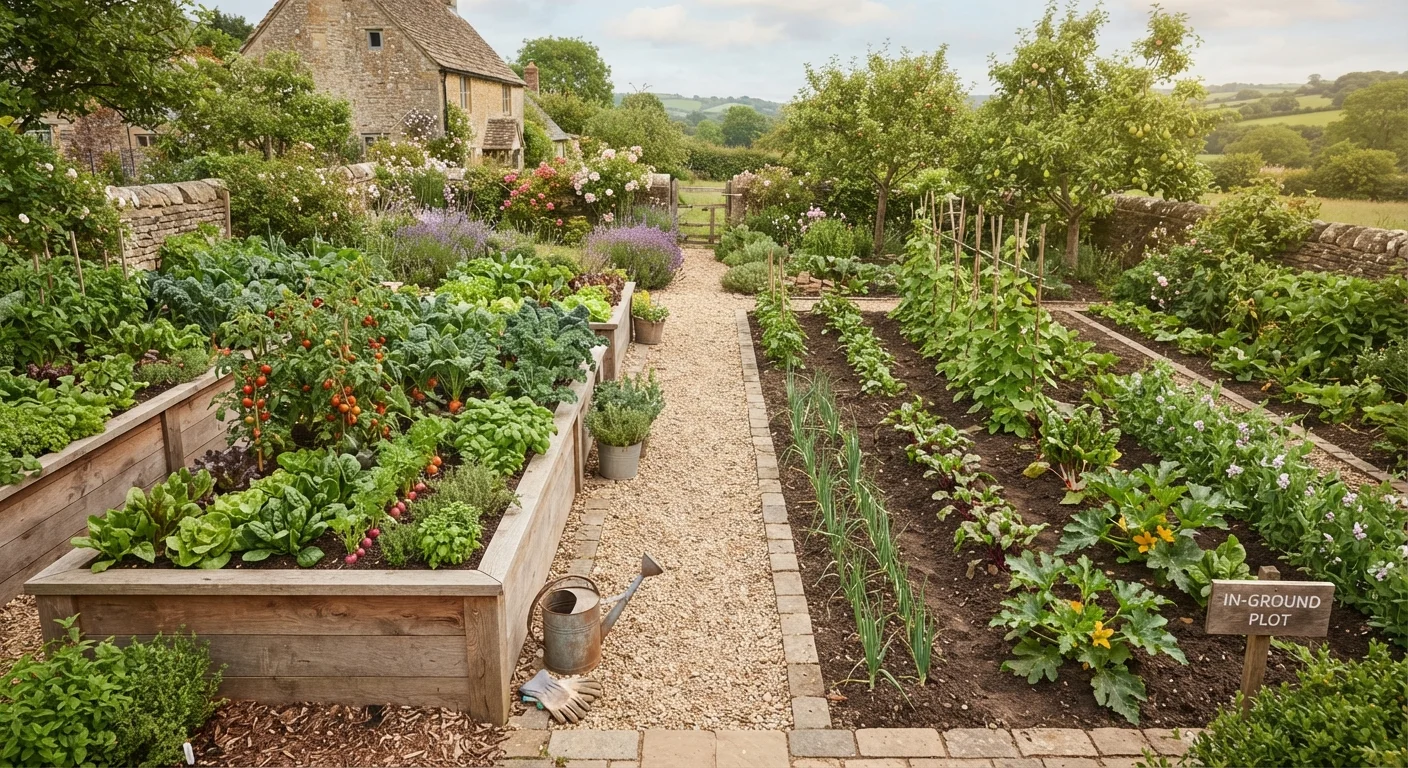
Raised beds are enclosed growing structures - typically built from wood, metal, or composite materials - filled with a custom soil blend that sits above the native ground. In-ground planting, by contrast, means working directly with your existing yard soil, amending it as needed and planting into it naturally.
The distinction sounds simple, but it shapes nearly every aspect of your gardening experience: how much you spend upfront, how well your plants drain, how much weeding you'll do, and how physically demanding maintenance becomes. If you're just getting started, our beginner's garden guide walks through the foundational decisions you'll face before choosing a setup.
| Criterion | Raised Garden Beds | In-Ground Planting |
|---|---|---|
| Upfront Cost | Higher ($100-$400+ per bed) | Lower (mainly labor and amendments) |
| Soil Control | Complete - you choose the fill | Dependent on native soil quality |
| Drainage | Excellent by design | Varies by yard grade and soil type |
| Weed Pressure | Significantly lower at the start | Higher, especially in year one |
| Scalability | Limited by cost and materials | Easily expanded across large areas |
| Growing Season | Longer - soil warms faster in spring | Standard - follows ambient conditions |
| Physical Accessibility | High - reduces bending and kneeling | Low - requires working at ground level |
| Deep-Rooted Crops | Limited by bed depth | Unrestricted rooting depth |
Soil Quality and Drainage: Where the Difference Is Most Felt
Soil control is arguably the biggest practical advantage of raised beds. You choose exactly what goes inside - a blend of topsoil, compost, and amendments tailored to what you're growing. If your yard sits on dense clay or sandy soil that drains poorly or dries out instantly, this ability to start fresh is transformative.
In-ground gardens depend heavily on what's already underfoot. The good news: healthy loamy soil with decent organic content can support robust gardens with far less fuss than a raised bed requires. The risk is that amending poor native soil takes several growing seasons of consistent effort - adding compost, covering with mulch, and building microbial life gradually.
6-8 inches
Minimum raised bed depth for most vegetables
Most extension gardening programs recommend at least 6 inches of growing medium for shallow-rooted crops; 12 inches or more for root vegetables like carrots.
10-15 years
Typical lifespan of untreated cedar raised bed frames
Cedar's natural oils resist decay; pine or fir frames may need replacement sooner without lining or sealant, according to general horticultural guidance.
2-4 weeks
Earlier planting window in raised beds
Because elevated soil warms faster than ground-level plots, many gardeners can transplant seedlings several weeks ahead of their in-ground counterparts in the same climate zone.
Drainage tells a similar story. Raised beds drain from the bottom and sides, which is a genuine advantage in regions with heavy rainfall or high clay content. In-ground plots in flat yards can pool water after storms, increasing the risk of root rot. That said, strategic in-ground techniques - like raised rows, swales, or incorporating organic mulch - can improve drainage considerably. Our guide on mulch types and their uses explains which materials improve soil structure most effectively.
Cost, Scale, and Long-Term Commitment
Setup costs diverge sharply between these two methods. A single 4×8-foot raised bed with materials and quality soil mix can run anywhere from $100 to $400 or more, depending on the frame material and fill blend. Scale that up to a full kitchen garden and the investment becomes significant.
In-ground planting, by comparison, requires mostly labor and soil amendments. Renting a tiller, buying compost, and adding starter fertilizer might cost a fraction of what raised beds demand. For gardeners who want to grow at scale - dozens of tomato plants, long rows of beans, or sprawling winter squash - in-ground growing is simply more practical on a per-square-foot basis.
Raised beds, however, tend to earn their keep over time. Wood frames often last 10-15 years with basic care; galvanized metal beds can last decades. They also require less annual tilling, reduce compaction since you never walk in them, and tend to produce earlier harvests due to faster spring soil warming. For a broader look at vegetable garden planning across seasons, our backyard vegetable garden guide covers layout and succession planting in depth.
Consider Your Long-Term Garden Vision
Neither method is permanent. Many gardeners start in-ground to learn the basics affordably, then add raised beds over time for specific crops or problem areas. The two approaches can also coexist in the same yard - using raised beds for herbs and salad greens while growing pumpkins or corn in-ground. Think about where you want to be in three to five seasons, not just this year.
Weed Pressure, Pest Management, and Accessibility
Weeding is less burdensome in raised beds - particularly when you start with weed-free fill soil and add a layer of organic mulch. Because you're not disturbing dormant weed seeds from the native soil bank, the first few seasons can be dramatically lighter work. In-ground beds, especially those converted from lawn or fallow ground, typically come with a significant weed seed reservoir that takes years to deplete.
Pest pressure is more nuanced. Raised beds don't eliminate soil-dwelling insects, but their defined boundaries make it easier to add hardware cloth at the bottom to deter burrowing animals, or install row covers as a physical barrier. In-ground gardens have the natural advantage of supporting a wider diversity of soil life - earthworms, beneficial nematodes, and microbes - which builds long-term plant resilience when soil health is managed well.
Accessibility is where raised beds clearly win for many gardeners. An 18-24 inch tall bed eliminates most stooping and kneeling. If gardening with physical limitations is a consideration, the trade-offs of container gardening are also worth comparing, since pots offer yet another alternative for tight spaces or mobility-first setups.