
Why Shade Gardens Deserve More Credit
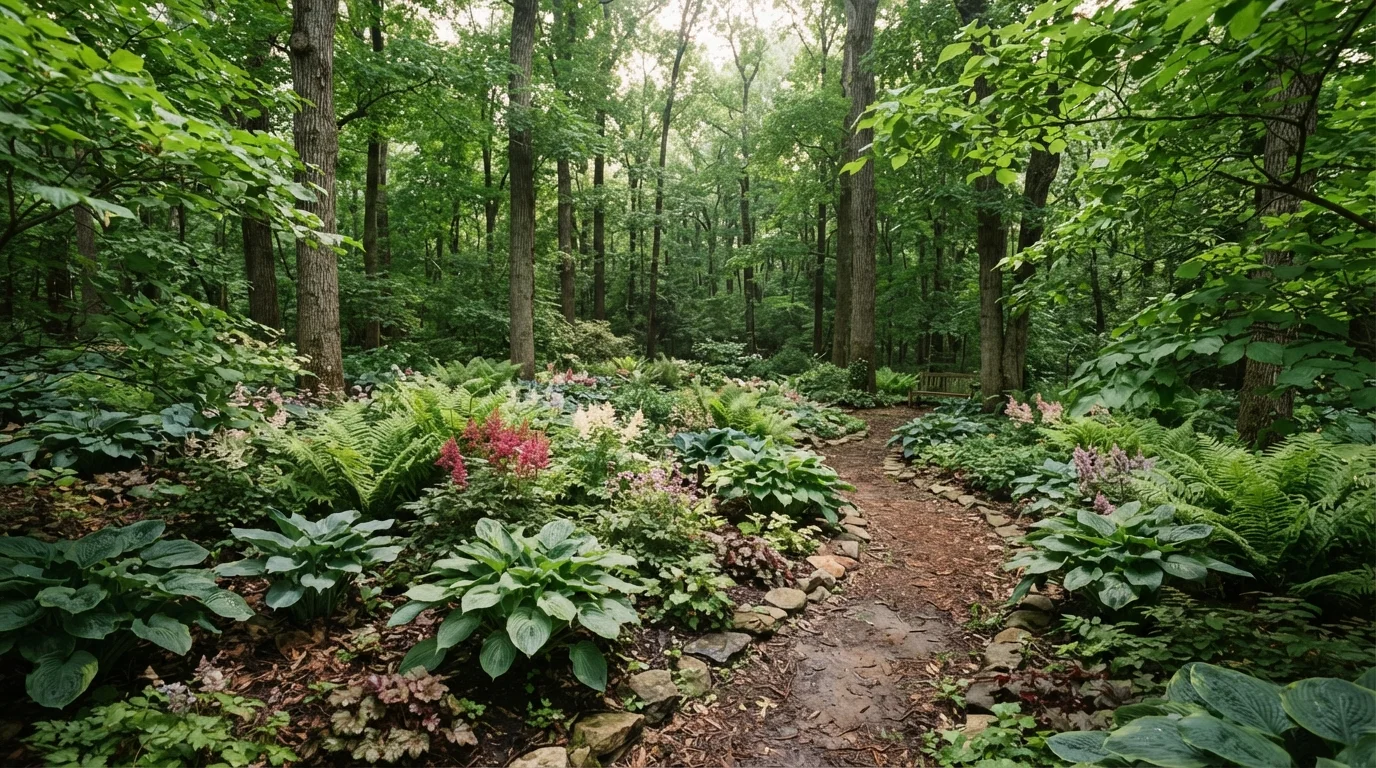
Many gardeners treat shaded areas as problem spaces - spots where grass won't grow and nothing seems to thrive. But shade gardens, when designed thoughtfully, can be among the most serene and low-maintenance spaces on a property. The key is understanding what shade actually means, and working with it rather than against it.
Unlike vegetable gardens, which generally require full sun (typically six or more hours of direct light daily), shade-adapted plants have evolved to photosynthesize efficiently in lower-light conditions. Their large, broad leaves are designed to capture diffuse light, making them ideal for spots beneath established trees or on the north side of a house.
If you're accustomed to sun-focused growing, it's worth noting the contrast: vegetable gardening demands the brightest spots in your yard, so shaded beds are best used for ornamental planting. That specialization is actually an advantage - once established, shade gardens generally require less watering, less weeding, and fewer pest interventions than exposed sunny beds.
Know Your Shade Before You Plant
Not all shade is equal. Dappled shade (shifting light through a canopy) differs significantly from dense, full shade cast by a building or evergreen hedge. Planting a species rated for dappled light into deep shade almost guarantees failure. Observe your space at different times of day and across seasons before committing to a planting plan.
What You'll Need Before You Start
Successful shade gardening starts with honest observation and the right materials. Before purchasing any plants, spend time in the space during different times of day to understand your light conditions. Then gather the basics:
What you will need
Garden trowel
Used for digging individual planting holes and transplanting small plants.
Garden fork
Loosens compacted soil and helps incorporate compost into existing planting beds.
Compost or aged organic matter
Improves soil structure and fertility in shaded areas where soil quality is often poor.
Mulch (shredded bark or leaf mold)
Retains soil moisture, suppresses weeds, and regulates soil temperature in shaded beds.
Containers or planters
Useful for placing plants in root-congested areas under established trees.
If you're shopping for plants, learn to read plant tags accurately - the light, spacing, and hardiness zone information tells you whether a plant is genuinely suited to your conditions. Our guide on reading plant labels walks through exactly what those symbols and ratings mean.
Step-by-Step: Creating Your Shade Garden
Follow these steps in sequence for the best results. Each stage builds on the last - rushing through soil preparation or skipping your light assessment will make later steps harder.
Assess and classify your shade type
Walk your yard at morning, midday, and late afternoon on a clear day. Track which areas receive direct sun and for how long. Use this to classify each zone:
- Dappled shade: shifting light through a deciduous canopy - supports the widest plant range
- Partial shade: 2-4 hours of direct sun daily - suitable for many flowering perennials
- Full shade: fewer than 2 hours of direct sun - requires specially adapted plants
Note also whether shade is cast by trees (living, moisture-drawing roots nearby) or structures (buildings, fences), as this affects soil conditions.
Prepare and amend the soil
Shade garden soil is often compacted, root-filled, or depleted of nutrients. Before planting, loosen the top 6-8 inches of soil where root competition allows, then work in 2-3 inches of compost or aged leaf mold. This improves drainage, adds fertility, and encourages beneficial soil organisms.
In areas with dense tree roots, avoid deep digging. Instead, lay 2-3 inches of compost on the surface and plant into that layer. Most shade perennials have shallow root systems that will adapt well to this approach.
Select plants suited to your shade level
Match plant choices to your classified shade type. Reliable options by category include:
- Dappled to partial shade: Astilbe (feathery flower plumes), bleeding heart (Lamprocapnos), Japanese forest grass (Hakonechloa), and woodland phlox
- Full to deep shade: Hostas (wide variety of leaf size and color), ferns (many native species available), epimedium (excellent ground cover), and sweet woodruff
- Ground covers for bare soil under trees: Pachysandra, wild ginger (Asarum), and creeping Jenny
Many native shade plants also support local pollinators. See our guide on native plants and pollinators for regionally specific options.
Design a layered planting layout
Effective shade gardens use vertical layering to mimic natural woodland structure and maximize interest throughout the season:
- Canopy layer: Existing trees or large shrubs (already present in most cases)
- Mid-layer shrubs: Oakleaf hydrangea, mountain laurel, or rhododendron where partial light permits
- Perennial layer: Hostas, ferns, astilbe, and coral bells grouped in odd-numbered clusters of 3 or 5
- Ground layer: Low creeping plants that suppress weeds and cover bare soil between larger specimens
Place larger-leaved plants at the back or center (depending on your sightline) and smaller, finer-textured plants toward edges. This creates depth and draws the eye through the space.
Plant, water, and mulch
Dig each planting hole only as deep as the root ball and twice as wide. Set the plant so its crown (where roots meet stem) sits at soil level - planting too deep is a common cause of failure in shaded, slower-draining spots. Backfill with the amended soil, firm gently, and water thoroughly.
Apply 2-3 inches of mulch across the entire bed, keeping it a few inches away from plant stems. Mulch is especially valuable in shade gardens because it retains moisture, moderates temperature, and gradually feeds the soil as it breaks down.
If working around a tree with limited planting space, container gardening is a practical alternative that avoids root competition entirely.
Establish a watering and maintenance routine
Newly planted shade gardens need consistent moisture for their first full growing season. Water deeply once or twice per week, depending on rainfall and soil drainage. Once established, many shade perennials are relatively drought-tolerant, though they still appreciate consistent soil moisture during dry spells.
Annual maintenance tasks include dividing overcrowded perennials every 3-4 years, refreshing mulch each spring, and removing spent foliage in late fall or early spring. Avoid heavy fertilizing - in shaded conditions, lush new growth from excess nitrogen is more susceptible to slugs and fungal problems.
Brighten Shade With Foliage Color
When flowers are limited in low-light spaces, rely on foliage contrast to add visual interest. Pair the chartreuse leaves of 'Sum and Substance' hosta with the deep burgundy of coral bells (Heuchera) for a striking combination that requires no blooms. Silver or variegated leaves also reflect available light and make shaded corners feel more open.
Tree Root Competition Is Real
Planting directly into soil filled with surface tree roots can stress both the new plants and the tree itself. Avoid deep digging near large root zones. Instead, build raised planting pockets with added compost between roots, or use containers positioned in shaded areas. Always research your tree species before disturbing the root zone.
Design Principles That Make Shade Gardens Work
Beyond plant selection, a few design principles separate a thriving shade garden from a disappointing one:
- Embrace foliage as the main event. Blooms in shade are often brief; leaf texture, color, and form carry the space through the season.
- Use contrast deliberately. Pair fine-textured ferns with bold hosta leaves, or dark-leafed coral bells against bright variegated ground covers.
- Define edges cleanly. A crisp edge between the planting bed and lawn or path gives a shade garden a finished, intentional look without requiring elaborate structure.
- Think in seasons. Early spring ephemerals like Virginia bluebells bloom before tree canopy fills in, filling gaps before summer shade plants take over.
Shade gardening shares some principles with low-water landscaping - both prioritize plant selection suited to existing conditions rather than trying to modify the environment to fit a preferred plant.