
Planning Your Layout
A productive vegetable garden starts on paper, not in the ground. Before you buy a single seed, map your available space and observe how sunlight moves across it throughout the day. Most vegetables - tomatoes, peppers, squash, beans, cucumbers - require a minimum of six hours of direct sun daily. Leafy greens and root vegetables tolerate four to five hours, making them candidates for slightly shadier spots. If your yard has significant shade, see our guide to shade gardening for alternative strategies.
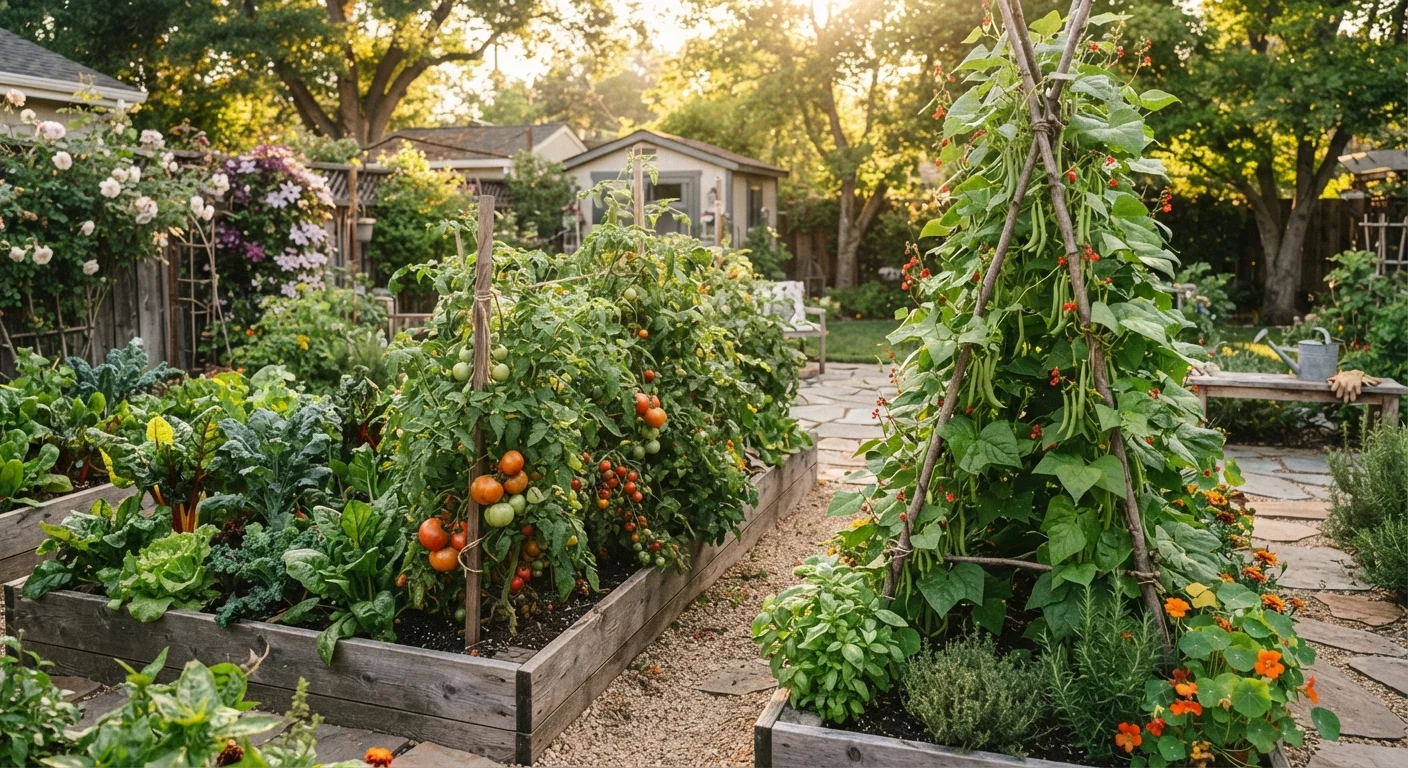
Next, decide between raised beds, in-ground rows, or containers. Each has real trade-offs in cost, soil control, and drainage. Our article on raised beds vs. in-ground planting walks through those differences in detail. If you are new to gardening entirely, starting a garden from scratch covers essential ground-prep steps before your first season.
Design beds no wider than four feet so you can reach the center from either side without stepping on the soil - compacted soil restricts root growth and drainage. Keep paths at least 18 inches wide. Orient rectangular beds north-to-south so taller plants at the north end cast minimal shadow over shorter crops.
Sketch Your Garden Before You Dig
Use free grid-paper tools or even a simple hand-drawn sketch to map bed dimensions, sun exposure, and planned crop locations. Placing tall crops like tomatoes or corn on your layout first prevents you from accidentally shading out shorter neighbors. Revisit the sketch each season to rotate crop families and reduce soil-borne disease buildup.
Choosing the Right Crops
Match crops to your climate and your household's actual eating habits. Growing a bumper crop of eggplant is only rewarding if your family eats it. Start by consulting your USDA Hardiness Zone and average last-frost date - both are free to look up on the USDA Plant Hardiness Zone Map. These two data points determine when you can safely transplant warm-season crops and how long your frost-free window runs.
Divide crops into two broad camps: cool-season (lettuce, spinach, kale, peas, carrots, beets) and warm-season (tomatoes, peppers, cucumbers, squash, beans). Cool-season crops tolerate light frost and bolt - go to seed prematurely - when temperatures climb consistently above 75°F. Warm-season crops stall or die if soil temperature drops below 50°F.
6+ hrs
Daily sun required for most vegetables
General agronomic guidance consistently cites six or more hours of direct sunlight as the threshold for productive warm-season vegetable growing.
2-3 weeks
Succession sowing interval for continuous harvest
University extension services commonly recommend staggered plantings at two-to-three-week intervals for crops like lettuce, radishes, and beans to avoid simultaneous gluts.
55°F
Minimum soil temperature for tomato transplanting
Cooperative extension research indicates tomato root development is severely limited in soil temperatures below 55°F, making soil thermometers a practical tool for timing transplants.
For a small 4×8 raised bed, a practical starter selection might include one or two tomato plants, a row of bush beans, a short row of carrots, and a cut-and-come-again lettuce mix. That single bed can supply a family of two to four with regular harvests across the growing season when managed well.
Companion Planting Strategies
Companion planting is the practice of growing certain crops near one another because they offer mutual benefits - pest deterrence, pollinator attraction, or improved soil chemistry. The classic example is the Three Sisters: corn, beans, and squash grown together. Corn provides a climbing structure for beans, beans fix atmospheric nitrogen into the soil, and squash leaves shade the ground to suppress weeds and retain moisture.
Basil planted near tomatoes is widely reported by gardeners to repel aphids and whiteflies, though the scientific evidence is mixed. What is well-documented is that flowering herbs and edible flowers - dill, fennel, nasturtiums, marigolds - draw beneficial insects such as parasitic wasps and hoverflies that prey on common garden pests. Incorporating a few flowering plants into your vegetable beds also supports local pollinators; see our piece on native plants and pollinators for broader context.
When choosing companion flowers, prioritize species with open, accessible blooms - single-petaled marigolds and flat-topped dill umbels are far more useful to beneficial insects than double-petaled ornamental varieties whose nectar is inaccessible.
Beneficial insects like hoverflies and parasitic wasps need easily accessible pollen and nectar; densely packed double flowers effectively lock them out, making the plants decorative but not functionally useful for pest control.
Sow a small patch of fast-maturing radishes between slow-growing crops like carrots or parsnips. Radishes germinate quickly and mark the row, making it easy to weed without disturbing the slower seeds below.
This technique, known as a 'nurse crop,' reduces early weed competition and eliminates the frustrating guesswork of distinguishing young vegetable seedlings from weeds in a bare-soil row.
Some pairings actively harm each other. Keep fennel away from most vegetables - it suppresses growth in tomatoes, peppers, and beans. Onions and garlic can stunt bean growth when planted too close. A simple rule: when in doubt, keep alliums (onions, garlic, leeks) grouped together rather than scattered through mixed beds.
Seasonal Succession Planting
Succession planting means making multiple, staggered sowings of the same crop rather than planting everything at once. Sow a short row of lettuce or radishes every two to three weeks from early spring through late summer, and you get a continuous trickle of harvest instead of a single overwhelming glut followed by bare soil.
Think of your garden in three overlapping seasons:
- Cool-season (spring and fall): Peas, lettuce, spinach, kale, brassicas, root vegetables. Start these as early as four to six weeks before your last frost date in spring, and again in late summer (count back from your first fall frost date) for an autumn harvest.
- Warm-season (summer): Tomatoes, peppers, cucumbers, squash, beans. Transplant after last frost when soil has warmed to at least 60°F.
- Late-season gap-filling: When a spring crop finishes, immediately replant that space with a warm-season seedling or a fast-maturing cool-season crop for fall. This practice - called interplanting or relay planting - eliminates bare soil, which invites weeds.
For a full quarterly breakdown of what tasks each transition demands, our seasonal garden maintenance checklist is a practical companion resource.
Soil Temperature Matters More Than Calendar Date
Planting warm-season crops on the 'right' calendar date means little if the soil is still cold. Tomato roots planted into soil below 55°F will stall and become vulnerable to disease, even if air temperatures are warm. Use an inexpensive soil thermometer to confirm temperatures at a four-inch depth before transplanting. A few extra days of waiting pays off in stronger, faster-establishing plants.
Pest Management Without Panic
Most pest problems in vegetable gardens stem from one of three conditions: stressed plants, poor air circulation, or an absence of beneficial insects. Address root causes before reaching for any spray - even approved organic options can harm beneficial insects when misapplied.
Adopt an Integrated Pest Management (IPM) approach, which prioritizes observation, physical controls, and biological solutions before chemical interventions. Scout your garden at least twice a week, checking the undersides of leaves where aphids, spider mites, and whitefly eggs typically cluster. Early detection prevents minor infestations from becoming destructive.
Avoid Broad-Spectrum Pesticides
Products that kill a wide range of insects indiscriminately - including pyrethrin sprays often labeled 'organic' - can decimate populations of beneficial insects like bees and parasitic wasps. Once beneficial populations collapse, pest problems tend to worsen the following season. Reserve any spray for targeted, last-resort use and apply only in the early morning or evening when pollinators are less active.
Physical controls handle most common threats: row cover fabric protects brassicas from cabbage moths; copper tape or crushed eggshells deter slugs; hand-picking works for tomato hornworms and squash bugs when populations are small. Attracting predatory insects through companion planting (see the previous section) builds a natural control system that runs itself over time.
Healthy soil is your best long-term defense. Plants grown in biologically active, well-nourished soil are more resistant to pest and disease pressure. Building your own compost is one of the most cost-effective ways to maintain that soil health year over year. Our guide on composting at home explains exactly how to get started.
Harvesting for Maximum Yield
Harvesting is not a one-time event - it is an ongoing management task. The core principle is simple: pick frequently to keep plants producing. Zucchini left on the vine beyond six to eight inches signals the plant to slow fruit production. Beans allowed to mature and dry on the plant tell the plant its reproductive goal is complete; it stops flowering. Herbs that are never cut bolt to seed quickly, turning bitter.
Harvest in the morning when plant tissues are firm and well-hydrated. Use clean, sharp scissors or pruners rather than pulling or twisting, which can damage stems and introduce disease. For tomatoes, harvest at full color and allow to ripen at room temperature indoors - refrigeration blunts flavor. Root vegetables like carrots and beets can often be left in the ground past maturity and harvested as needed, provided temperatures stay above freezing.
At season's end, pull spent plants, add them to your compost pile (avoid diseased material), and amend beds with two to three inches of finished compost before winter. This single practice - returning organic matter to the soil each year - is what separates gardens that improve with time from those that gradually decline.
Growing your own vegetables connects directly to a more nutritious diet; explore evidence-based guidance on building that connection at healthy eating or dive deeper at nutrition and diet.