
How Manufacturer Service Schedules Actually Work
Open almost any owner's manual and you'll find service intervals written as a dual trigger: "every 5,000 miles or 6 months, whichever comes first." That phrasing isn't redundant - it's intentional. Automakers build in both conditions because vehicle wear isn't driven by mileage alone.
Fluids degrade chemically through heat cycling, moisture absorption, and oxidation - processes that happen even when the car sits in a driveway. Rubber seals, belts, and hoses age on a clock regardless of odometer readings. Mileage, meanwhile, tracks mechanical wear on moving parts: brakes, filters, spark plugs, and transmission components accumulate stress with every rotation.
The practical rule: whichever threshold you reach first is the one that matters. Treating these as interchangeable - or assuming one cancels the other - is where drivers get into trouble. See our overview of essential maintenance tasks for a broader look at what genuinely needs attention and when.
| Criterion | Time-Based Intervals | Mileage-Based Intervals |
|---|---|---|
| Primary trigger | Calendar months elapsed | Odometer miles accumulated |
| Best suited for | Low-mileage or infrequent drivers | High-mileage daily commuters |
| Key components covered | Oil, coolant, brake fluid, belts | Filters, brakes, tires, spark plugs |
| Risk if ignored | Fluid degradation, seal deterioration | Mechanical wear, filter clogging |
| Tracking method | Calendar reminder or service sticker | Odometer reading or oil life monitor |
| Owner's manual guidance | Always specifies a maximum age limit | Always specifies a maximum mileage cap |
When Time Matters More Than Mileage
A driver who logs only 4,000 miles a year might feel their oil change can wait - after all, they're nowhere near the 5,000-mile mark. But if that oil has been sitting in the engine for 14 months, it has likely oxidized, accumulated moisture, and lost its viscosity rating. The engine doesn't know the car stayed parked; the oil chemistry deteriorated on its own timeline.
Time-based triggers are particularly critical for:
- Engine oil - most manufacturers specify a maximum interval of 12 months even for synthetic formulas, regardless of miles driven.
- Coolant and brake fluid - both absorb moisture over time, reducing effectiveness independent of usage.
- Timing belts - these carry both a mileage and an age limit; an 8-year-old belt at 55,000 miles may still be overdue for replacement.
Ignoring time-based intervals is one of the subtler habits that quietly accelerates vehicle wear, especially for infrequent drivers who assume a low odometer reading means everything is fine.
~1 in 3
Drivers who skip or delay routine oil changes
Industry service data consistently suggests a significant share of vehicles arrive at shops with overdue oil - often because drivers relied solely on mileage and drove too little to trigger the threshold.
12 months
Maximum oil change interval regardless of mileage
Most major automakers specify a 12-month maximum for engine oil replacement in their owner's manuals, even when using full synthetic formulations rated for extended mileage intervals.
15,000 mi
Average annual mileage for U.S. drivers
According to the Federal Highway Administration, the average American driver travels approximately 14,000-15,000 miles per year, making mileage-based triggers the more frequent concern for typical use.
When Mileage Is the Dominant Factor
For drivers covering 15,000 to 20,000 miles annually, mileage thresholds arrive long before the calendar deadline. At that usage rate, engine oil accumulates combustion byproducts, air filters clog with road debris, and brake pads wear at a rate that demands mileage-based tracking.
Components most directly governed by usage include:
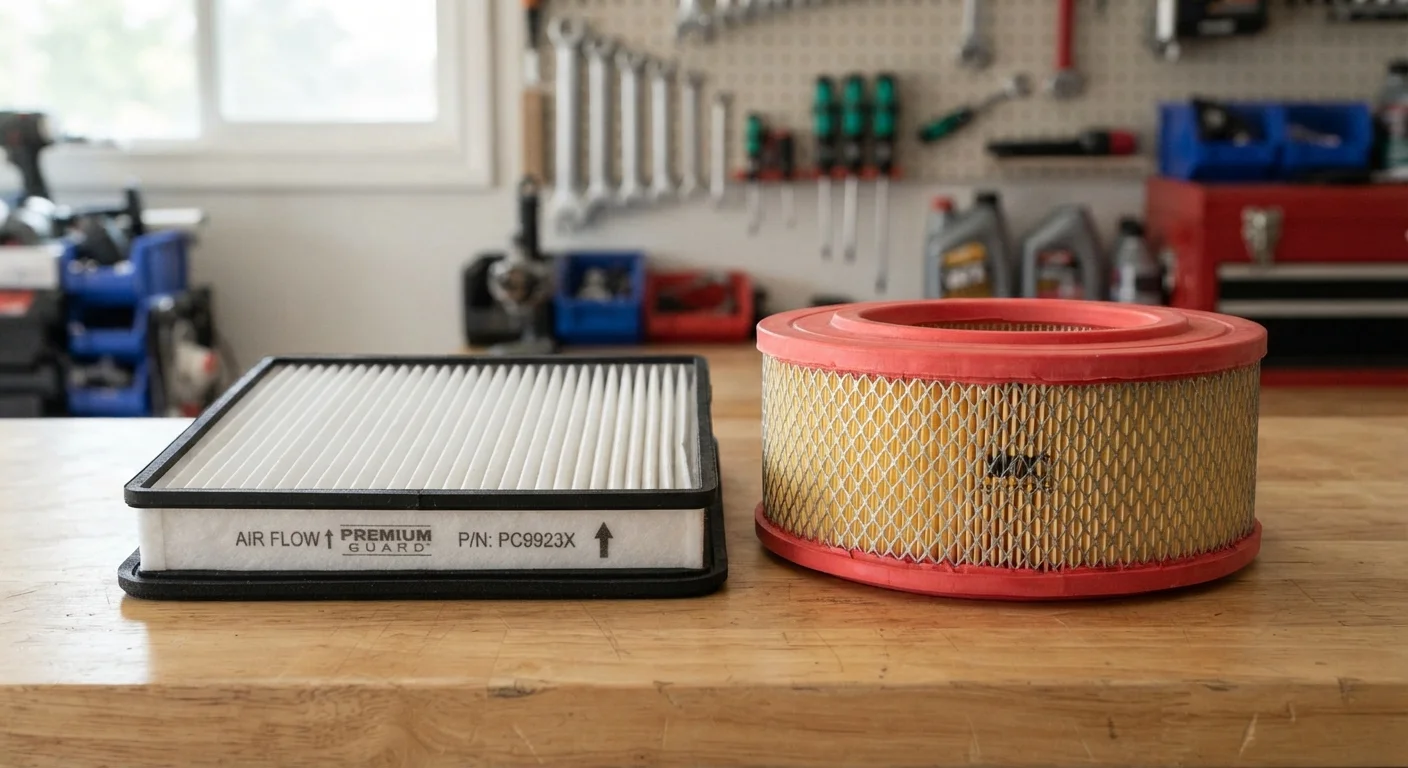
- Engine air and cabin filters - clog proportionally to miles driven through dusty or urban environments.
- Brake pads and rotors - wear correlates directly with driving frequency and style, not time.
- Tires - tread depth depletes with distance; rotation intervals are always mileage-driven.
- Spark plugs - modern iridium plugs are typically rated to 60,000-100,000 miles, a threshold high-mileage drivers approach faster.
If you're managing a high-mileage vehicle, this overview of high-mileage maintenance priorities covers what to monitor more closely once you pass 100,000 miles.
Putting It Into Practice: A Reliable Decision Framework
Rather than choosing one approach over the other, treat time and mileage as a two-alarm system. Check both whenever you're deciding whether service is due:
- Look up your specific intervals in the owner's manual - not a generic rule of thumb. Intervals vary by vehicle, fluid type, and driving conditions (severe vs. normal duty).
- Note which threshold is closer - if you're at 4,800 miles and 11 months on your oil, the mileage trigger will likely arrive first. If you're at 3,000 miles and 13 months, time has already won.
- Adjust for driving conditions - short trips under 10 miles, extreme heat or cold, and towing all qualify as "severe" driving and shorten recommended intervals.
- Use oil life monitoring as a guide, not a guarantee - these systems are sophisticated but don't replace reading fluid condition or watching for warning signs.
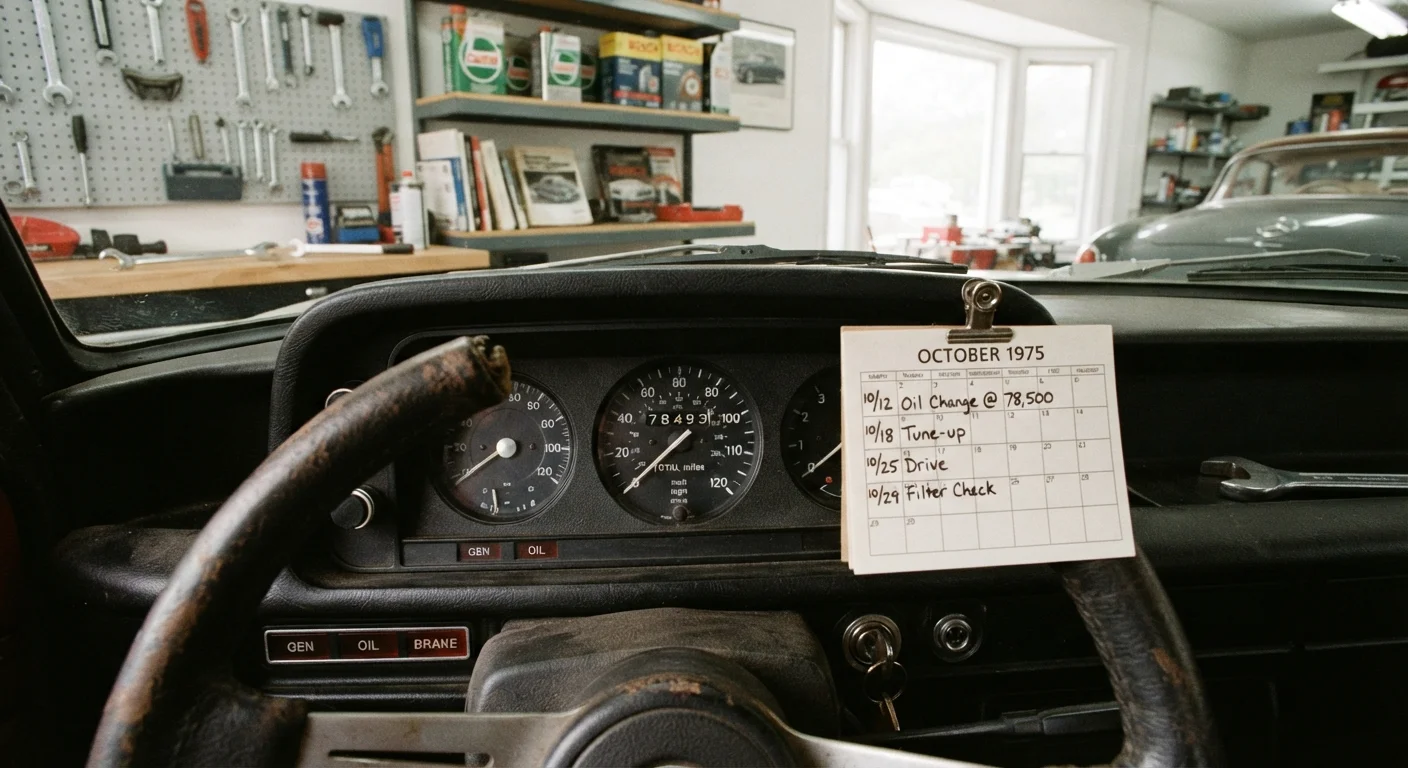
Keeping a clear service record makes this tracking far easier. Documenting each service with date and mileage lets you see at a glance which trigger applies next. And if you've been inconsistent with service timing, understand what deferred maintenance can compound into before small oversights become expensive repairs.
Severe Duty Conditions Shorten Both Intervals
Manufacturers define "severe" driving as frequent short trips, extreme temperatures, towing, off-road use, or stop-and-go traffic. Under these conditions, both time and mileage thresholds are typically cut by 30-50% compared to the normal schedule. If your driving matches any of these patterns, use the severe-duty column in your owner's manual rather than the standard one.