
What Your Brakes Are Trying to Tell You
Brakes don't usually fail without warning. Most problems announce themselves through sounds, sensations, or changes in pedal behavior - if you know what to listen and feel for. Catching these signals early is the difference between a straightforward pad replacement and a much more expensive repair.
| Typical brake pad lifespan | 25,000-65,000 miles (Varies widely by driving style, vehicle weight, and pad material) |
| Brake fluid flush interval | Every 2-3 years or per manufacturer schedule (Consult your owner's manual for the specific interval) |
| Minimum rotor thickness | Stamped on rotor edge; varies by vehicle (Rotors below minimum discard thickness must be replaced) |
| Wear indicator noise | High-pitched squeal (Built-in metal tab that contacts the rotor when pads are low) |
| ABS warning light | Signals ABS system fault, not always total brake failure (Base braking typically remains; prompt inspection still required) |
For a broader look at fluid-related maintenance, including brake fluid, see our guide on car fluids every driver should know how to check.
Common Brake Warning Signs Explained
Squealing or Squeaking
A persistent high-pitched squeal - especially when stopping - is usually the wear indicator doing exactly what it's designed to do. Most disc brake pads include a small metal tab that contacts the rotor when pad material runs low, producing that unmistakable sound. Occasional squealing after rain or a vehicle that's been sitting is generally normal; constant squealing is not.
Grinding Noise
Grinding means the pad material is likely gone and metal is contacting metal - rotor against caliper bracket or backing plate. At this stage, both the pads and the rotor often need replacement. Continuing to drive on grinding brakes accelerates damage rapidly.
Pulling to One Side
If the car drifts left or right under braking, it may indicate uneven pad wear, a sticking caliper, or a brake line issue on one side. This symptom can also overlap with tire and suspension problems, so a full inspection is warranted.
Spongy or Soft Pedal
A pedal that travels unusually far before the brakes engage - or that feels soft rather than firm - points to air in the brake lines or degraded brake fluid. Both conditions reduce hydraulic pressure and braking effectiveness.
Dashboard Warning Lights Aren't Always Obvious
A brake warning light can mean anything from low brake fluid to a parking brake left engaged. If the light stays on while driving, pull over safely when possible and have the system inspected. Do not assume one cause without a professional diagnosis.
Vibration or Pulsing Under Braking
Brake pedal pulsation during normal stops often signals a warped or unevenly worn rotor. This is distinct from the intentional pulsing you feel when ABS activates during a hard stop on a slippery surface.
Brake Pad
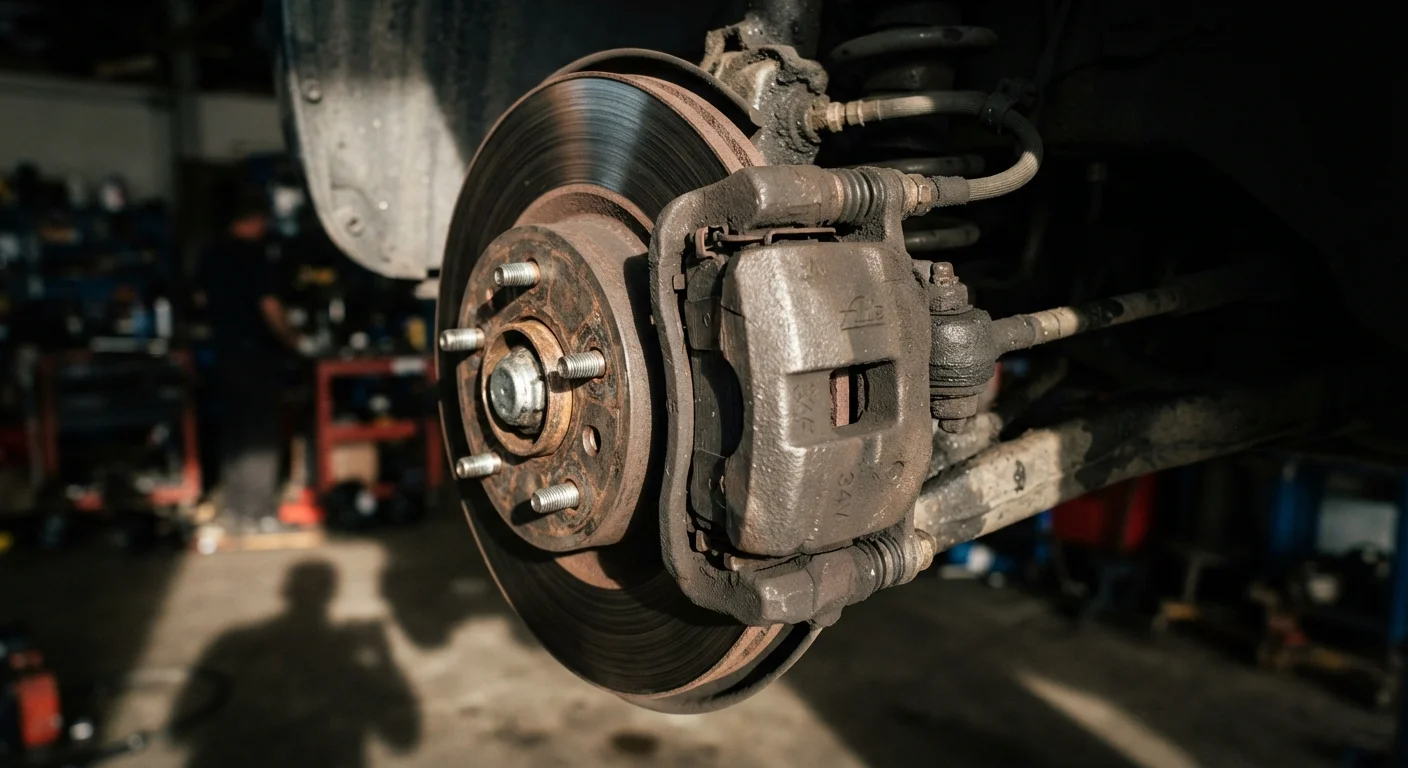
A friction material pressed against the rotor to slow or stop the vehicle. Pads wear down over time and must be replaced before they reach metal-on-metal contact.
Rotor
The flat metal disc that rotates with the wheel. Brake pads clamp against it to create the friction needed to stop. Rotors can warp or score with heavy use.
Brake Caliper
The hydraulic clamp that squeezes brake pads against the rotor. A sticking caliper can cause uneven braking or excessive heat buildup.
ABS (Anti-lock Braking System)
A safety system that prevents wheels from locking up during hard braking, allowing the driver to maintain steering control. When ABS activates, drivers typically feel a pulsing in the pedal.
Brake Fade
A temporary loss of braking effectiveness caused by excessive heat - common when brakes are overworked on long downhill grades or during repeated hard stops.
Brake Fluid
A hydraulic fluid that transmits pressure from the pedal through the brake lines to the calipers. Low or degraded brake fluid can cause a soft or spongy pedal feel.
When to Get an Inspection - and What to Expect
Any of the symptoms above is sufficient reason to have your brakes inspected promptly. A qualified mechanic will assess pad thickness, rotor condition, caliper function, and brake fluid quality. This inspection is typically quick and, in many shops, free or low-cost.
If you're new to routine vehicle upkeep, the car maintenance guide for new drivers covers brake checks alongside other essential maintenance tasks. Before a long road trip, include brakes in your pre-trip safety check.
Ignoring brake symptoms is one of the maintenance habits that shorten a car's lifespan - and unlike many wear items, brakes directly affect your ability to avoid a collision. When in doubt, have them looked at. The cost of timely inspection is almost always lower than the cost of delayed repair.
~22%
Crashes linked to brake-related issues
According to NHTSA data, brake-related factors are among the most common vehicle causes in pre-crash scenarios.
25,000-65,000 mi
Typical brake pad lifespan range
Driving habits, load, and terrain can move this figure significantly in either direction.