
Why Surface Type Changes Everything
Most drivers know to slow down in bad weather, but treating all slippery roads the same is a common and potentially dangerous mistake. Rain, ice, and snow each affect your tires differently, and the correct adjustments vary accordingly.
Traction depends on friction between your tires and the road. Dry pavement offers the most friction. Each wet-weather condition progressively reduces it - but not equally. Understanding what's under your wheels lets you make smarter decisions about speed, following distance, and steering. For a deeper look at how stopping distances compound with speed, see our stopping distance guide.
| Rain | Snow | Ice | |
|---|---|---|---|
| Traction reduction | Moderate | Moderate to significant | Severe to near-zero |
| Visibility impact | Significant | Moderate to high | Low (ice itself invisible) |
| Braking distance increase | ~2× dry road | ~2-3× dry road | ~5-10× dry road |
| Key risk | Hydroplaning | Hidden ice beneath snow | Black ice, skid with no warning |
| Recommended speed reduction | 5-10 mph below limit | 10-20 mph below limit | As slow as conditions require |
| 4WD/AWD benefit | Minor | Helps acceleration only | Minimal - braking unaffected |
Driving in Rain: The Basics Still Apply, With More Margin
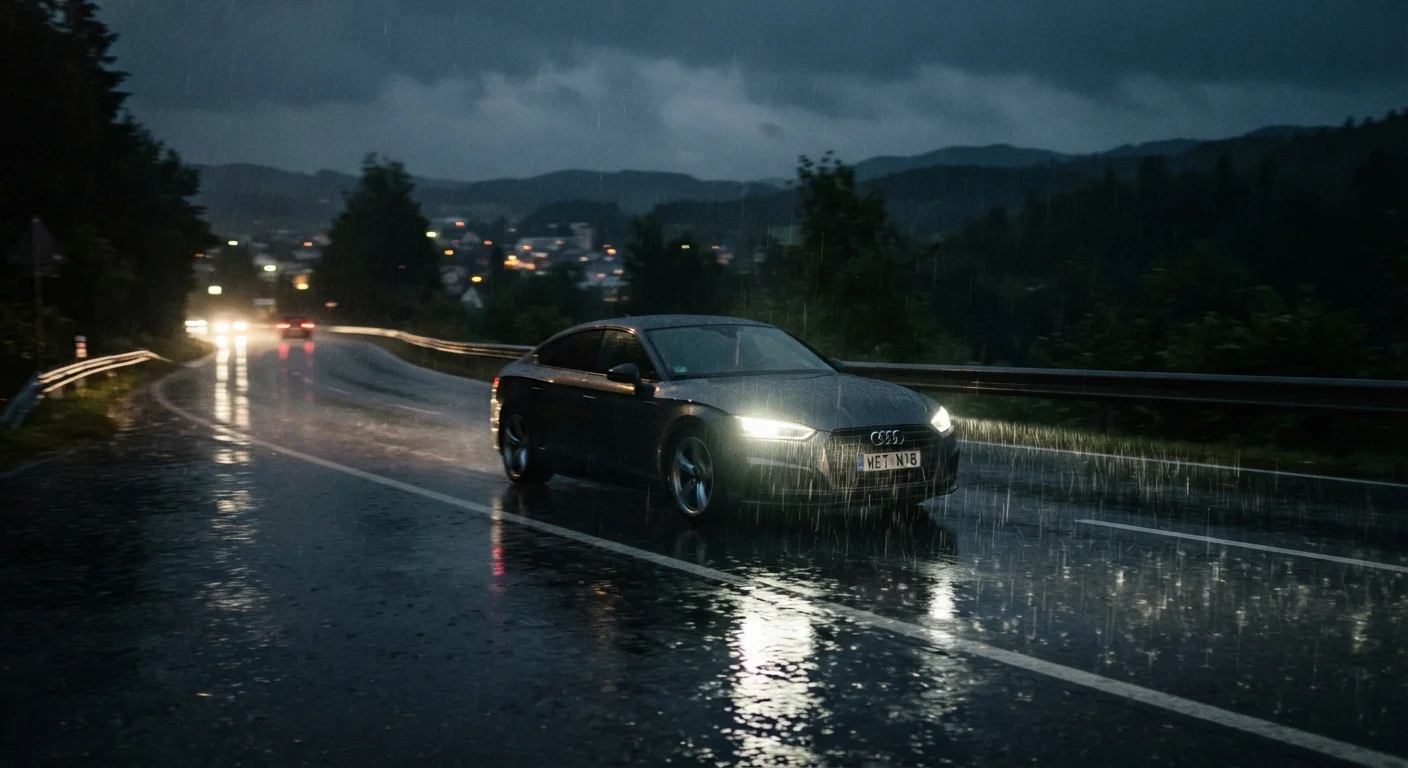
Rain is the most common slippery condition most drivers encounter. Water on the road reduces tire grip and introduces a specific risk called hydroplaning - where your tires ride on a film of water rather than the road surface itself. This can occur at speeds as low as 35 mph on standing water.
- Reduce speed by 5-10 mph below posted limits on wet roads, more in heavy rain.
- Increase following distance to at least 4-5 seconds from the vehicle ahead.
- Avoid sudden braking. Apply brakes gradually; modern ABS systems help, but they can't override physics.
- If hydroplaning occurs, ease off the accelerator and hold the wheel steady. Do not brake hard or steer sharply.
Rain also reduces visibility. Use low-beam headlights, not just wipers, and stay clear of large vehicles that create spray. Defensive driving principles - scanning ahead and maintaining space - matter more than ever in rain.
Check Tire Pressure Before Wet-Weather Driving
Tire pressure drops in cold temperatures - roughly 1 PSI per 10°F decrease. Underinflated tires increase hydroplaning risk in rain and reduce grip on snow. Check your tire pressure when temperatures drop significantly. Your vehicle's recommended PSI is found on the sticker inside the driver's door jamb.
Driving in Snow: Slow Down and Read the Surface
Snow introduces variability that rain doesn't. Fresh powder behaves differently than packed snow, and packed snow may hide ice beneath. Four-wheel drive helps you accelerate but does nothing to improve braking - a widely misunderstood limitation.
- Accelerate slowly to avoid wheel spin. If your wheels spin, ease off the gas.
- Brake earlier than usual. Stopping distances in snow can be two to three times longer than on dry roads.
- Steer smoothly. Sharp steering inputs can cause the rear end to slide on packed snow.
- Stay in established tire tracks on highways where possible - cleared lanes offer better grip than fresh snow.
Preparation matters here too. Ensure your tires have adequate tread depth before winter arrives - seasonal vehicle maintenance covers what to check before conditions turn.
Driving on Ice: When Minimal Input Is Maximum Safety
Ice is the most dangerous common road surface. A thin glaze can reduce tire friction to near zero, leaving almost no margin for steering or braking corrections. Black ice - a transparent layer that makes road pavement look merely wet - is particularly treacherous because drivers often don't recognize it until they've lost control.
Where black ice forms:
- Bridges and overpasses, which lose heat from both above and below
- Shaded stretches of road that never see direct sun
- Intersections where water collects and refreezes
Key adjustments on ice:
- Reduce speed drastically - 10-15 mph on icy residential streets is not unreasonable.
- Apply brakes with extreme gentleness; threshold braking technique is important here.
- If your vehicle begins to skid, steer in the direction you want the front of the car to go and do not overcorrect.
- When possible, avoid driving on ice entirely. No technique fully compensates for near-zero traction.
Don't Trust All-Wheel Drive on Ice
AWD and 4WD systems give drivers more confidence than conditions often warrant on ice. These systems improve power delivery to wheels but do not improve braking or cornering ability on a frozen surface. Overconfidence in AWD is a documented factor in many winter crashes - treat ice as equally dangerous regardless of your drivetrain.
For new drivers encountering winter conditions for the first time, foundational road safety concepts provide useful context before tackling these conditions.