
Why Native Plants Matter for Local Wildlife
Most conventional landscaping relies on ornamental plants sourced from other regions or continents. While visually appealing, these plants often provide little nutritional value to local insects and birds that haven't co-evolved with them. Native bees, for example, frequently cannot access pollen from flowers with shapes that didn't exist in their natural habitat.
Native plants fill a different role. They produce the right types of pollen, nectar, seeds, and berries that local wildlife depends on. Research from entomologist Doug Tallamy and colleagues has highlighted that native oaks alone support hundreds of caterpillar species - which in turn feed nesting birds. Removing or replacing native plants from the landscape has a ripple effect through the food web.
Beyond wildlife value, native plants tend to be more resilient in their home environments. Because they evolved alongside local soils, rainfall patterns, and temperature swings, they're naturally equipped to handle regional conditions. This translates to less supplemental watering, fewer amendments, and reduced dependence on pesticides - all of which benefit both the gardener and the surrounding ecosystem. For gardeners interested in reducing irrigation needs further, our low-water landscaping guide covers complementary strategies.
~4,000
Native bee species in North America
According to the U.S. Fish & Wildlife Service, North America is home to roughly 4,000 native bee species, many of which depend on specific native plant relationships.
70%
Native bees that nest in the ground
Entomologists estimate that approximately 70% of North American native bee species are ground-nesters, making undisturbed soil an important garden habitat element.
3x
More wildlife supported by native vs. non-native plants
Research cited by the National Wildlife Federation suggests native plants can support significantly more native insect species than exotic ornamentals in the same planting area.
Designing Your Yard for Pollinators
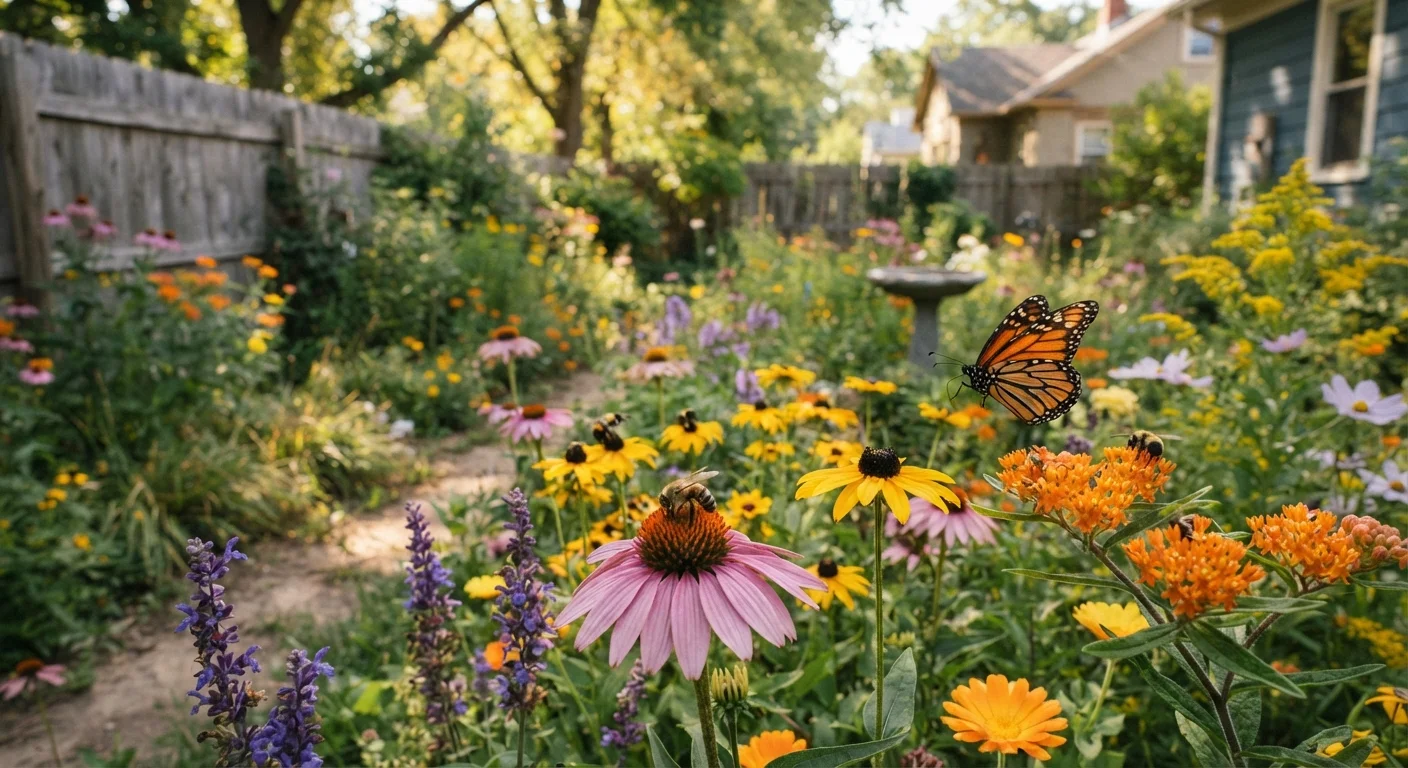
A pollinator-friendly yard doesn't need to look wild or unkempt. Thoughtful design actually makes native plant gardens more attractive and functional. The key principles are layering, succession blooming, and variety.
Layering for Habitat Complexity
Think of your yard in vertical layers: tall canopy trees, mid-size shrubs, low perennials, and ground-level plants. Each layer provides different habitat - caterpillars feed in the tree canopy, ground-nesting bees burrow in bare soil patches, and butterflies bask on flat-topped flowers at mid-height. Even a modest yard can incorporate two or three layers to create meaningful habitat structure.
Planning for Continuous Bloom
Different pollinators are active at different times of year. A garden that blooms only in midsummer leaves early spring bumblebee queens and late-season monarch butterflies without resources. Aim for at least one or two native species in bloom from early spring through late fall. In many regions, early bloomers like native willows and red maples are critical for queens emerging from winter hibernation before most flowers appear.
For gardeners already thinking about seasonal planning, our guide to annuals versus perennials can help you structure a garden that delivers color across the growing season with minimal replanting.
Start Small and Expand Each Season
You don't need to overhaul your entire yard at once. Start with a single 4-by-6-foot bed of three to five native species and observe which pollinators visit throughout the season. Each year, you can expand by one or two more plant clusters. This incremental approach also helps you learn which plants perform best in your specific yard conditions before committing to a larger planting.
Choosing Plants for Your Region
One of the most common mistakes new native gardeners make is buying plants labeled simply as "native" without checking whether they're native to their specific region. A plant native to the Southeast may provide no ecological benefit in the Pacific Northwest. Specificity matters.
Where to Start
Your local Cooperative Extension Service is the most reliable free resource for region-specific native plant lists. Many states also have native plant societies that maintain curated lists by county or ecoregion. When visiting local nurseries, ask staff which plants are native to your particular area - not just broadly to your country or climate zone.
Planting in Clusters
Pollinators are more efficient when foraging in patches of the same species. Rather than scattering individual plants across your yard, group three to five of the same species together. This increases the visibility of flowers to passing insects and reduces the energy pollinators expend moving from bloom to bloom.
If you're also growing food, native plants can be powerful allies. Many native flowering plants attract the same pollinators that improve vegetable crop yields. Our backyard vegetable garden guide explores how to integrate pollinator-friendly design into a productive edible space.
Supporting Pollinators Beyond Plants
Plants are the foundation of a pollinator habitat, but a few additional practices significantly increase the value of your yard for local wildlife.
Reduce Pesticide Use
Even pesticides labeled as organic or "natural" can harm pollinators if applied incorrectly or when flowers are open. Whenever possible, tolerate some insect damage - chewed leaves are often a sign that your garden is functioning as wildlife habitat. When treatment is necessary, apply in the early morning or evening when most pollinators are not actively foraging, and avoid spraying open flowers.
Leave the Leaves
Many native bees overwinter in hollow stems, leaf litter, and undisturbed soil. Tidying up the garden aggressively in fall removes these sheltering spots. Consider leaving stems standing through winter and raking leaves to garden beds rather than bagging them. This single practice can meaningfully support overwintering pollinators.
Add a Water Source
A shallow dish with clean water and a few stones for landing perches provides a drinking station for bees and butterflies. Change the water every few days to prevent mosquito breeding.
Staying on top of garden upkeep without disrupting habitat is a balance worth planning for. Our seasonal garden maintenance checklist outlines what to prioritize each quarter in ways that can be adapted for pollinator-friendly yards.
Check Local Regulations Before Planting
Some municipalities have ordinances that regulate lawn height, "weedy" appearances, or specific plant species. Before converting a large portion of your yard to native plantings, check with your local planning or zoning office. Many communities now explicitly support pollinator gardens, and some even offer certification programs that may also satisfy any neighbor or HOA concerns.