
Why a Quarterly Approach Works
Most gardening problems - overgrown shrubs, nutrient-depleted soil, pest infestations that spiral out of control - share a common cause: long gaps between attention. A quarterly maintenance routine closes those gaps. Instead of reacting to crises, you stay ahead of them with focused, predictable effort four times a year.
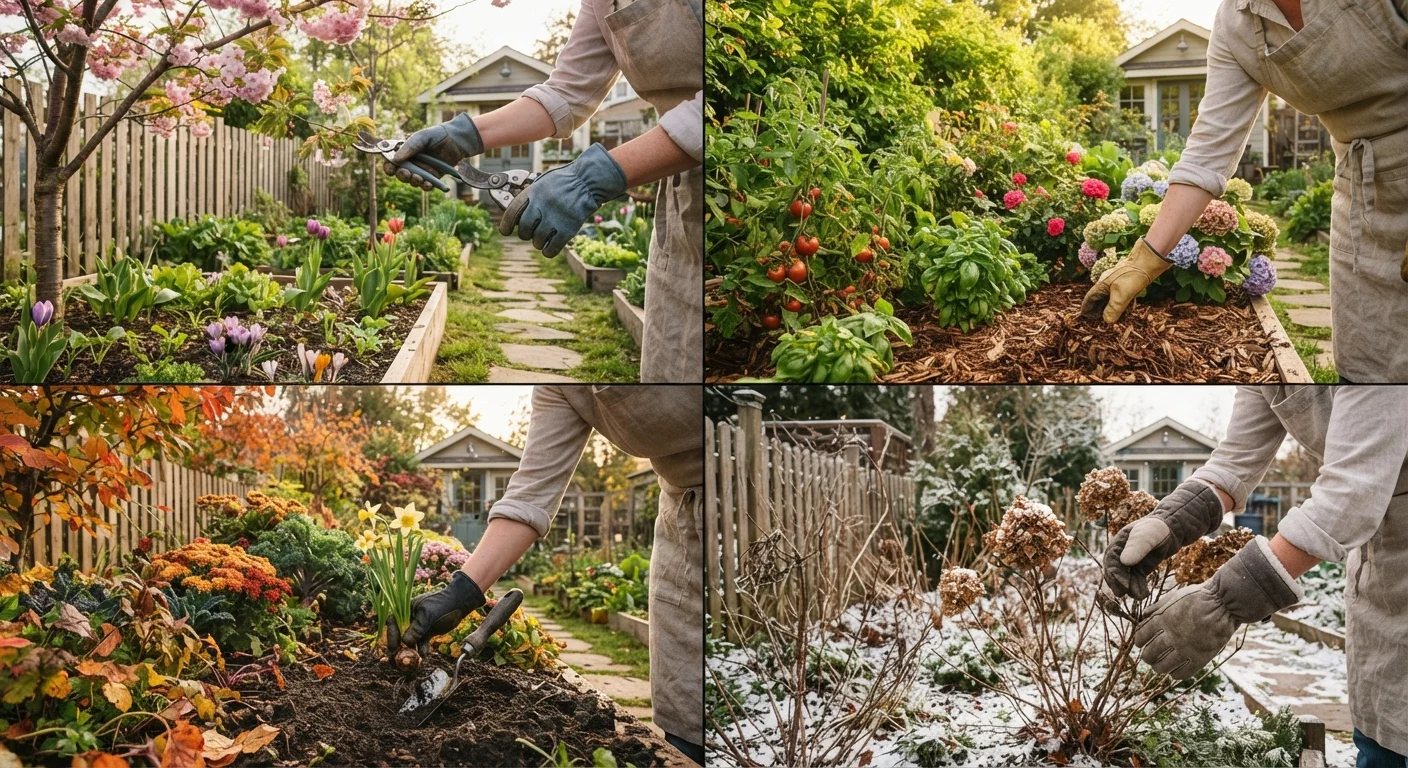
This checklist organizes tasks by season - spring, summer, fall, and winter - so you always know what to prioritize. If you're just getting started with outdoor growing, the ground-up guide for first-timers covers planning and soil prep before you dive into ongoing maintenance.
Below you'll find the tools you'll need on hand, followed by the full seasonal checklist.
Bypass hand pruners
Used every quarter for deadheading, shaping shrubs, and removing dead or diseased stems cleanly.
Garden fork or cultivator
Loosens compacted soil before adding amendments or mulch, improving water and nutrient penetration.
Soil test kit
Measures pH and basic nutrient levels so you apply the right amendments rather than guessing.
Balanced granular fertilizer
Feeds plants during the active growing seasons of spring and summer.
Mulch (wood chips or straw)
Applied in spring and fall to retain moisture, moderate soil temperature, and suppress weeds.
Hand lens or magnifying glass
Aids close-up pest and disease scouting on leaf undersides and stems.
Garden journal or notes app
Tracks what you did each quarter, what worked, and what to change next season.
Burlap or frost cloth
Protects tender shrubs and young perennials during fall and winter cold snaps.
Your Four-Season Garden Checklist
Work through each group as its season approaches. Items marked must are non-negotiable for plant health; should items deliver strong results with moderate effort; nice-to-have tasks are worthwhile enhancements when time allows.
Spring (March-May)
Summer (June-August)
Fall (September-November)
Winter (December-February)
Avoid Pruning at the Wrong Time
Pruning spring-flowering shrubs like lilacs and forsythia in fall removes next season's flower buds - wait until just after they bloom. Similarly, pruning too late in fall on marginally hardy plants can stimulate tender new growth before frost. When in doubt, research your specific plant's optimal pruning window before cutting.
Thinking about expanding beyond ornamentals? The backyard vegetable garden guide pairs well with this checklist, offering crop-specific timing for planting, pest management, and harvest succession.
For perennial plantings, pairing this routine with sound plant selection pays long-term dividends - see annual vs. perennial flower planning for how to combine both for continuous color with less replanting effort.
Supporting Habits That Make the Checklist Easier
A few year-round practices reduce the workload each quarter significantly. Composting is the most impactful: a steady supply of finished compost means your soil amendment tasks take minutes rather than a trip to a garden center. If you haven't started yet, composting kitchen scraps at home walks you through setup and what to include.
Never Skip Diseased Material Removal
Leaving diseased stems, leaves, or fruit on the ground or in beds is one of the most common ways fungal and bacterial problems persist from one season to the next. Bag and dispose of visibly infected material through your municipal yard waste program rather than composting it. This single habit prevents many recurring disease cycles.
If your property includes lawn areas, beds planted with native species also shrink quarterly workloads. Native plants are adapted to local conditions and need less watering, fertilizing, and pest intervention. Explore native plant and pollinator garden design for layout ideas that support local wildlife while cutting maintenance time.
Finally, your fall garden winterizing should coordinate with broader property prep. Outdoor plumbing, irrigation shutoffs, and exterior systems all need attention at the same time - home winterization guidance covers the full picture beyond the garden beds.