
Why Container Gardening Appeals to So Many Gardeners
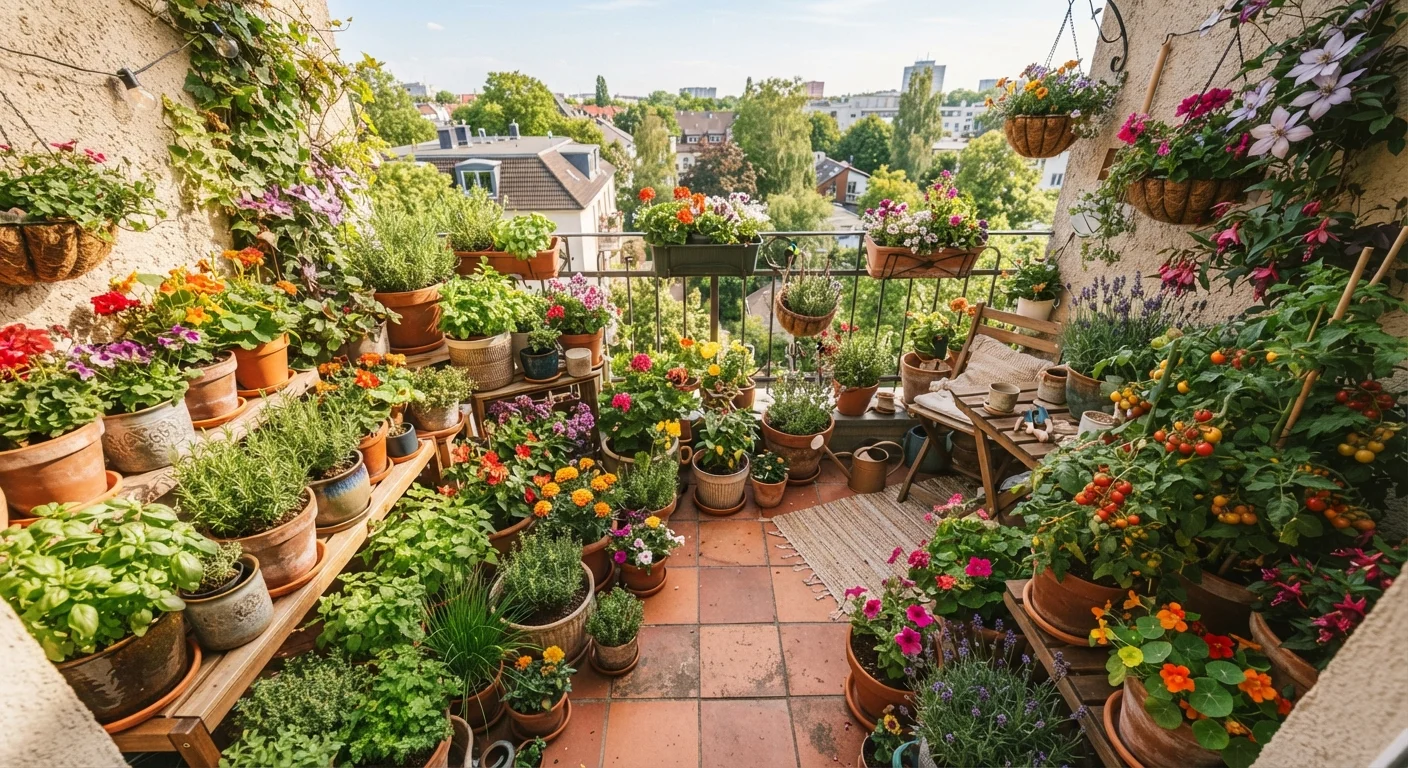
Container gardening has grown well beyond the window box of decades past. Today, gardeners use pots to grow everything from cherry tomatoes and basil to dwarf citrus trees and ornamental grasses. The appeal is understandable: containers let you garden in spaces that would otherwise be off-limits - a concrete patio, a rental apartment balcony, or a yard with compacted clay soil that's essentially impenetrable.
If you're just finding your footing as a gardener, containers offer a low-stakes entry point. Our guide for first-time gardeners covers broader planning fundamentals, but containers let you start with a single pot and scale from there. The learning curve is gentler when you're only managing a few square feet of soil.
Garden anywhere, regardless of yard or soil
Containers work on balconies, patios, driveways, and rooftops - any surface that can bear their weight. This opens up gardening to renters and urban residents who have no access to ground soil.
Full control over soil quality and composition
You choose every ingredient in your potting mix, so poor native soil - heavy clay, sandy, or contaminated ground - becomes irrelevant. This is a significant advantage for vegetable growers concerned about soil history.
Mobility lets you chase sun or avoid frost
Pots can be moved to follow optimal light conditions throughout the season, or brought indoors to extend the growing season when frost threatens. This flexibility is unavailable with in-ground or even raised-bed plantings.
Easier to manage pests and disease
Isolated containers can be quarantined when a plant shows signs of disease or pest pressure, preventing spread to neighboring plants. Soil-borne problems stay contained rather than spreading through an entire bed.
Accessible for gardeners with physical limitations
Raised containers, elevated planters, and tabletop pots reduce the need to kneel or bend, making gardening more comfortable for people with mobility, joint, or back issues.
The Real Limitations You Should Know Before You Start
The convenience of containers comes with genuine constraints that catch many new gardeners off guard. Understanding these limitations before you invest in pots and plants will save both frustration and money.
Rapid drying requires frequent, consistent watering
Container soil has no connection to groundwater, so it dries out entirely between waterings - sometimes within 24 hours in summer heat. Missing a day or two in warm weather can stress or kill plants quickly.
Nutrients leach out with every watering
Regular irrigation flushes fertilizer through the drainage holes, so container plants need supplemental feeding far more often than in-ground plants. Neglecting this leads to pale, underperforming growth.
Root space limits what you can grow
Deep-rooted vegetables like carrots, parsnips, and large squash varieties struggle in typical containers. Vigorous perennials and most trees and shrubs eventually become pot-bound and decline unless repotted into increasingly large containers.
Containers can be expensive to set up well
Quality pots, potting mix, and fertilizer represent a real upfront cost, especially if you're outfitting a large space. Cheap pots crack in freezing temperatures and may need replacing each season.
Temperature extremes stress roots more than in-ground plants
Container walls have little insulating mass compared to the ground, so roots are exposed to greater temperature swings - overheating in summer sun and freezing in cold winters. Dark-colored or metal containers amplify this problem.
Perhaps the biggest practical challenge is watering. Containers lose moisture far faster than in-ground beds - on a hot summer day, small pots may need water twice daily. This rules out container gardening as a casual, low-attention activity unless you install drip irrigation or self-watering inserts. If you're weighing containers against other formats, our article on raised beds vs. in-ground planting lays out a direct comparison of drainage, soil control, and upkeep differences.
What Actually Grows Well in Containers
Matching plants to containers is where container gardening succeeds or fails. Some plants are naturally well-suited; others are a constant struggle regardless of effort.
5 gallons
Minimum pot size for most vegetable crops
Most cooperative extension programs recommend a minimum of 5 gallons of soil volume for common vegetables like tomatoes and peppers to develop an adequate root system.
2×
How often containers may need watering vs. in-ground beds
Container plantings can require watering twice as often as in-ground beds in warm climates, particularly during summer peak temperatures, due to limited soil volume and faster evaporation.
Plants that reliably thrive in containers:
- Herbs - basil, parsley, chives, mint (best kept in its own pot to prevent spreading), and thyme adapt readily to container life.
- Compact vegetables - determinate tomato varieties, peppers, lettuce, radishes, and bush beans all perform well given adequately sized pots.
- Annual flowers - petunias, marigolds, zinnias, and nasturtiums provide season-long color and ask little beyond consistent watering and deadheading. See our annual vs. perennial flower guide for combining both types effectively.
- Shade-tolerant plants - impatiens, ferns, and begonias work well on shaded patios. Our shade gardening guide can help you match low-light plants to your conditions.
Always read plant labels before purchasing. Understanding mature size, light needs, and spacing requirements prevents the common mistake of overcrowding. Our article on reading a plant label breaks down exactly what those tags tell you.
Container Size Matters More Than You Think
One of the most common container gardening mistakes is choosing pots that look attractive but are too small for the plant's root system. A tomato plant in a 2-gallon pot will survive but rarely thrive - roots quickly run out of room, and the small soil volume dries out so fast that consistent fruiting becomes nearly impossible. When in doubt, go larger. Bigger containers are more forgiving of missed waterings and support healthier root development throughout the season.
Getting the Basics Right: Soil, Drainage, and Feeding
Three factors determine whether container plants thrive or merely survive. Get these right and most other variables become manageable.
Use proper potting mix, not garden soil. Garden soil compacts in containers, restricts root growth, and drains poorly. A quality potting mix is formulated to stay loose and aerated even after repeated watering.
Drainage holes are non-negotiable. Every container must have at least one drainage hole. Roots sitting in standing water develop rot quickly, and no amount of careful watering can compensate for a pot that cannot drain.
Fertilize regularly. Because nutrients wash out with every watering, container plants need consistent feeding - typically a balanced liquid fertilizer every two to three weeks during the growing season, or a slow-release granular mixed into the potting medium at planting. If you're interested in building a sustainable fertility approach, composting at home describes how to produce nutrient-rich material you can blend into your potting mix over time.
Container gardening rewards thoughtful setup. The plants don't know they're in a pot - they just respond to whether their basic needs are met consistently.