
Why a Monthly Schedule Works Better Than Seasonal Panic
Most homeowners think about maintenance in two moments: when something breaks, and just before a season changes. The result is a frantic spring checklist that feels impossible to complete, followed by months of neglect. A month-by-month approach distributes the workload evenly, keeps small problems from compounding, and gives you time to schedule professionals for tasks that require one.
This calendar covers the full year in four seasonal blocks. Each task is marked by priority so you can triage your time effectively. For a deeper look at which jobs are safe to handle yourself versus those that need a licensed contractor, see our guide on DIY vs. professional home maintenance. And if you're thinking longer term, understanding how long your home systems will last can help you budget smartly before a replacement becomes urgent.
Winter (January - February)
Spring (March - May)
Summer (June - August)
Fall (September - November)
Tools and Supplies to Have on Hand
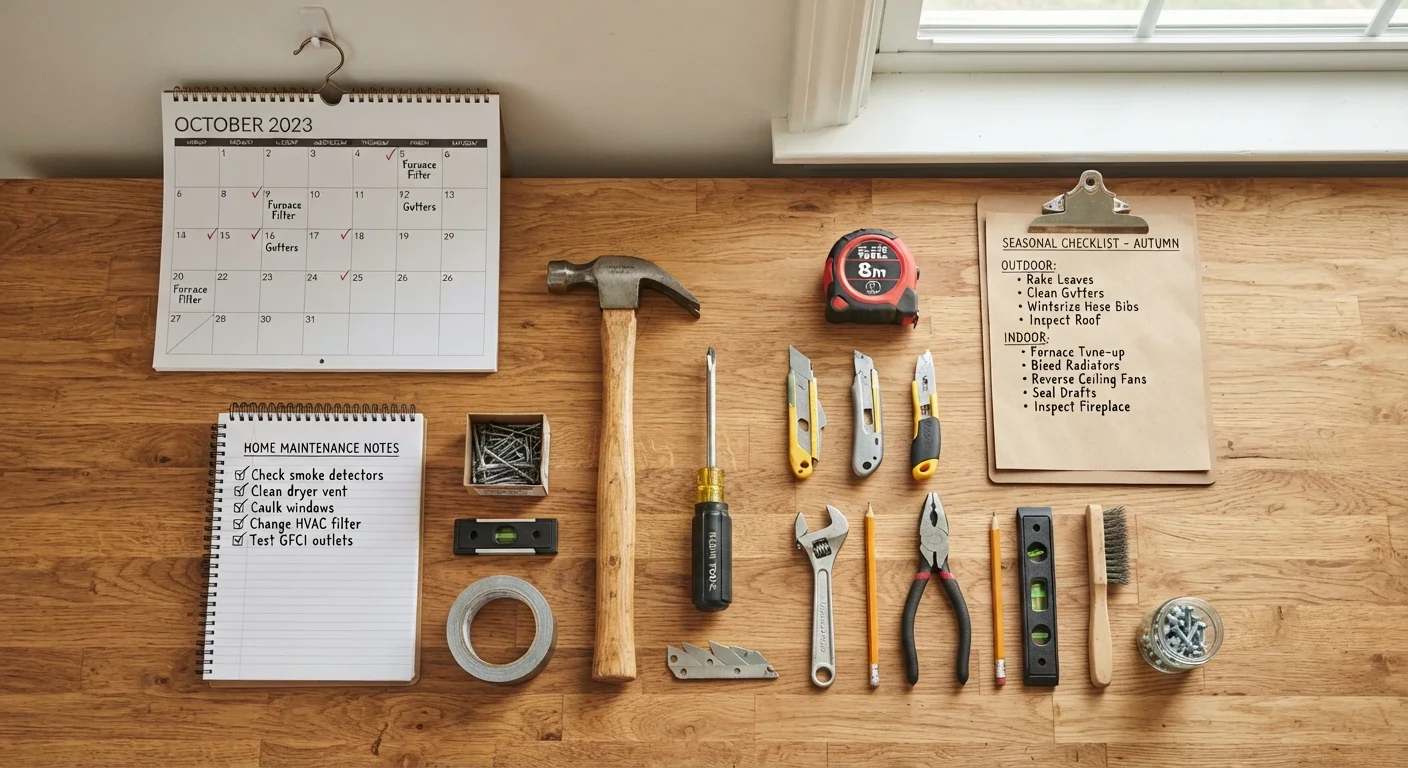
You don't need a contractor's truck to stay on top of routine maintenance. The following tools and supplies make it practical to handle the must-do items on this calendar safely and effectively.
Extension ladder
Safely reaches gutters, eaves, and upper exterior surfaces for inspection and cleaning.
Caulk gun and exterior-grade caulk
Seals gaps around windows, doors, and penetrations to prevent air and water infiltration.
Multimeter
Tests voltage at outlets and helps identify non-functioning GFCI circuits without calling a professional.
Pipe insulation foam
Wraps exposed cold-water pipes in unheated spaces to reduce freeze risk in winter.
Flashlight or headlamp
Illuminates attic spaces, crawlspaces, and utility areas during inspections.
Garden hose with spray nozzle
Tests sump pump function and rinses debris from exterior surfaces and dryer vents.
Don't Climb the Roof Without Proper Safety Equipment
Roof inspections from the ground using binoculars cover most of what you need to see. If you must access the roof, use appropriate fall-protection equipment and never work alone. For any roofing repair beyond cleaning debris, hire a licensed roofing contractor - falls are a leading cause of serious home injury.
Keeping Track and Staying Safe
A written maintenance log - even a simple spreadsheet or notebook - is one of the most underrated homeowner habits. Recording what you did, when, and what you noticed creates a paper trail that helps when selling your home, filing an insurance claim, or deciding whether a repair is getting worse over time.
Electrical, Gas, and Structural Work Requires a Licensed Pro
No annual maintenance checklist replaces the expertise of a licensed professional for hazardous systems. Work involving your electrical panel, gas appliances, gas lines, load-bearing walls, or foundation should never be DIY projects. Attempting these without proper credentials can void your homeowner's insurance, violate local code, and create serious safety hazards. Always verify permit requirements with your local building authority before starting any significant project.
Note that tasks touching your home's electrical panel, gas lines, structural framing, or main plumbing supply always require a licensed professional. Local building codes often require permits for certain work; contact your local building department to verify before starting anything beyond basic upkeep. Just as you'd plan ahead for seasonal vehicle care, a proactive home schedule prevents the same kind of costly surprise failures. If you also manage outdoor spaces, pair this calendar with a quarterly garden maintenance checklist to keep your full property in shape.